
“International Criminal Law Is a Discipline for Optimists”
July 02, 2026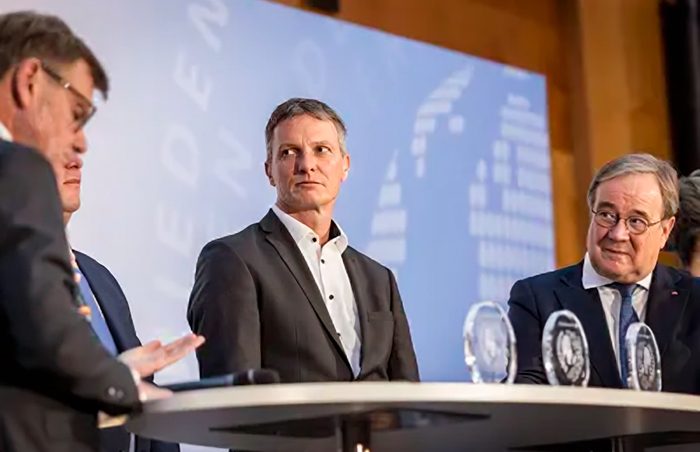
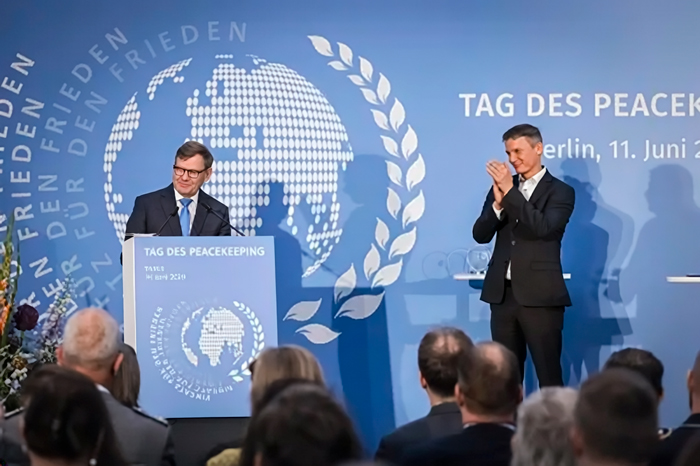
Thomas Körner, Head of the International Crimes Legal Unit at the European Union Advisory Mission (EUAM) Ukraine, has been recognised as a Peacekeeper of the Year by the German Federal Foreign Office during Germany’s Peacekeeping Day 2026. In this interview, he discusses EUAM’s advisory work with Ukrainian partners, the challenges of investigating international crimes during Russia’s war of aggression against Ukraine, and why accountability remains possible even when it may take years.
What does the Peacekeeper of the Year award mean to you?
I see it as recognition not only of my own work, but of two groups of people: all those working in Ukraine under very difficult conditions, and those working in international criminal law more broadly. This includes colleagues working in Ukraine, at the International Criminal Court in The Hague, and in other international justice settings.
What is your role at EUAM Ukraine?
My work focuses on international criminal law: advising Ukrainian partners on the investigation and prosecution of international crimes.
EUAM Ukraine is an advisory mission. We do not conduct investigations, interview witnesses or prosecute cases ourselves. That would neither be appropriate nor effective. Ukrainian institutions know their legal system, language and social context. Our role is to support them so that international crimes can be investigated and prosecuted as effectively as possible.
We work with prosecutors, investigative authorities, the judiciary and defence lawyers.
What are international crimes?
International crimes are generally understood as four main categories: war crimes, crimes against humanity, genocide and the crime of aggression.
War crimes are serious violations of international humanitarian law, which applies during armed conflict. They may include the killing of civilians, attacks on civilian objects, unlawful deportation or other grave violations of the laws and customs of war.
How can such crimes be investigated while the war is ongoing, particularly in occupied territories?
It is a major challenge. In areas affected by missile or drone attacks, investigators may be able to secure physical evidence and document the consequences of an attack. In occupied territories, the situation is often much more difficult.
Digital sources can also be important. Open-source information, social-media posts and satellite imagery may help establish facts, trace military movements or identify potential witnesses. In some cases, people from occupied territories are able to reach government-controlled territory and provide testimony, although these opportunities remain limited.
Ukraine’s decision to pursue accountability during an ongoing war is remarkable. It demonstrates the importance that the country places on international law and justice.
What practical support does EUAM provide to Ukrainian institutions?
The support is broad. We can provide advice on draft legislation and on strategies for investigating and prosecuting international crimes. We also organise or support specialised workshops on topics such as crimes against children and environmental damage caused by war.
EUAM’s International Crimes Component brings together legal and investigative expertise. The aim is not to create long-term dependency on international support. The goal is to help Ukrainian institutions strengthen their own capacity and continue this work independently.
What role can civil society organisations play?
Civil society organisations have made an important contribution to documenting alleged international crimes. Their work can help preserve information and draw attention to violations.
At the same time, documentation must be handled carefully. A witness should not be repeatedly interviewed by different organisations about the same traumatic experience. Repeated questioning can cause further harm and may also create inconsistencies that can later affect a case in court.
This is why coordination between state institutions, civil society and international partners is essential.
Can those responsible at the highest level ever be brought before a court?
International criminal law is a discipline for optimists. No one can guarantee outcomes in individual cases, but history shows that political circumstances can change. Leaders once seen as beyond the reach of justice have later faced international proceedings.
Accountability often takes years, sometimes decades. That does not make the work less important. It means that evidence must be preserved, cases must be built carefully and institutions must be prepared to act when opportunities arise.
Why do Ukrainian institutions need international advice?
Ukrainian law enforcement bodies are highly motivated and capable. But the scale of the task is extraordinary. Any justice system would face immense pressure if it had to investigate and prosecute thousands of potential international crimes while the country was at war.
International criminal law is also a specialised field. It differs from ordinary criminal law in important ways. International advisers can share experience, provide comparative expertise and help Ukrainian partners address complex legal and procedural questions.
How do EUAM and other international organisations avoid duplicating each other’s work?
Ukraine has many international partners. The aim should always be to complement each other and avoid unnecessary duplication.
This requires regular coordination and, above all, attention to the needs and priorities identified by Ukrainian institutions. International organisations must ensure that their offers of support are genuinely useful and do not create an additional burden for prosecutors, investigators or judges already working under immense pressure.
What keeps you optimistic?
I believe that meaningful change requires people to engage. International justice does not provide immediate answers or instant satisfaction. It is long-term work.
But it matters. Preserving evidence, strengthening institutions and supporting accountability are practical steps towards justice. That is why I remain convinced that this is meaningful work for a lawyer to do.
Full recording is here.
Interview conducted by Sabina Matthay from Berlin Public Radio Broadcaster “RBB Inforadio”. Translated and edited for length and clarity by EUAM Ukraine.
Photos by Christina Czybik.
