
From recovery to evidence, the Mission supports international crimes investigations in Ukraine
October 30, 2026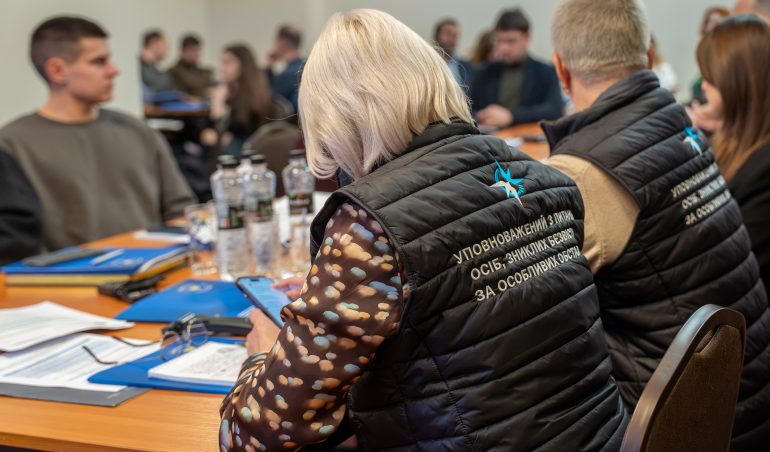
Where unlawful killing is suspected, the recovery and examination of human remains can provide important evidence. In areas of ongoing hostilities, military personnel and search teams may be the first to recover remains. National Police investigators and forensic experts subsequently examine them and work to establish the person’s identity. Details recorded during recovery can help connect forensic findings with the circumstances of death.
The EU Advisory Mission (EUAM) Ukraine supports cooperation between these institutions as part of its mandate to help Ukrainian authorities investigate and prosecute international crimes, including war crimes.
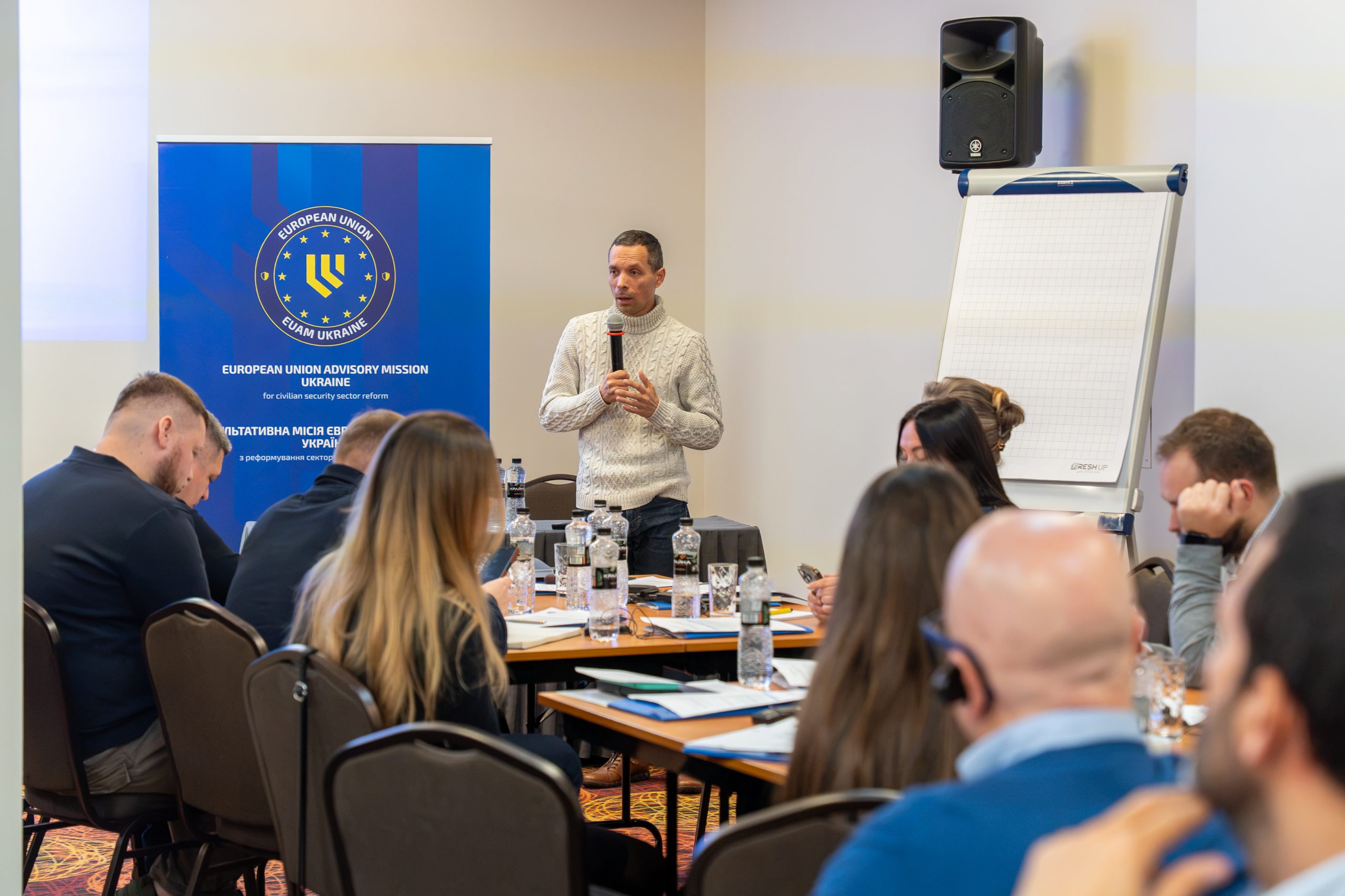
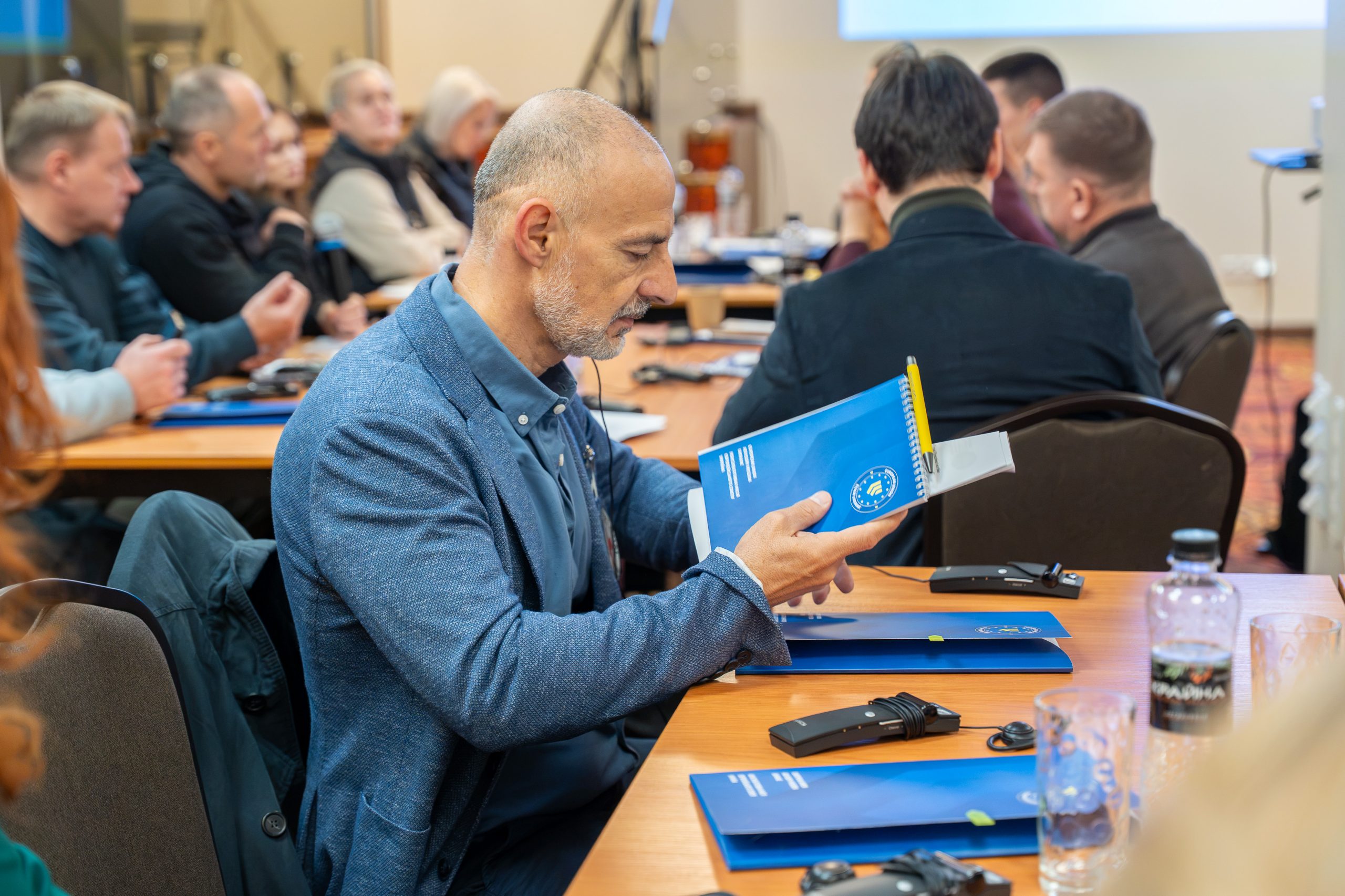
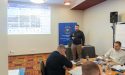
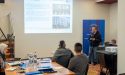
On 27 October, the Mission together with the Ministry of Defence organised a workshop on preserving information throughout the recovery, examination, identification and return of human remains, including from areas where civilian law enforcement authorities cannot operate. It provided a rare opportunity for a broad exchange between institutions with closely connected responsibilities.
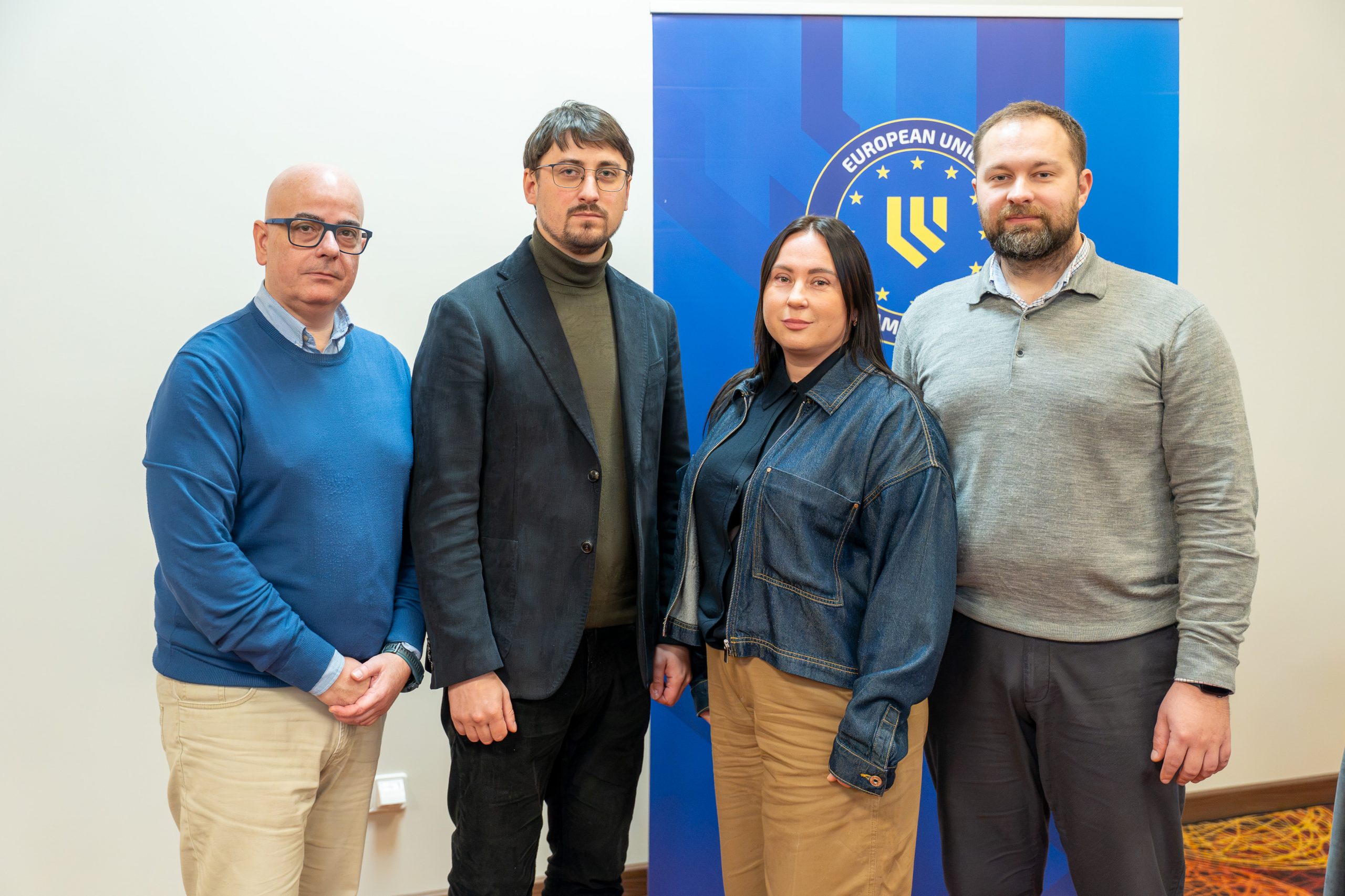
Participants included representatives of the Armed Forces of Ukraine, the National Police, the Security Service, the Prosecutor General’s Office, relevant ministries and other Ukrainian state institutions. The International Commission on Missing Persons, the International Committee of the Red Cross and the International Criminal Court also contributed to the discussions.
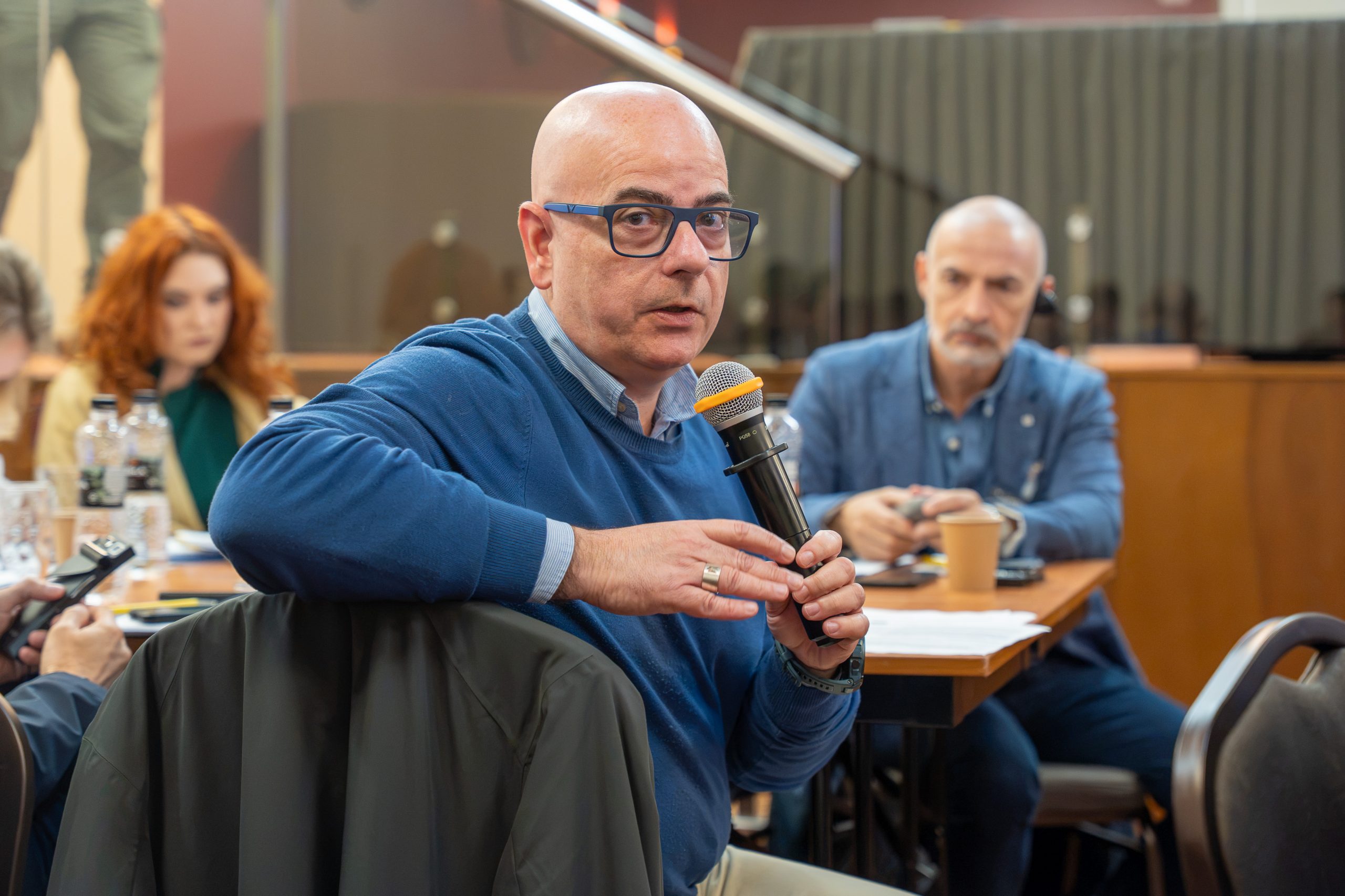
“Military personnel may hold information about a suspected international crime. Civilian investigators and prosecutors need this information to establish what happened. This is where the Mission’s support comes in,” explains Claudio Pala, Head of the International Crimes Component at EUAM Ukraine. “Within our mandate, we help Ukrainian partners strengthen cooperation between these institutions, so that relevant information is preserved, shared and can support the investigation and prosecution of international crimes. The ultimate goal is to hold those responsible for international crimes accountable.”
The exchange highlighted practical challenges that affect both the progress of investigations and families’ search for answers.
Police officers and Security Service investigators described difficulties in locating the personnel who had recovered remains months earlier. Even when those people can be found, the number of recoveries may make it difficult for them to recall individual cases. Details that could help an investigation can be lost before their significance becomes clear.
Military representatives presented ongoing work on a standardised protocol for recording initial observations during recovery. Its purpose is to assist identification and, where relevant, criminal investigations. Participants considered what can realistically be documented under the severe security constraints of war, recognising that complete records are not always possible.
Discussions also addressed chain of custody: keeping a clear record of how potentially relevant evidence is handled and transferred. This helps investigators trace its origin and handling as it passes between institutions.
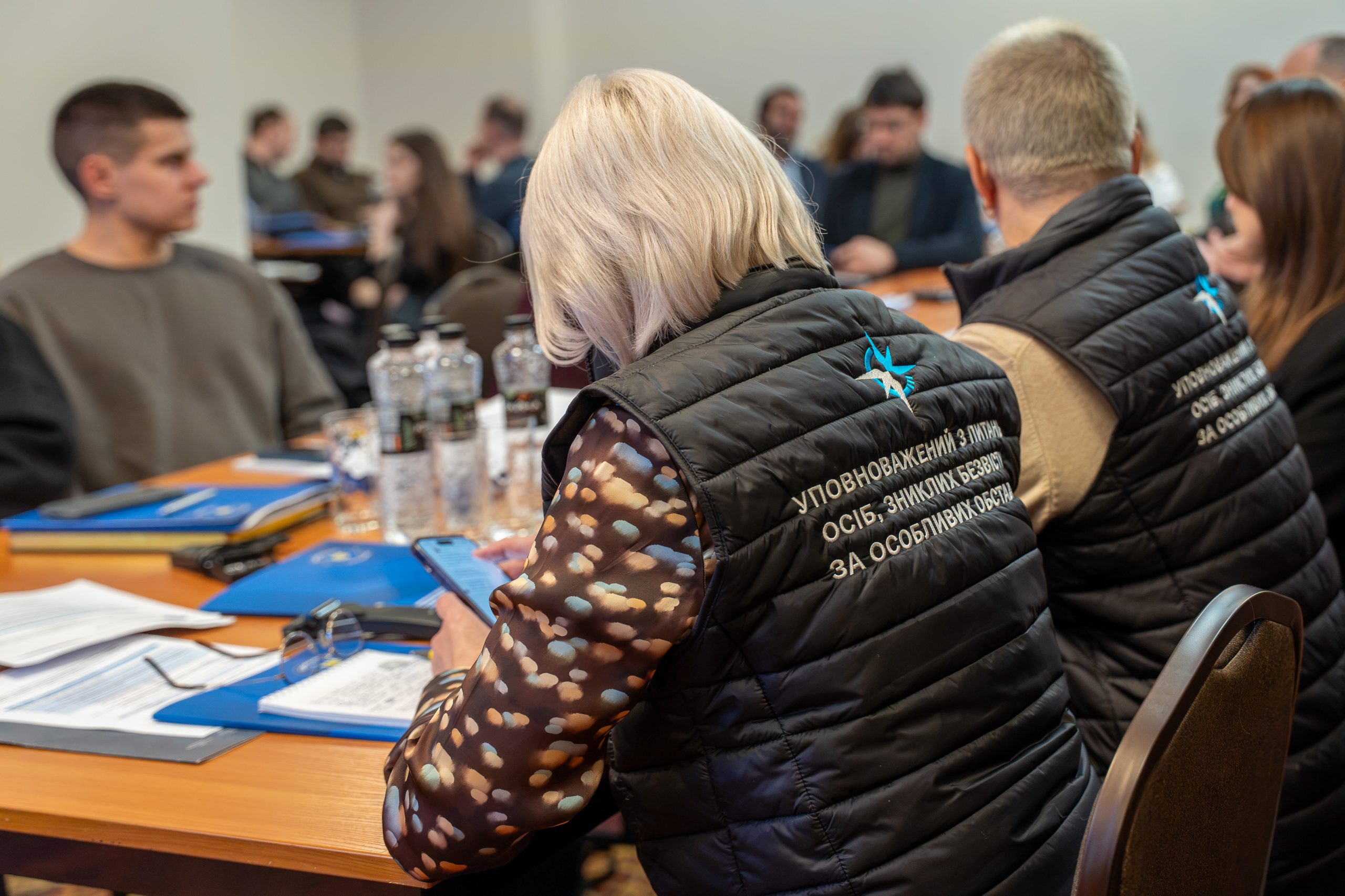
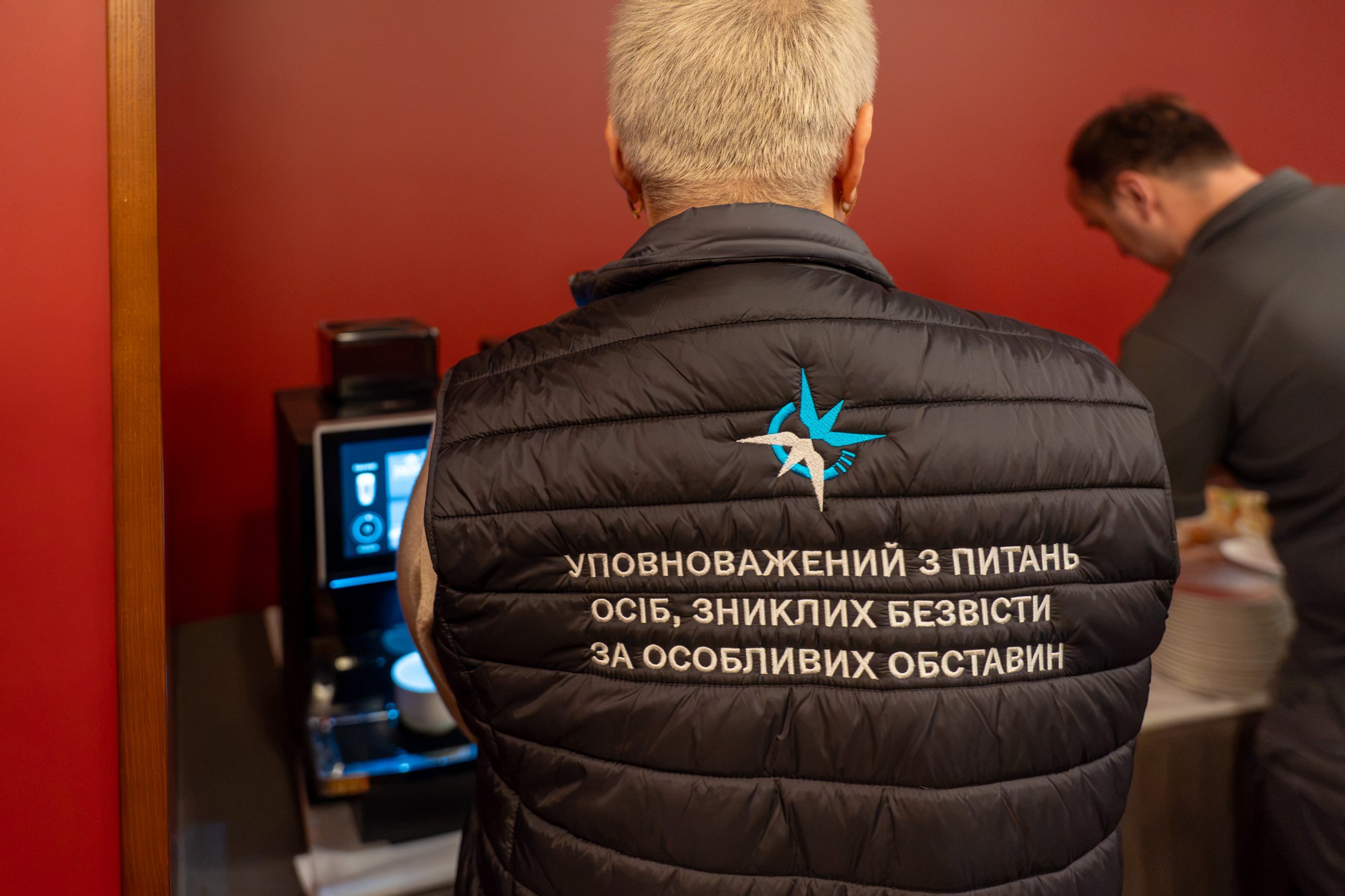
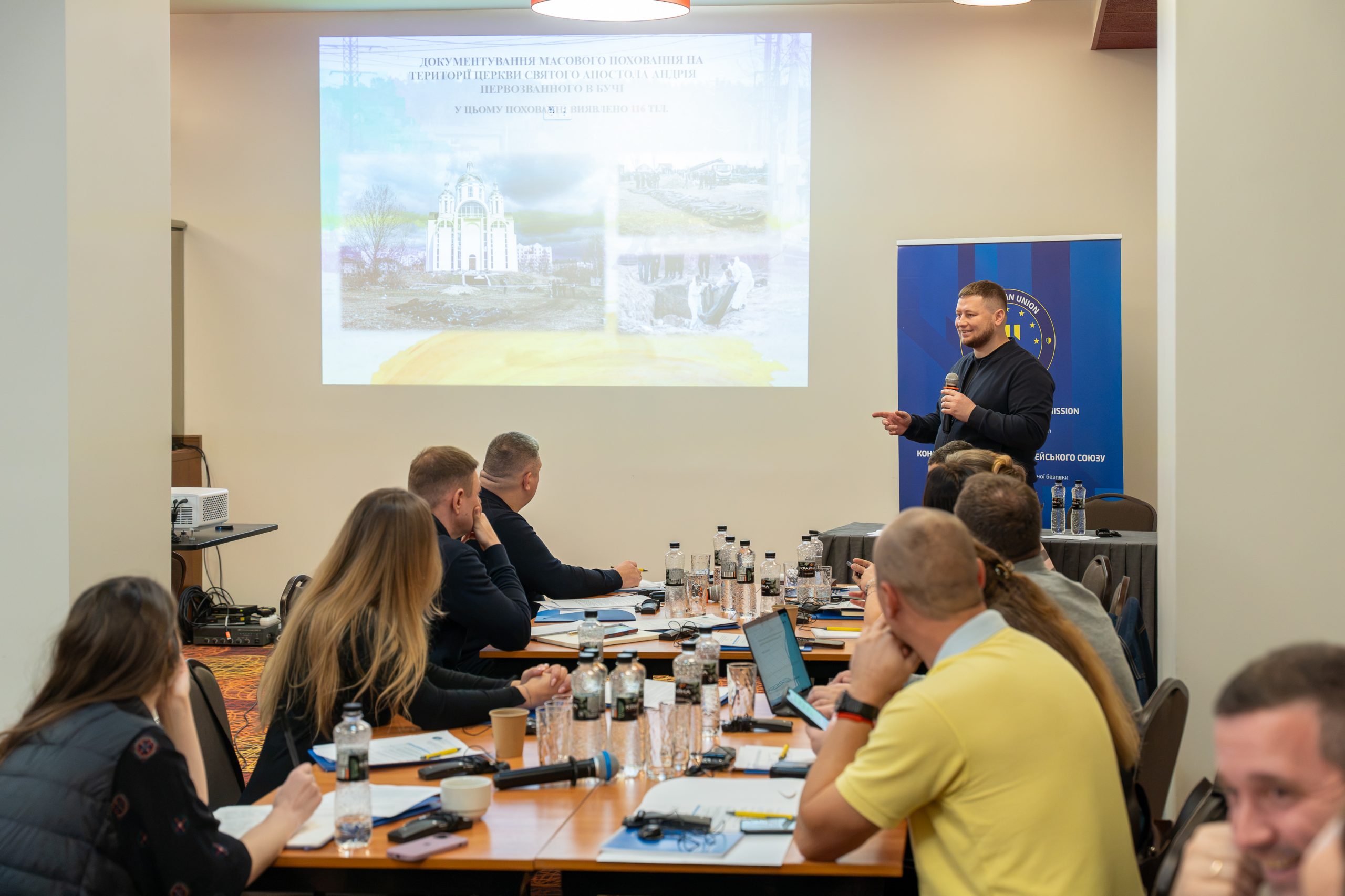
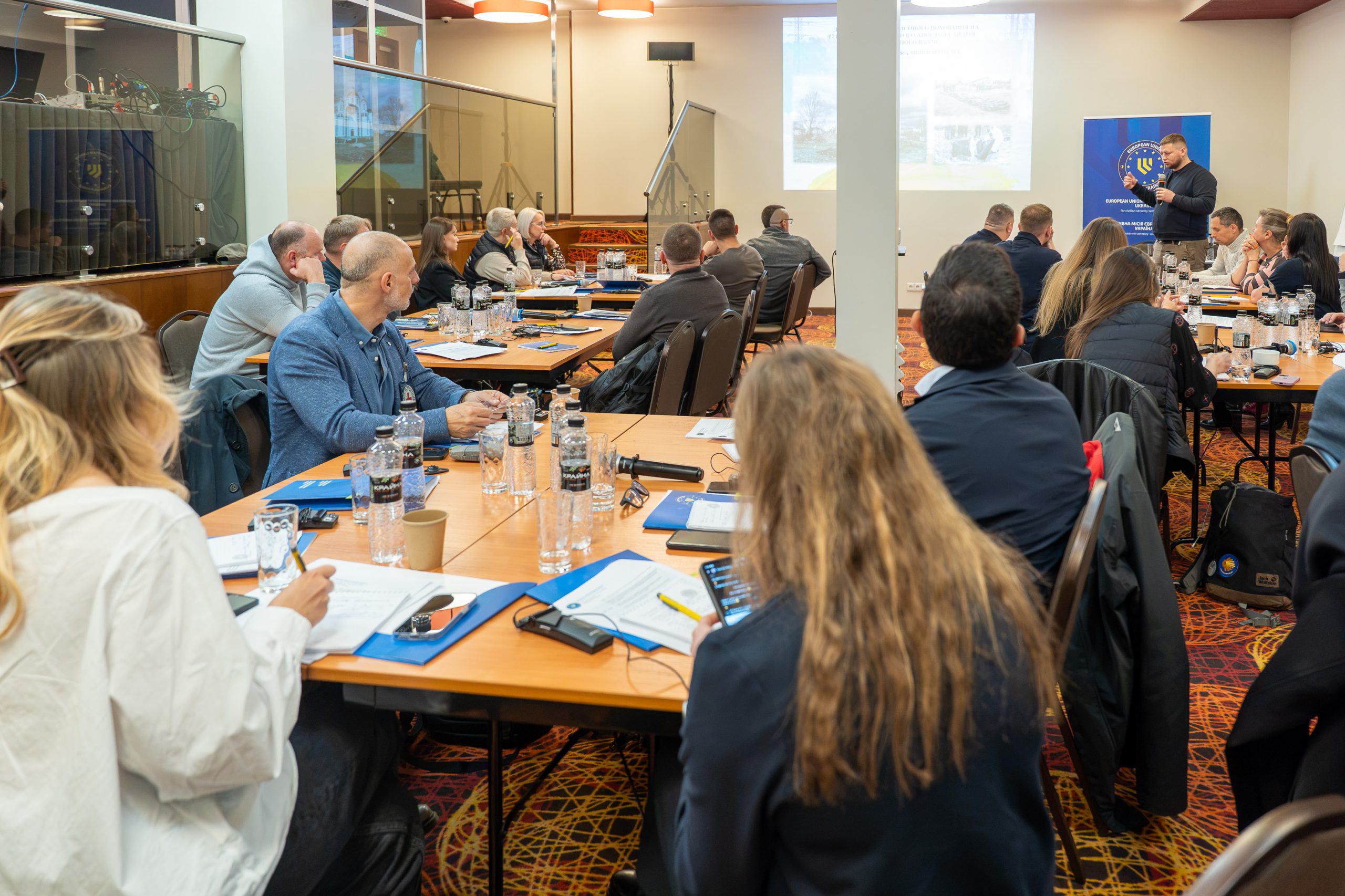
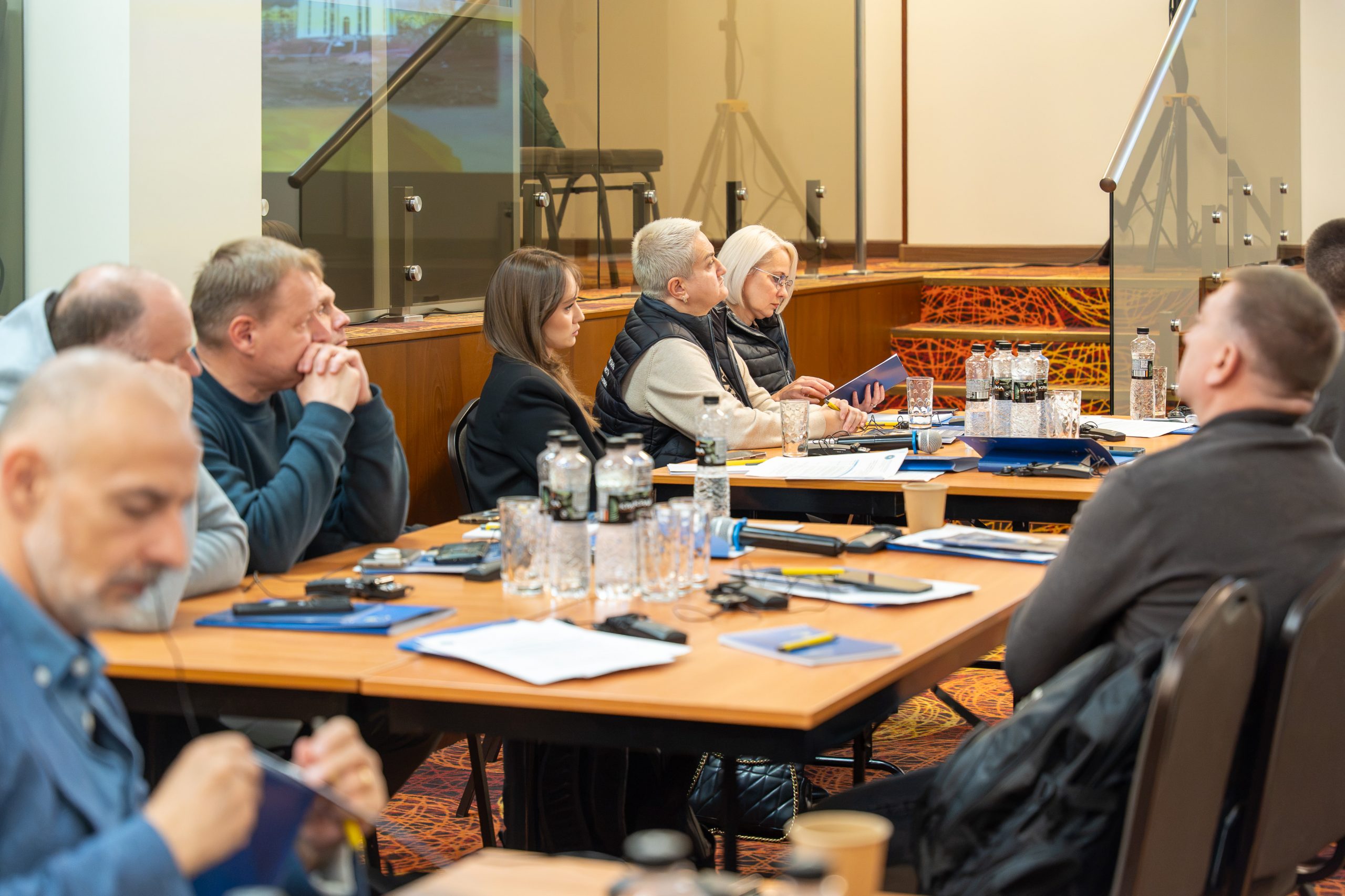
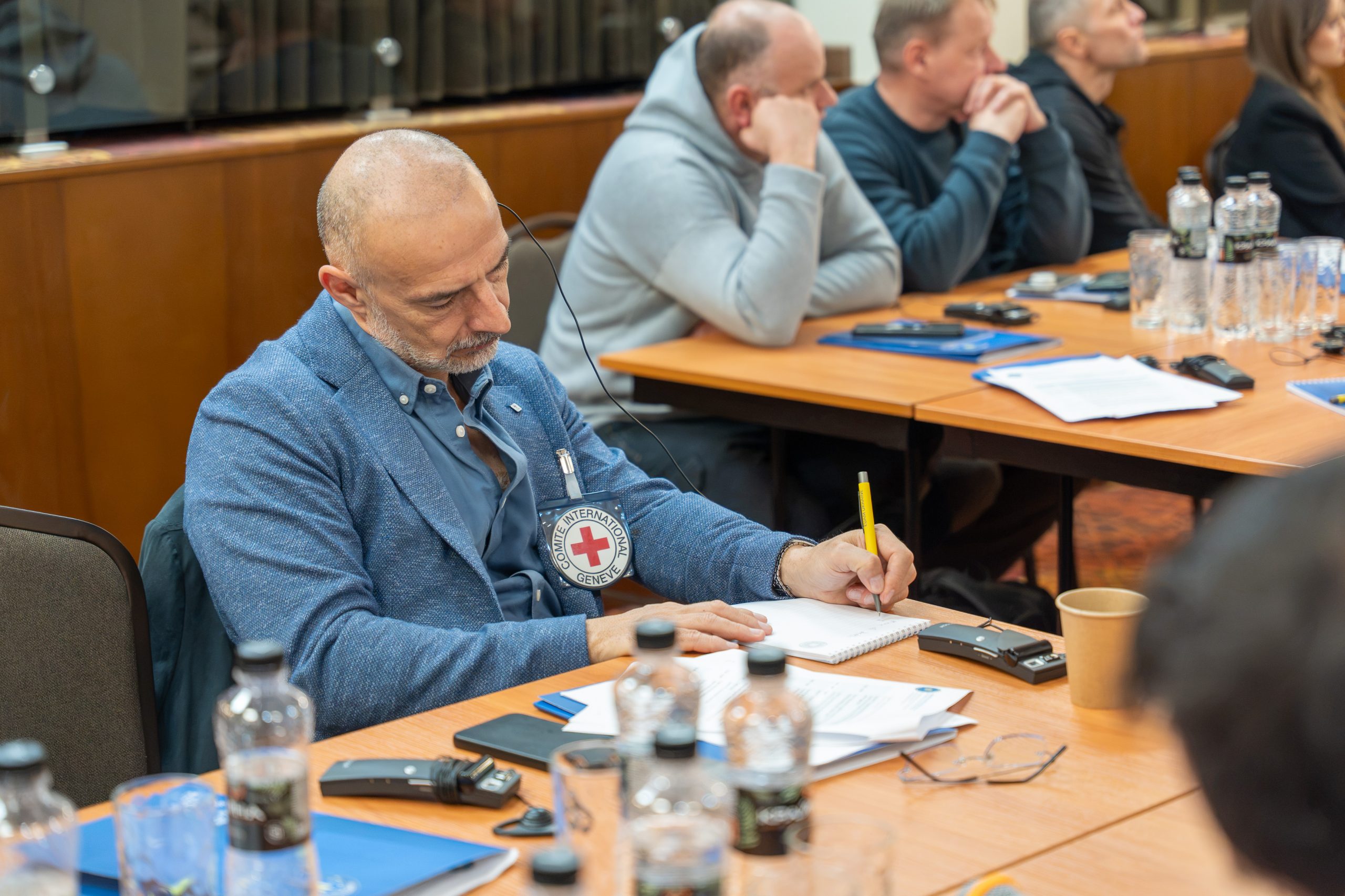
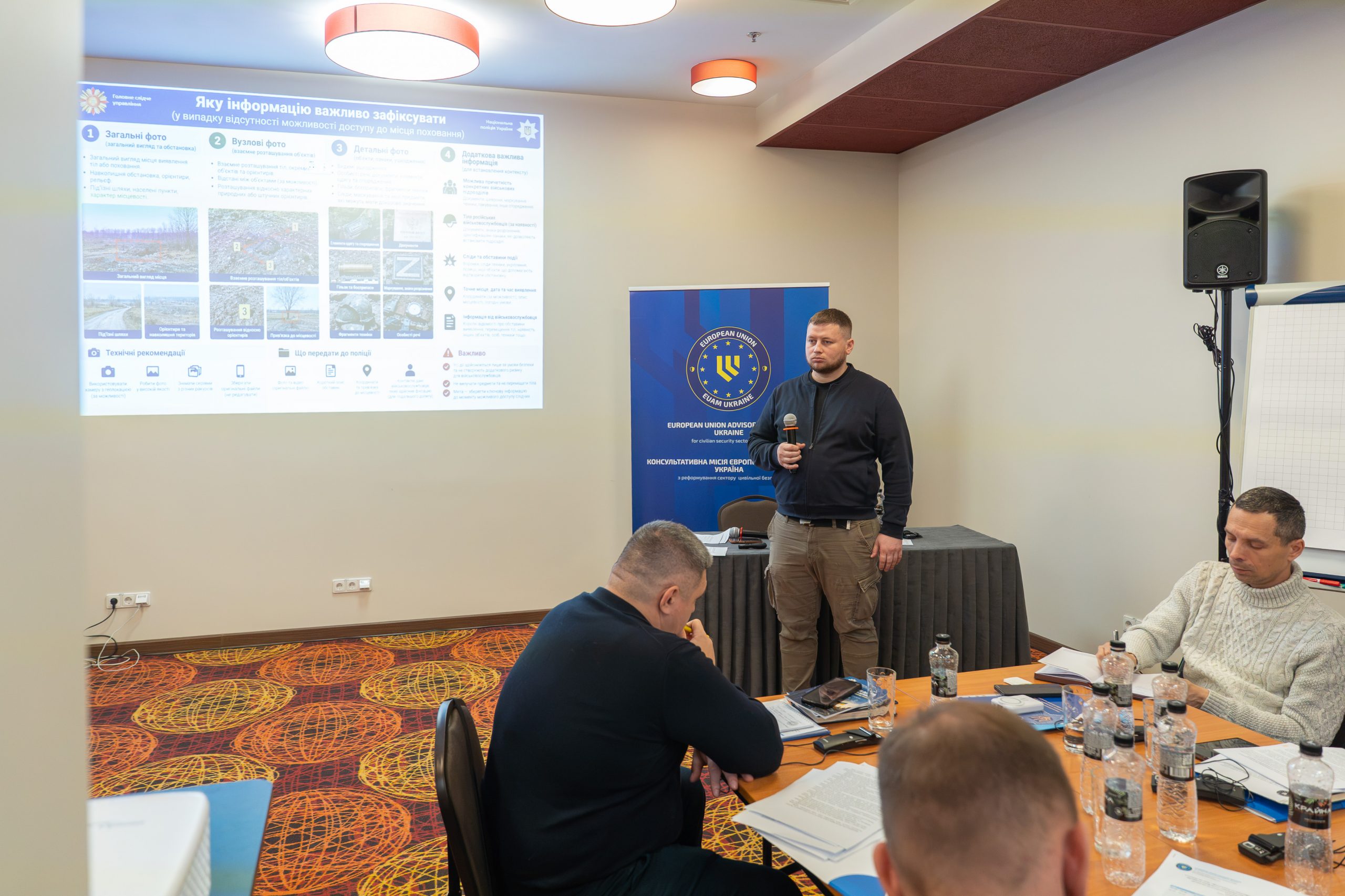
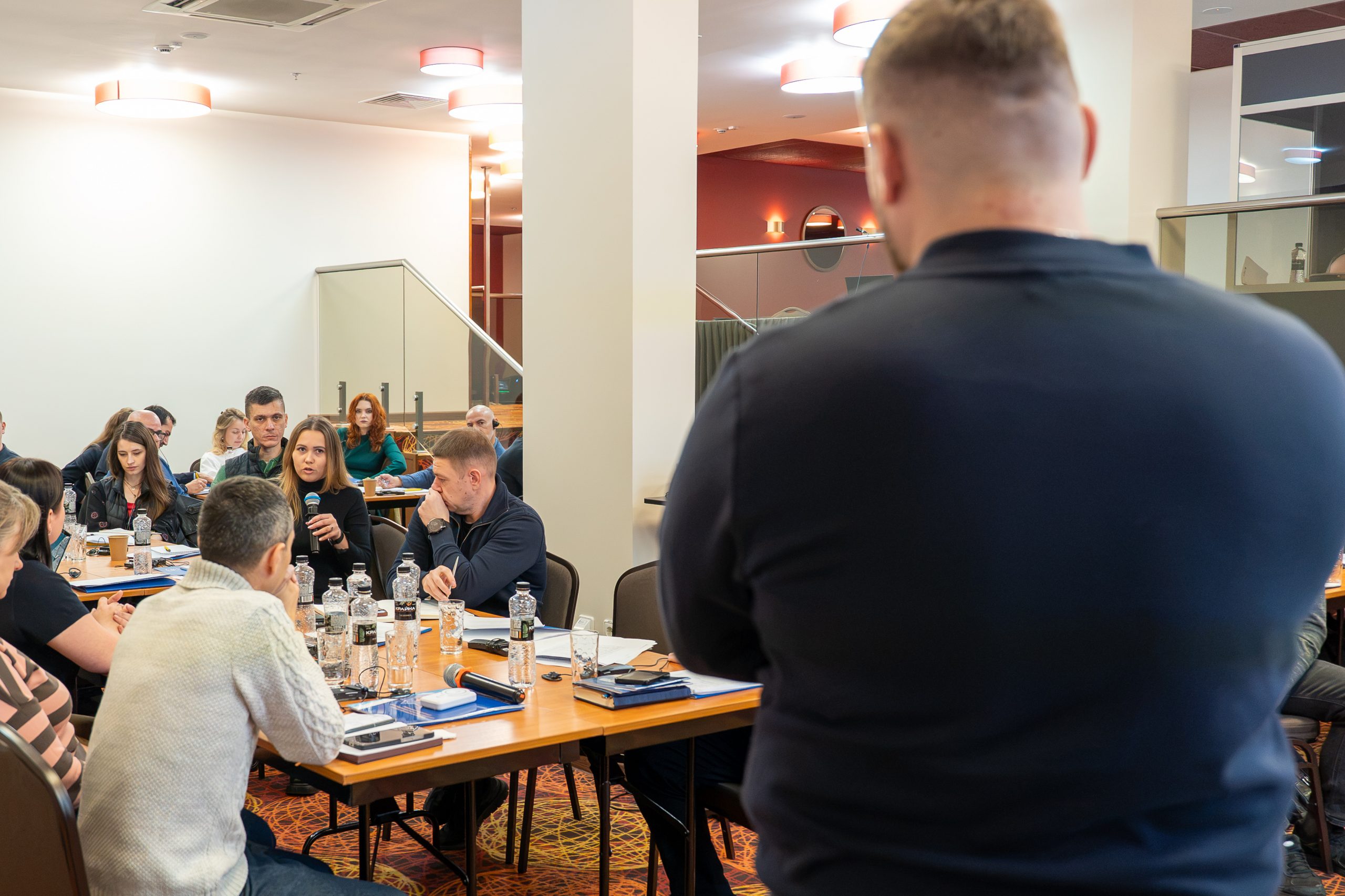
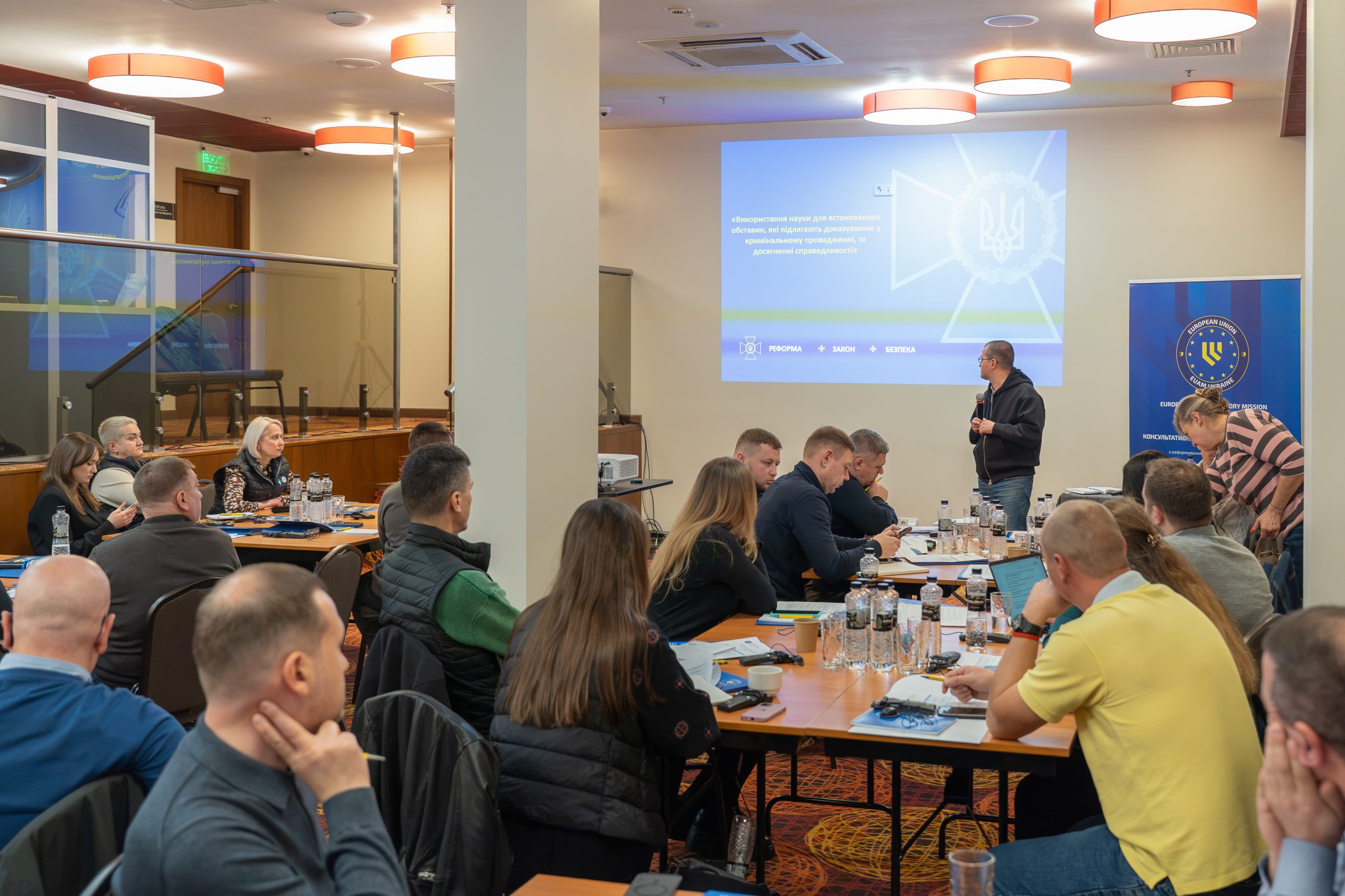
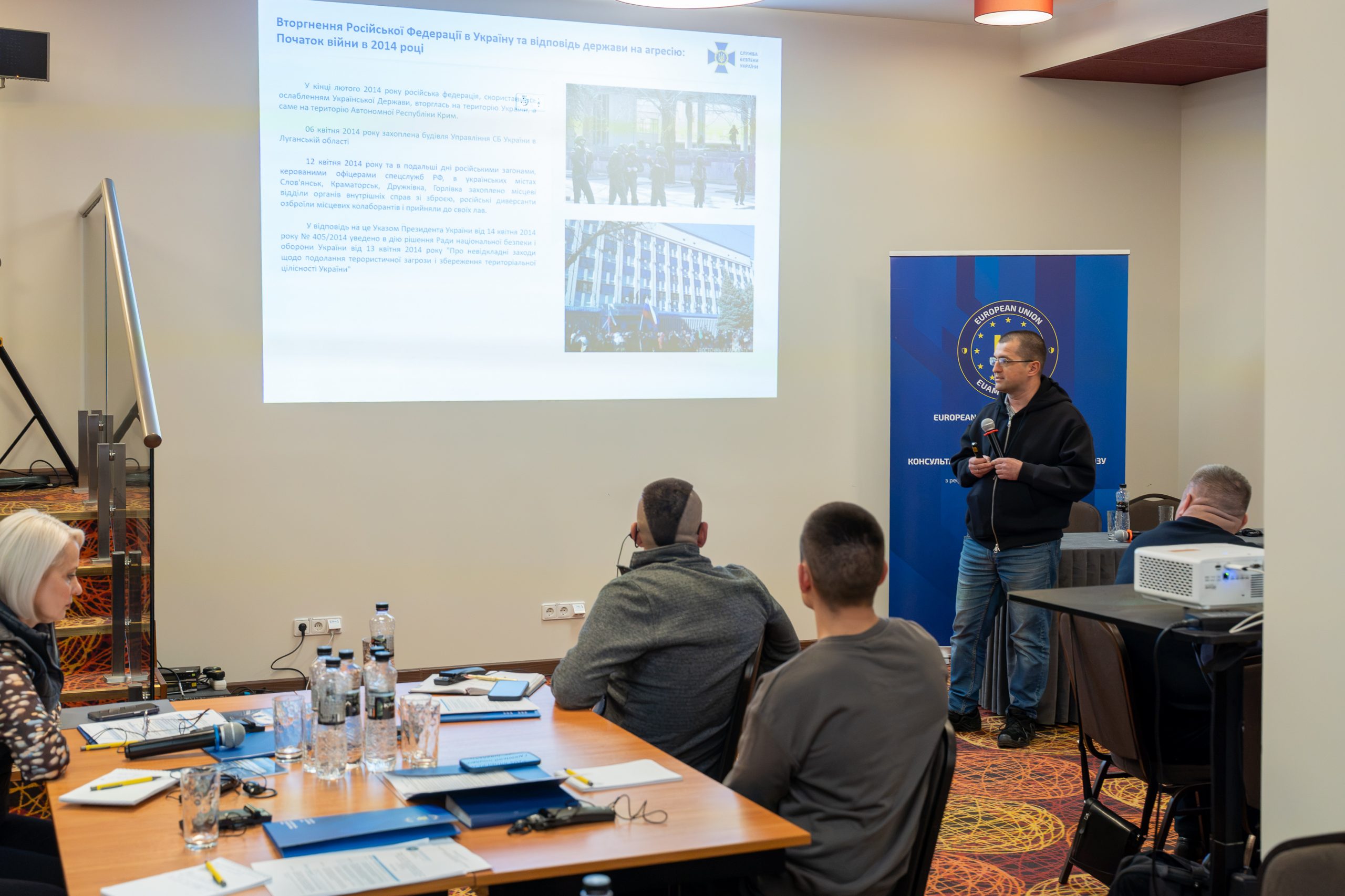
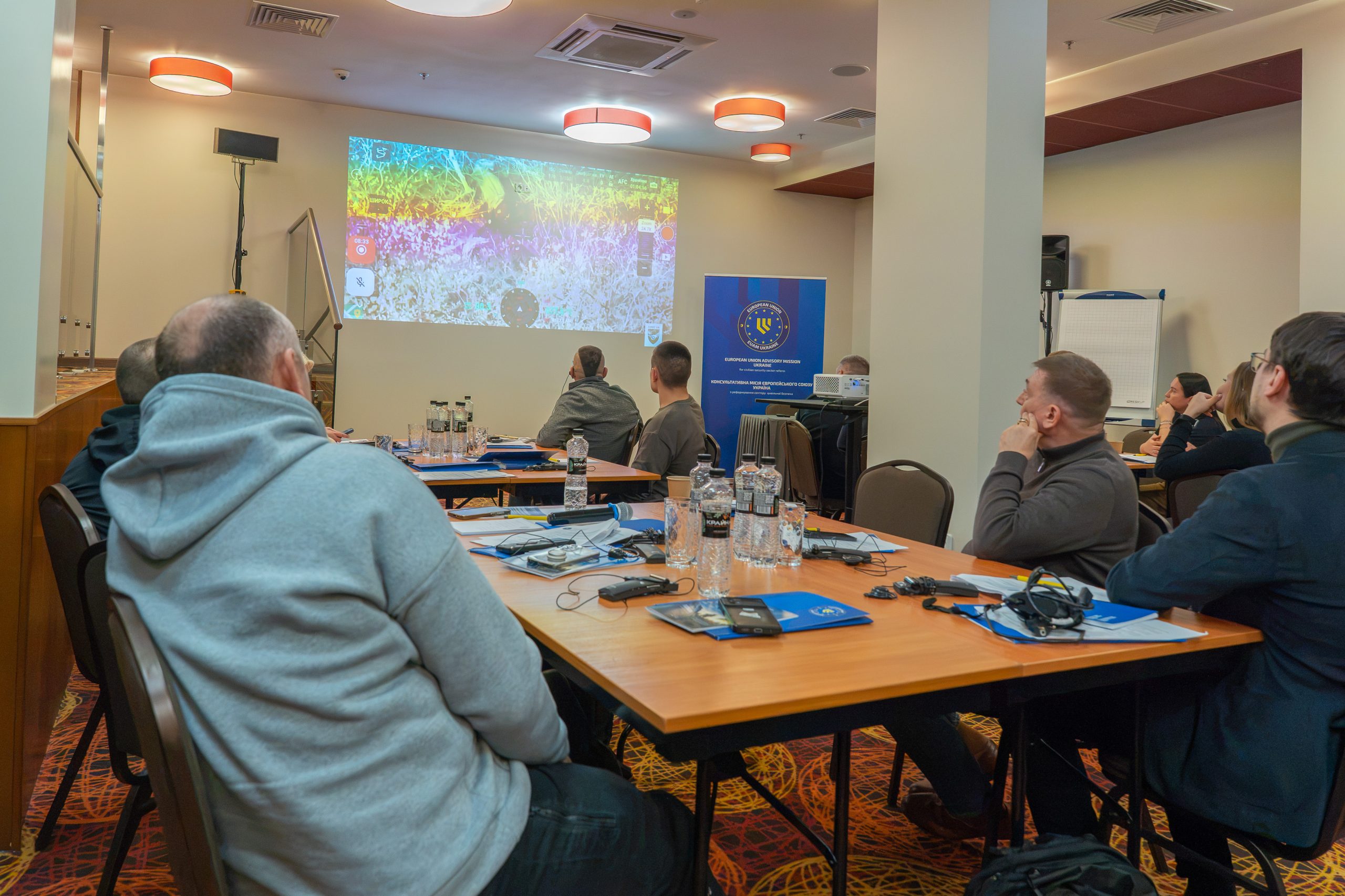
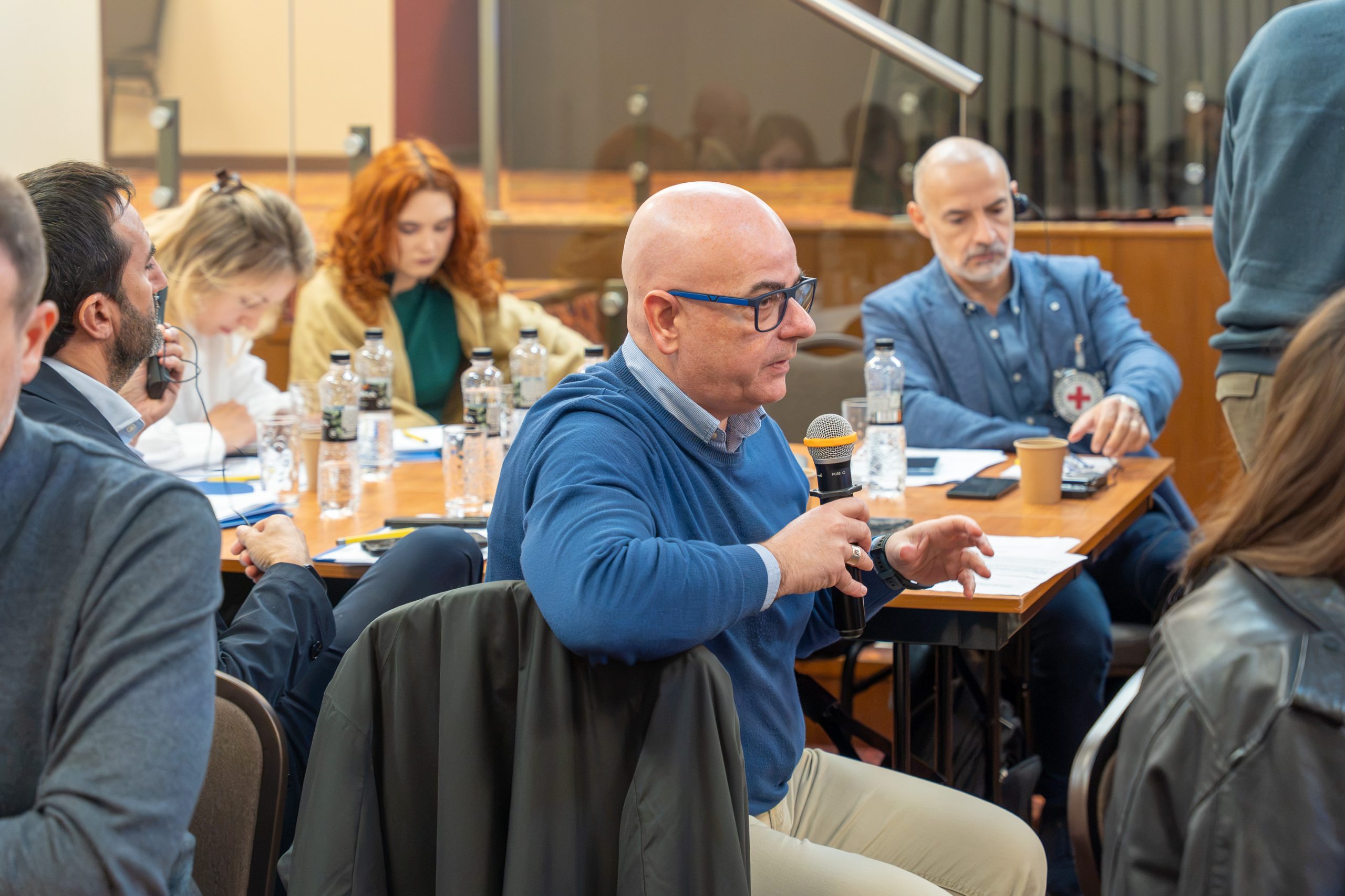
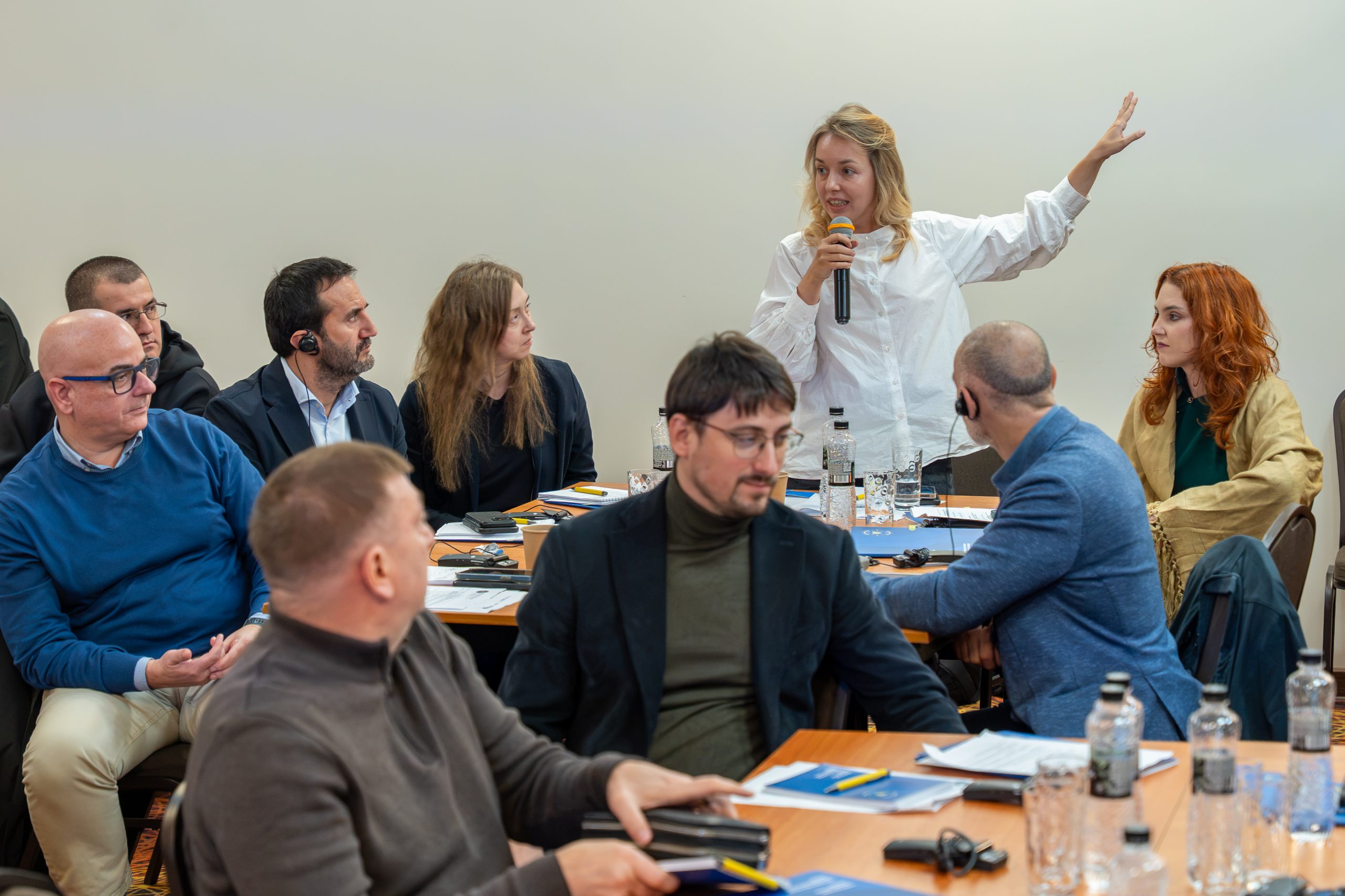
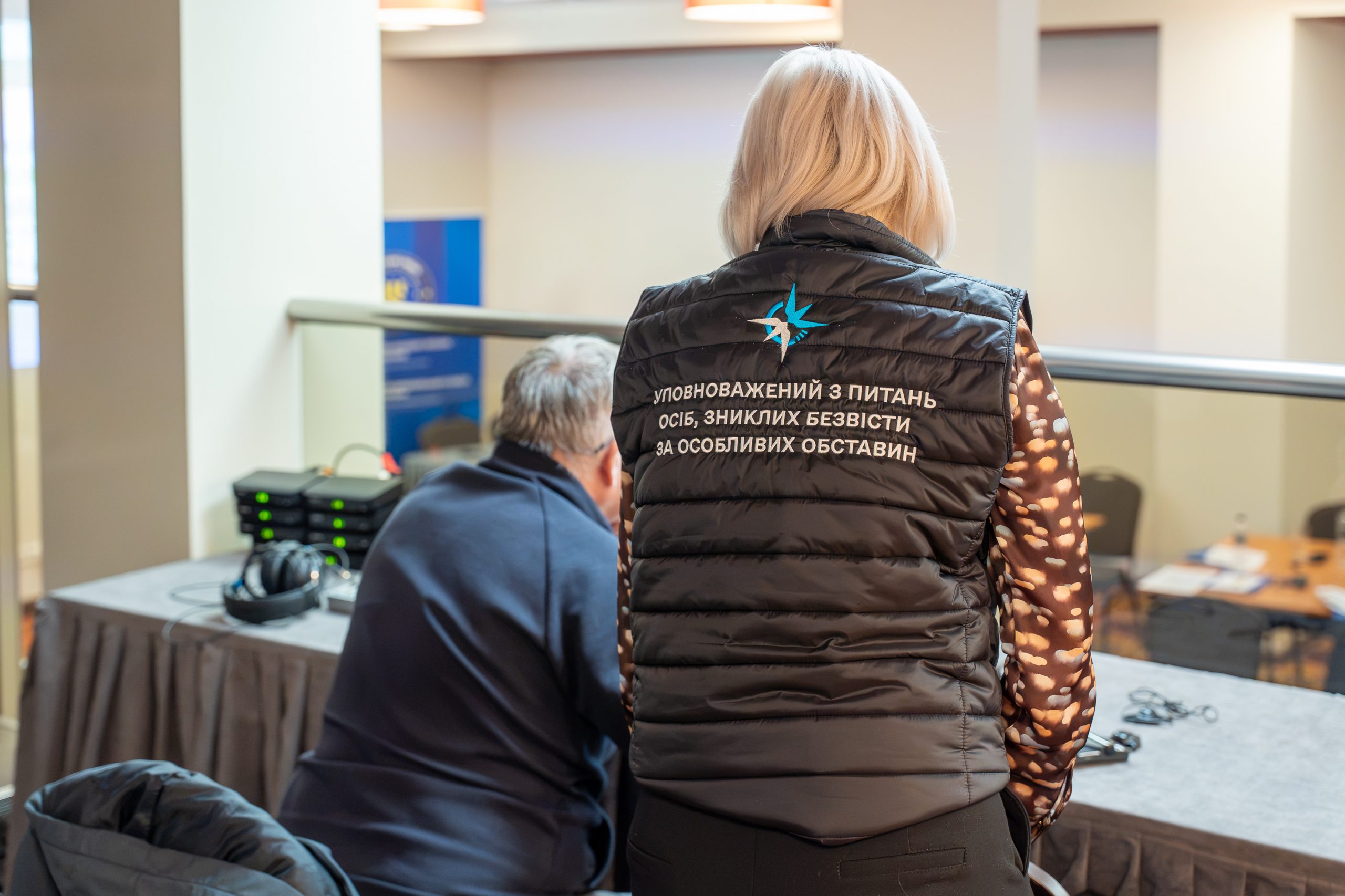














Alongside the investigative questions, participants examined the information needed to identify the deceased and return their remains to their families. Dental records, fingerprints and DNA reference samples from relatives can all contribute to identification. The Office of the Commissioner for Persons Missing under Special Circumstances also presented an existing information management platform and its potential to support data retrieval and coordination.
The workshop built on cooperation developed throughout 2026. In May, an EUAM-organised event examined how information and material held by military institutions could support war crimes investigations. Participants identified the need for clearer procedures, defined responsibilities and more consistent arrangements for transferring material to law enforcement.
A September workshop focused on documentation relevant to investigations into alleged chemical weapons use. It examined how medical findings and other information could be recorded in ways that preserve their value for criminal proceedings.
Together, these activities address different stages of the same challenge, which is ensuring that material gathered during war can contribute to justice. Through sustained support, EUAM Ukraine helps its partners identify gaps in cooperation and develop practical solutions for present and future international crimes investigations and prosecutions.
