
Beyond crowd control: How the Mission is helping Ukraine rethink public order policing
November 18, 2026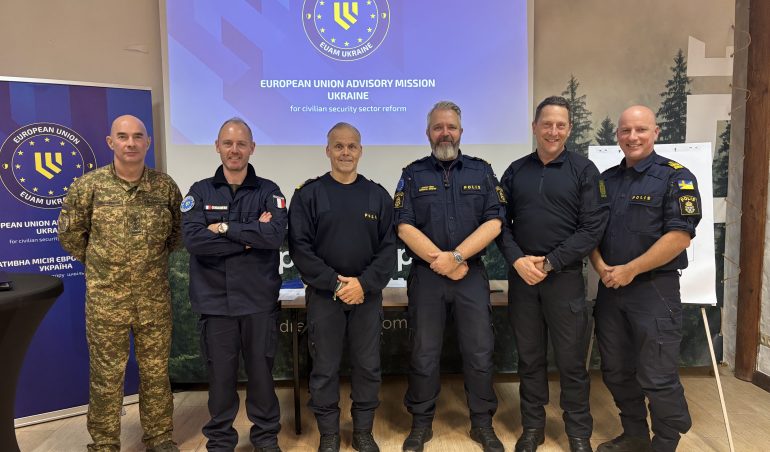
What does it take to manage a large public gathering without compromising people’s right to peaceful assembly? And how can police and National Guard commanders ensure that their decisions prevent tensions rather than escalate them?
These were among the questions explored at a five-day Gold Commander Seminar supported by the European Union Advisory Mission (EUAM) Ukraine in Lviv from 9 to 13 November. The event brought together senior representatives of the National Police and National Guard of Ukraine and international experts to examine how public order operations can be better planned and managed.
“The most important decisions in public order policing are often made long before officers are deployed,” explains Fredrik Age, EUAM Ukraine Adviser on Public Order. “Commanders need to understand the risks, set clear priorities and know how to respond when circumstances change. Good preparation can prevent a difficult situation from becoming a dangerous one.”
At the heart of the seminar was the Scandinavian Model of public order policing. Its central principle is that the police should facilitate peaceful assemblies, rather than simply control crowds. “This means communicating with organisers and participants, understanding the behaviour of different groups and using dialogue to reduce tensions before they escalate,” Fredrik Age says.
The model also encourages commanders to assess risks continuously and tailor their responses to the situation. If a small group becomes violent, for example, the response should target those responsible rather than treat everyone present as a threat. Force should be lawful, necessary and proportionate, with de-escalation remaining a priority.
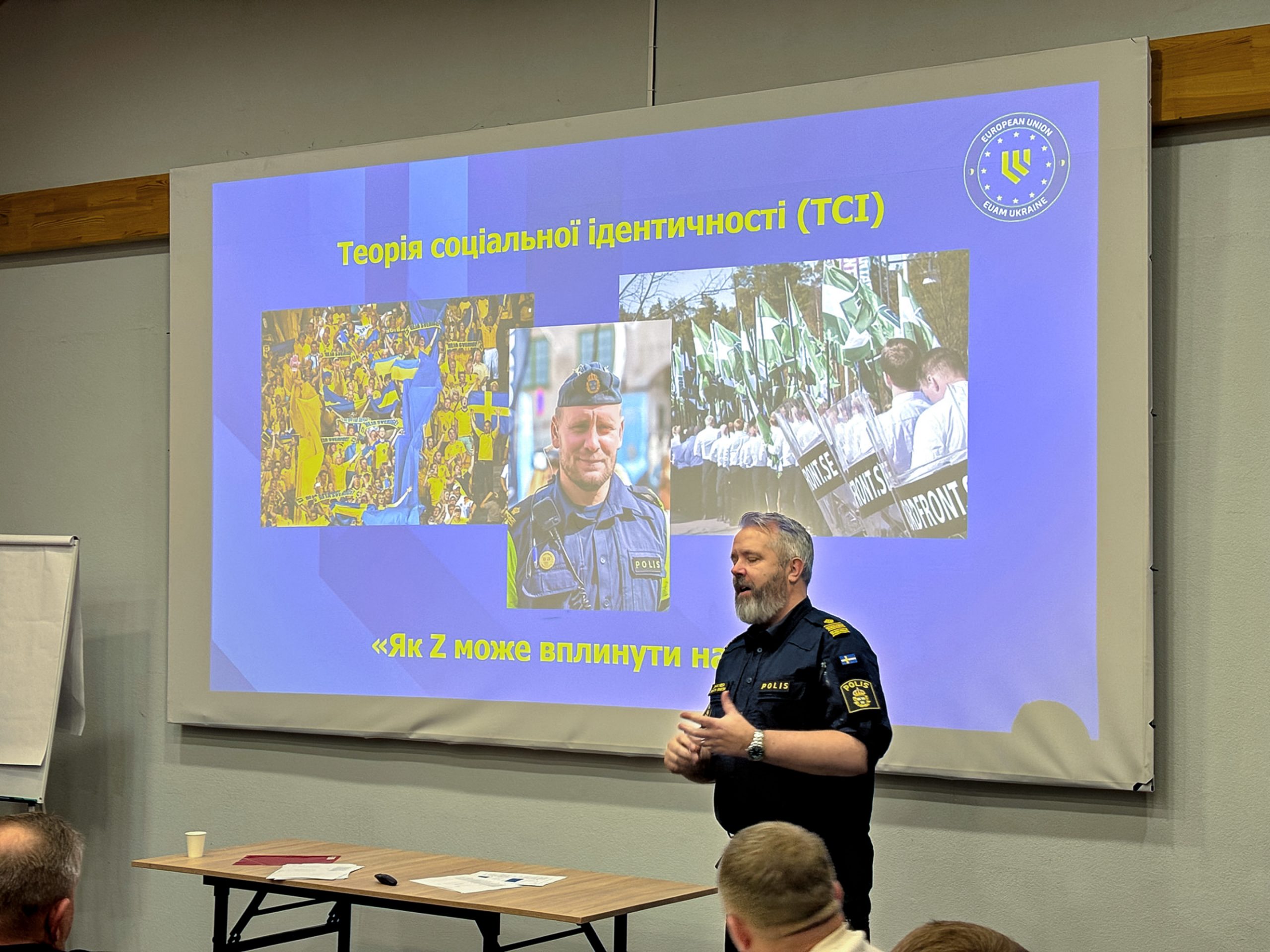
“The Scandinavian approach starts with a simple idea: most people attending a demonstration are there to express their views peacefully,” Age explains. “Our job is to protect their right to do so. That means understanding the crowd, communicating clearly and responding to actual threats rather than assuming that every gathering presents a danger.”
Through expert-led discussions and group exercises, Ukrainian commanders explored how these principles translate into strategic decisions. They examined command responsibilities, planning and risk assessment, including situations where the National Police and National Guard must operate together.
“National Police and National Guard have different mandates, but public order operations may require both institutions,” says Age. “Commanders must understand who is responsible for what, how information flows and how decisions are made. Otherwise, even a well-prepared operation can become difficult to manage.”
Another important issue was the legal framework governing peaceful assemblies. Participants stressed the need for legislation that provides clear guidance to law enforcement while protecting citizens’ constitutional rights.
For EUAM Ukraine, the value of the seminar also lies in what happens afterwards.
“We do not want this knowledge to remain with the people who attended the seminar. The goal is to bring these approaches into Ukrainian police education and leadership training, so that future commanders can apply them in practice,” Age underlines.
Participants expressed a wish for experts from the Scandinavian countries to visit the university and serve as instructors during practical exercises for police cadets. Such follow-up would help Ukrainian institutions develop their own expertise and embed rights-based public order management into everyday professional practice.
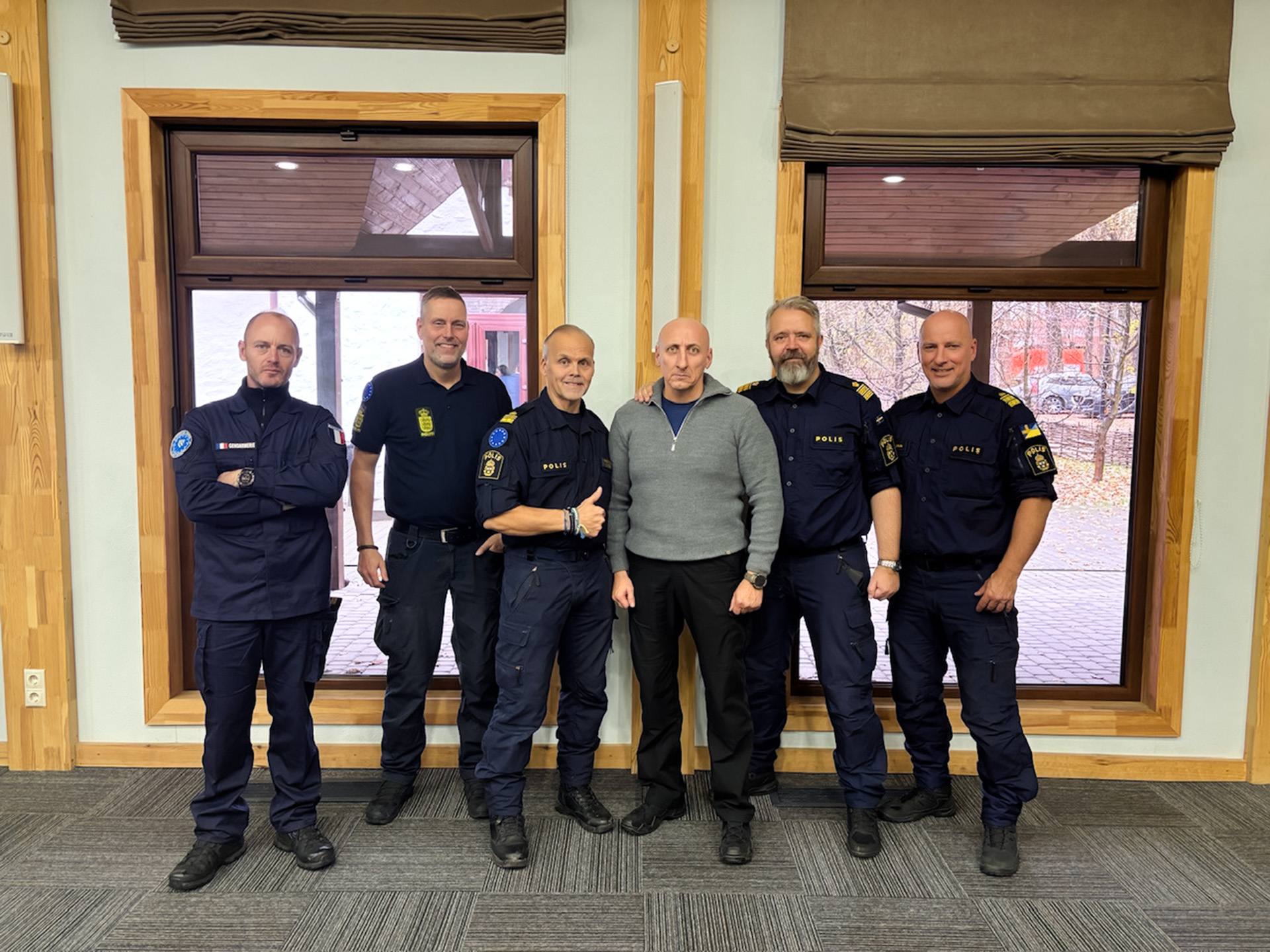
“Ultimately, successful public order policing is not measured by how much force is deployed,” Fredrik Age concludes. “It is measured by whether people remain safe, tensions are managed and fundamental rights are respected. That is the standard we are working towards together with our Ukrainian partners.”
