
Trial Skills: Advancing Consistent Courtroom Standards Through Prosecutor Training
March 03, 2026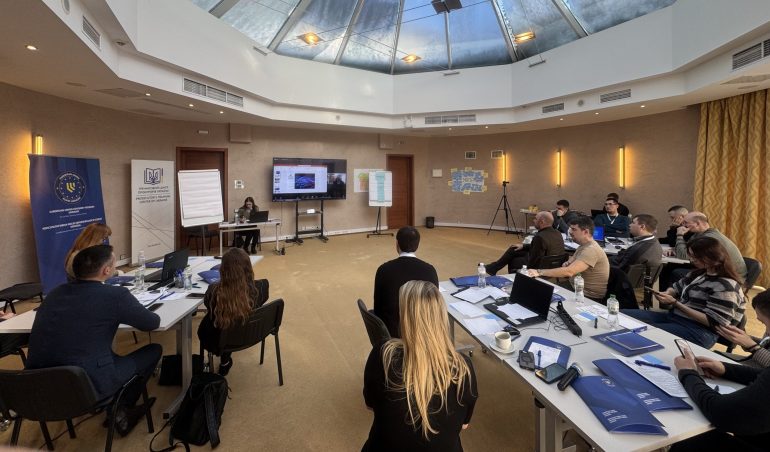
In high-stakes criminal proceedings, outcomes depend not only on facts, but on how clearly and convincingly they are presented in court. Whether addressing corruption, cybercrime or war crimes, prosecutors must argue with precision, question strategically and communicate with authority. When courtroom skills are inconsistent, the quality and credibility of justice may be affected.
To address this challenge, from 17 to 20 February 2026 the European Union Advisory Mission (EUAM) Ukraine, in cooperation with the Prosecutor’s Training Centre of Ukraine (PTCU), organised a four-day Training of Trainers (ToT) course on Trial Skills in the Kyiv region.
The objective was to strengthen practical courtroom competencies and ensure that these standards are replicated nationwide. By preparing prosecutors as trainers, the programme establishes a cascading model, meaning that the knowledge and methodology developed during the course will be systematically passed on to colleagues across all levels of the prosecution service.
Over four intensive days, participants worked on strategic case analysis, presentation of evidence, examination and cross-examination of witnesses, and the structuring of opening and closing statements. The training also covered the effective use of visual aids in court. A dedicated component focused on public communication in a legal context, including verbal and non-verbal techniques, interaction with media and crisis communication.
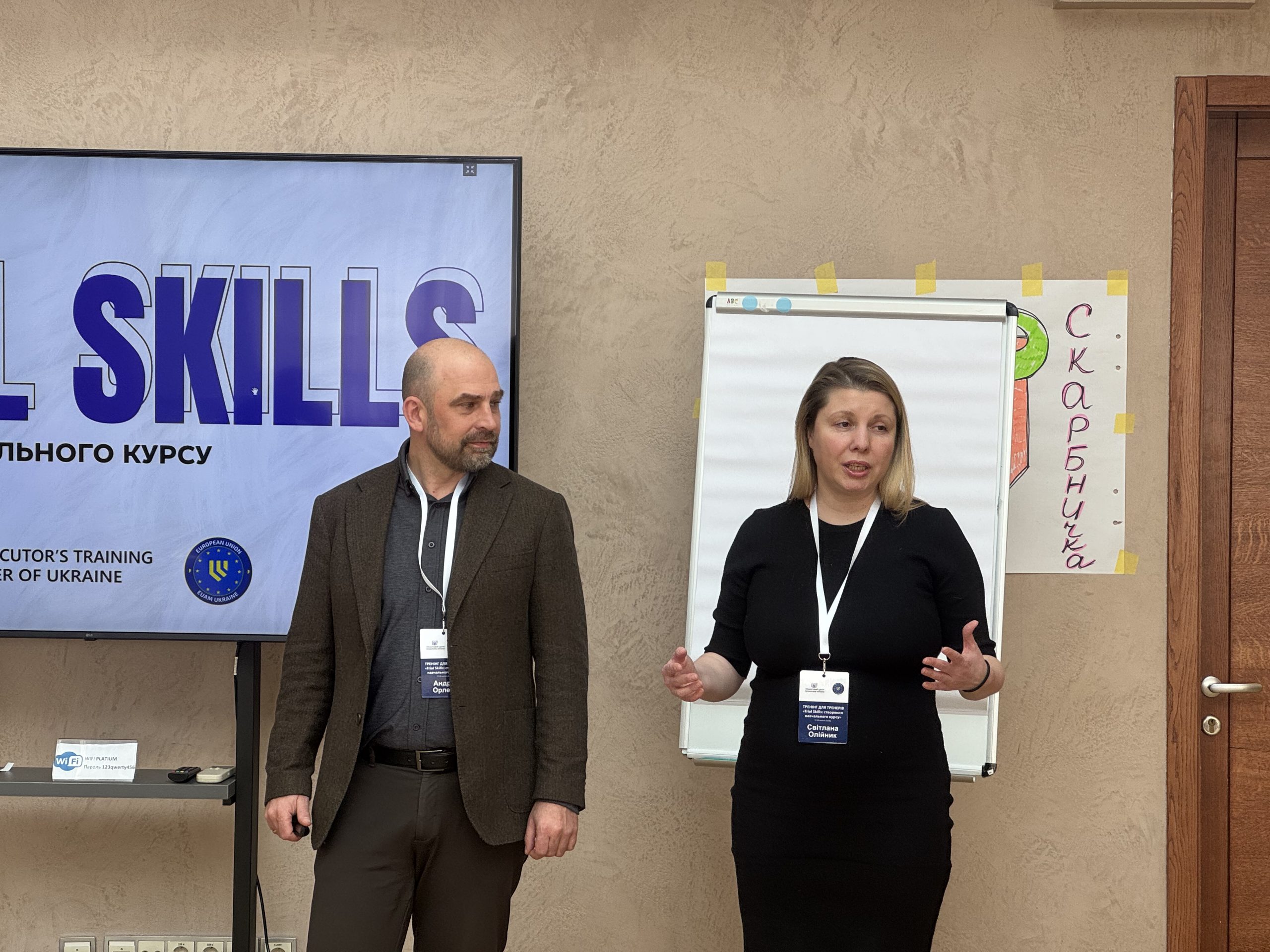
The course builds on the national Trial Skills concept, which aims to modernise approaches to maintaining public prosecution in court and reinforce the professional image of prosecutors as representatives of the state. “The framework sets clear priorities for courtroom practice from structured argumentation to effective examination of witnesses and presentation of evidence,” explained Svitlana Oliinyk, an EUAM Prosecutorial Reform Officer involved in the programme. “By investing in trainers, we are helping to ensure that these standards are consistently applied and sustained across the system.”
Participants emphasised the practical relevance of the course. “Building public trust today is impossible without the professional and responsible public conduct of a prosecutor – both in court and beyond. The knowledge gained during the training is universal and has practical application in daily work and future training activities,” said Oleksandr Chechitko, Head of the Left-Bank District Prosecutor’s Office of the city of Dnipro.
Echoing this view, Olena Shvydka, Prosecutor at the Prosecutor General’s Office, added: “Every appearance of a prosecutor in court reinforces the authority of the prosecution service, shapes its collective image and gives citizens a sense of fair and understandable justice.”
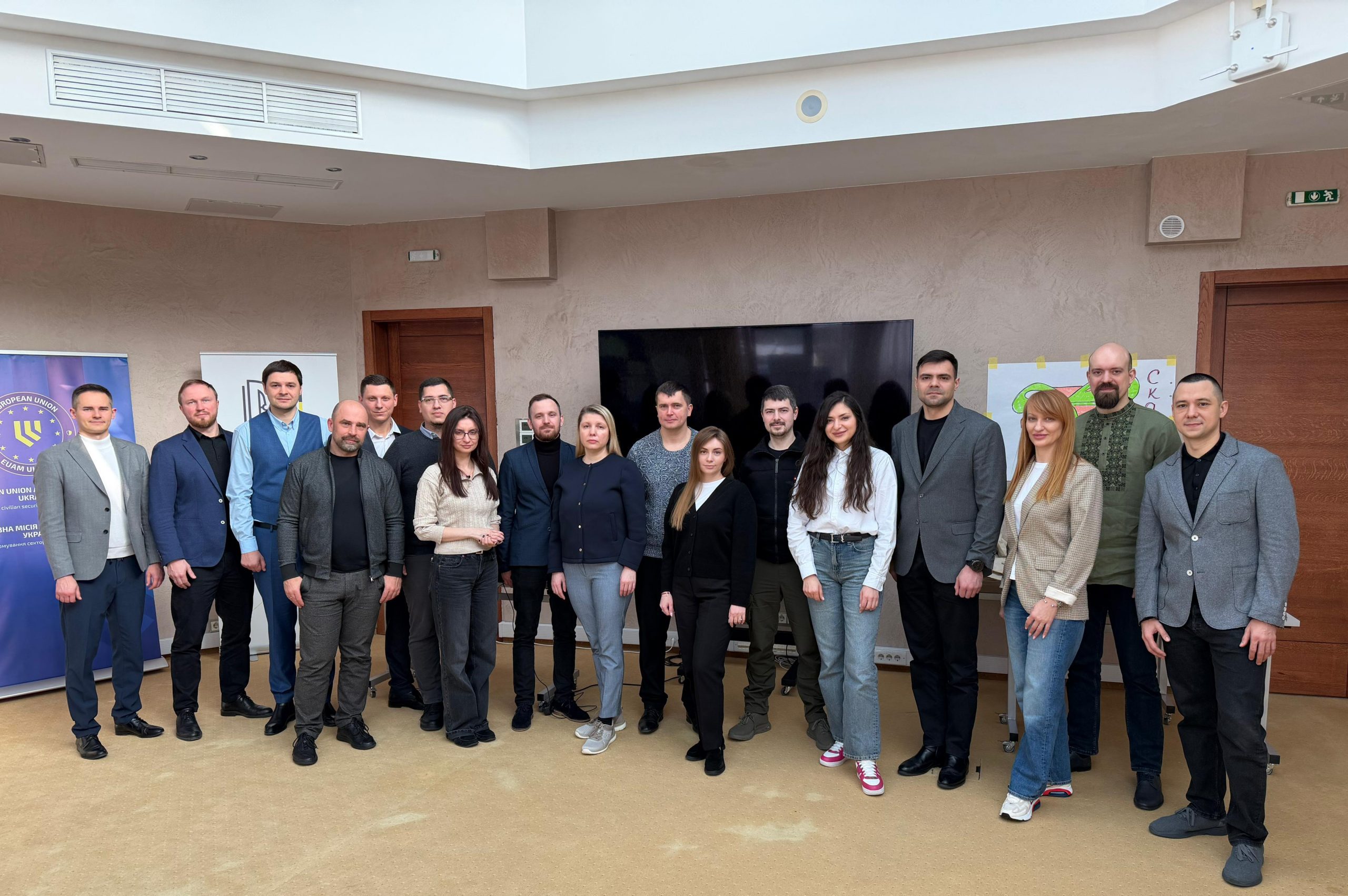
By embedding the updated curriculum into its official training catalogue and developing a network of certified trainers, the Prosecutor’s Training Centre, with the support of EUAM Ukraine, is strengthening its institutional capacity. The cascading approach ensures that the expertise developed during these four days will extend well beyond a single cohort, supporting more consistent courtroom practice and reinforcing confidence in Ukraine’s prosecution service.
