
Digital Clues at the Border: EUAM Supports SBGS in Digital Forensics
June 08, 2026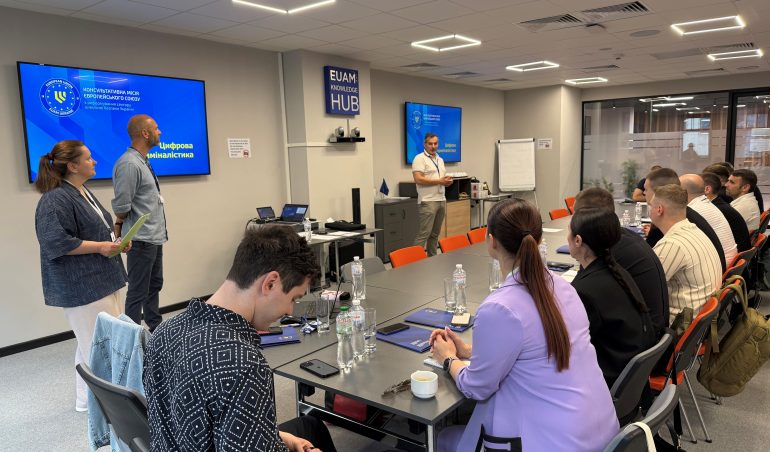
A phone, a laptop or a simple online trace can now tell investigators as much as a witness statement or a seized document. As criminal networks become more digital, border guards need the skills to identify, preserve and analyse digital evidence.
On 26–27 May 2026, EUAM Ukraine organised a workshop on digital forensics for the State Border Guard Service of Ukraine at the EUAM Knowledge Hub in Kyiv. The training brought together officers working in criminal analysis, operational-search activities and internal security.
“Criminal groups are increasingly using digital tools to organise, conceal and coordinate illegal activity. Strengthening digital forensic capacity helps border guards detect these patterns earlier, support investigations more effectively and respond to threats that no longer stop at the physical border,” said Johan Mårtensson, EUAM Adviser on Organised Crime and Smuggling, who led the workshop together with experts from the Swedish Police Authority, who joined the training online.
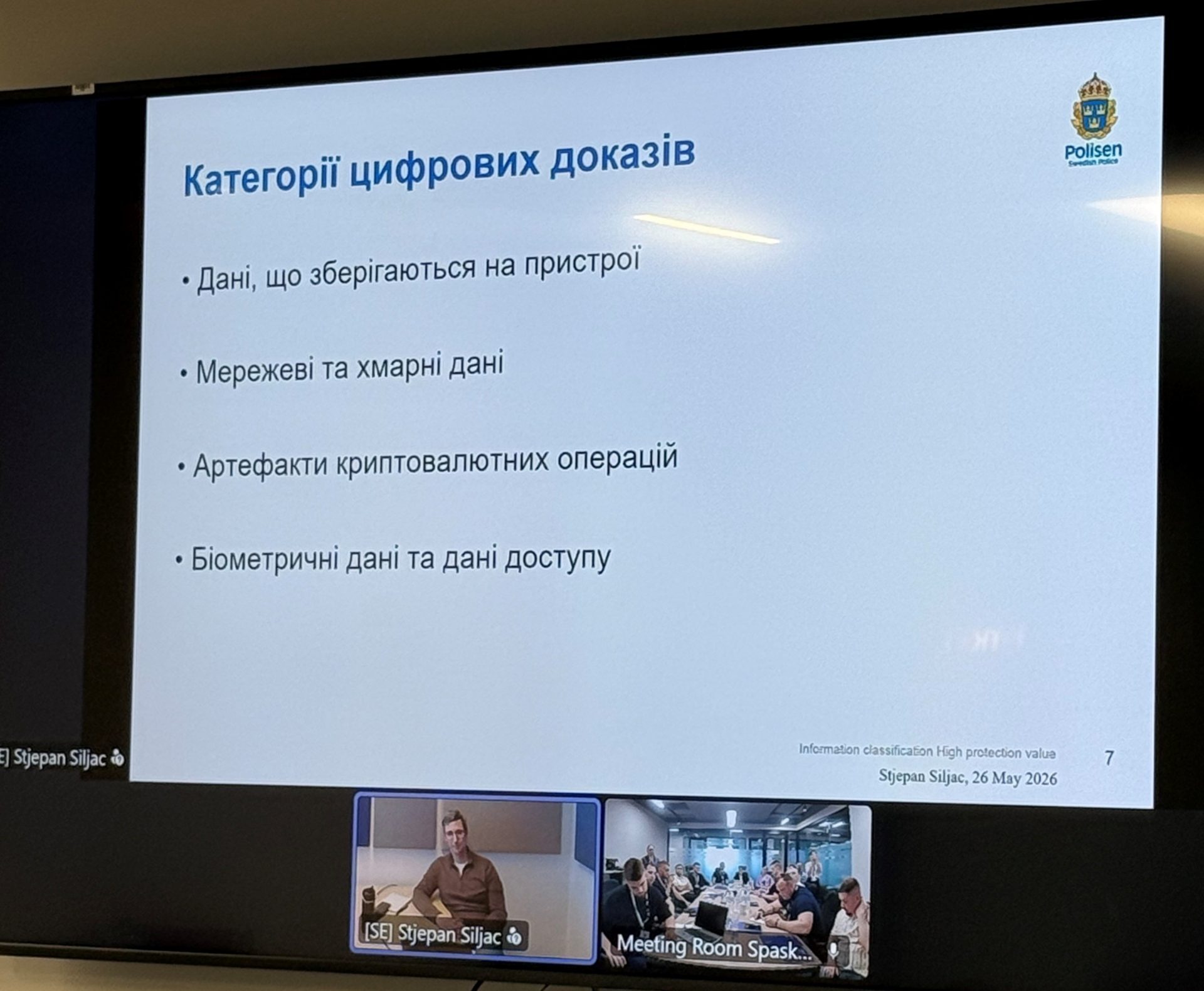
The workshop focused on how digital evidence can support investigations into smuggling, trafficking, cyber-enabled crime and other cross-border offences. Participants worked through the basics of digital forensics, chain of custody, digital traces, user and network analysis, and information sharing at national and international levels.
Practical examples and simulation exercises helped participants test how digital information can be collected, protected and used in criminal investigations. The workshop also gave officers space to compare experience and discuss challenges they face when working with digital material.
