
EUAM Ukraine and National School of Judges pilot new course on national security cases
May 27, 2026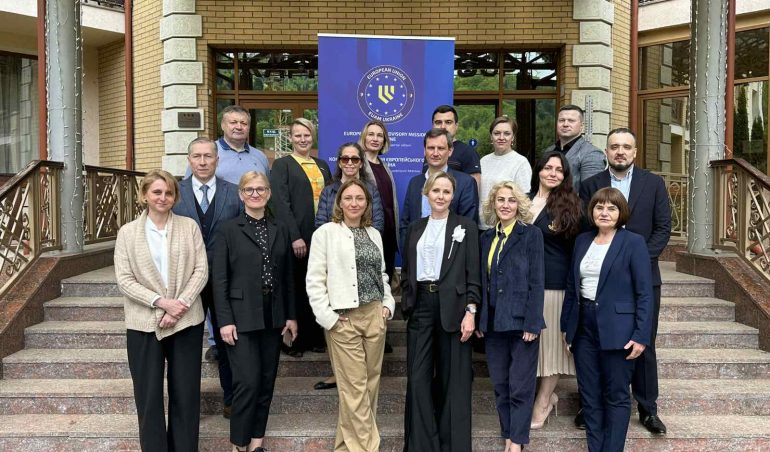
Russia’s war has brought Ukrainian courts face to face with cases that test both national criminal law and international standards of justice. Criminal proceedings related to collaborative activities are among the most complex. Judges must distinguish between different legal qualifications, assess evidence carefully, and uphold fair trial guarantees even under wartime conditions.
To support Ukrainian partners in this work, the European Union Advisory Mission (EUAM) Ukraine and the National School of Judges (NSJ) of Ukraine jointly piloted a new three-day Training-of-Trainers course on “Trial Criminal Proceedings in Cases of Crimes Against the Foundations of National Security: Collaborative Activities.”
Held from 13 to 15 May, the course brought together 15 participants, including NSJ trainers and judges from liberated and adjacent territories.
The course addressed the substantive and procedural aspects of criminal proceedings concerning offences against the foundations of Ukraine’s national security. Participants worked through the legal nature of collaborative activities, their distinction from war-related crimes, evidentiary standards, in absentia proceedings, preventive measures, and the preparation of well-reasoned court decisions.
The programme also placed these cases in the broader context of occupation, international humanitarian law, and international human rights law. It examined different forms of collaborationism, including administrative, economic, educational, political, military, and information-related offences.
Rather than relying only on lectures, the training combined expert input with moderated discussions, practical tasks, and case-based exercises. Participants practised how to qualify offences, assess evidence, evaluate court decisions, and apply international standards in proceedings conducted without the suspect’s presence.
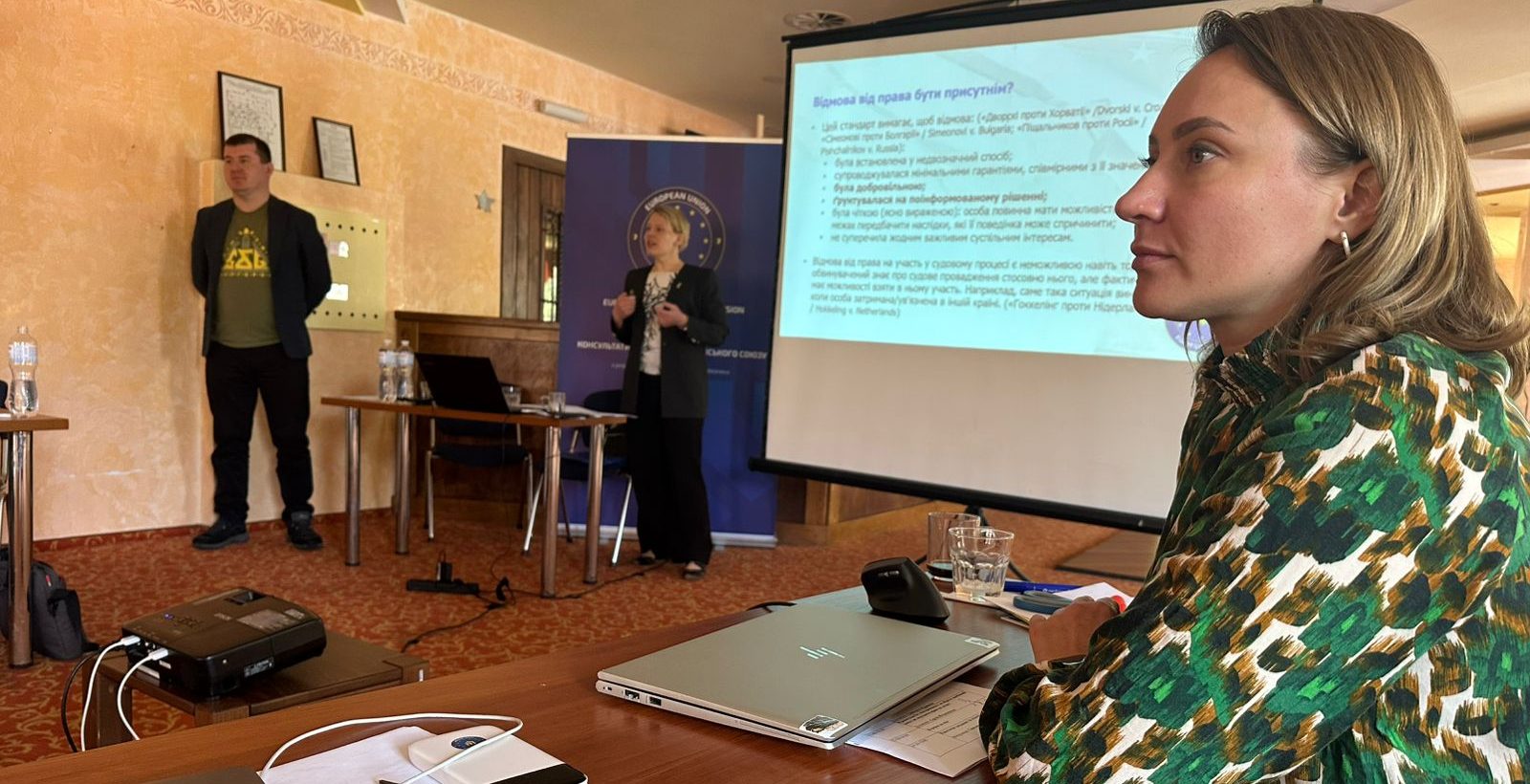
“For judges working in a country at war, these issues are among the most pressing. They shape the ability of the justice system to respond to crimes committed in the context of Russia’s aggression, while protecting the rights of all parties and maintaining public trust in the courts,” said Mari-Ann Roos, Senior Adviser on Legal Reform at EUAM. “In this context, EUAM’s support for such initiatives contributes to strengthening judicial capacity in one of the most sensitive areas of wartime justice,” added Ivanna ILlchenko, EUAM’s Legal Reform Officer.
The training was the first course of this kind delivered jointly by EUAM Ukraine and the NSJ. Developed within a dedicated working group, it helped test and finalise a practical three-day Training-of-Trainers programme that can later be used to strengthen judicial training across Ukraine.
