From Lisbon to the Black Sea: European lessons for Ukraine’s maritime coordination
June 15, 2026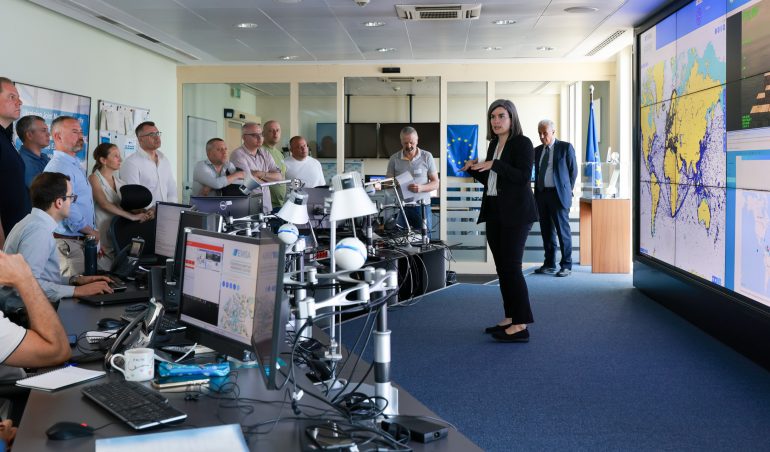
How can different agencies protect the same maritime space when each of them has its own mandate, information and procedures? And how can they coordinate effectively when no single body has direct authority over the others?
These questions were at the center of an EUAM-supported study visit to Lisbon, where Ukrainian representatives working on the establishment of the future Joint Maritime Security Centre (JMSC) explored European approaches to maritime coordination, information sharing and maritime governance.
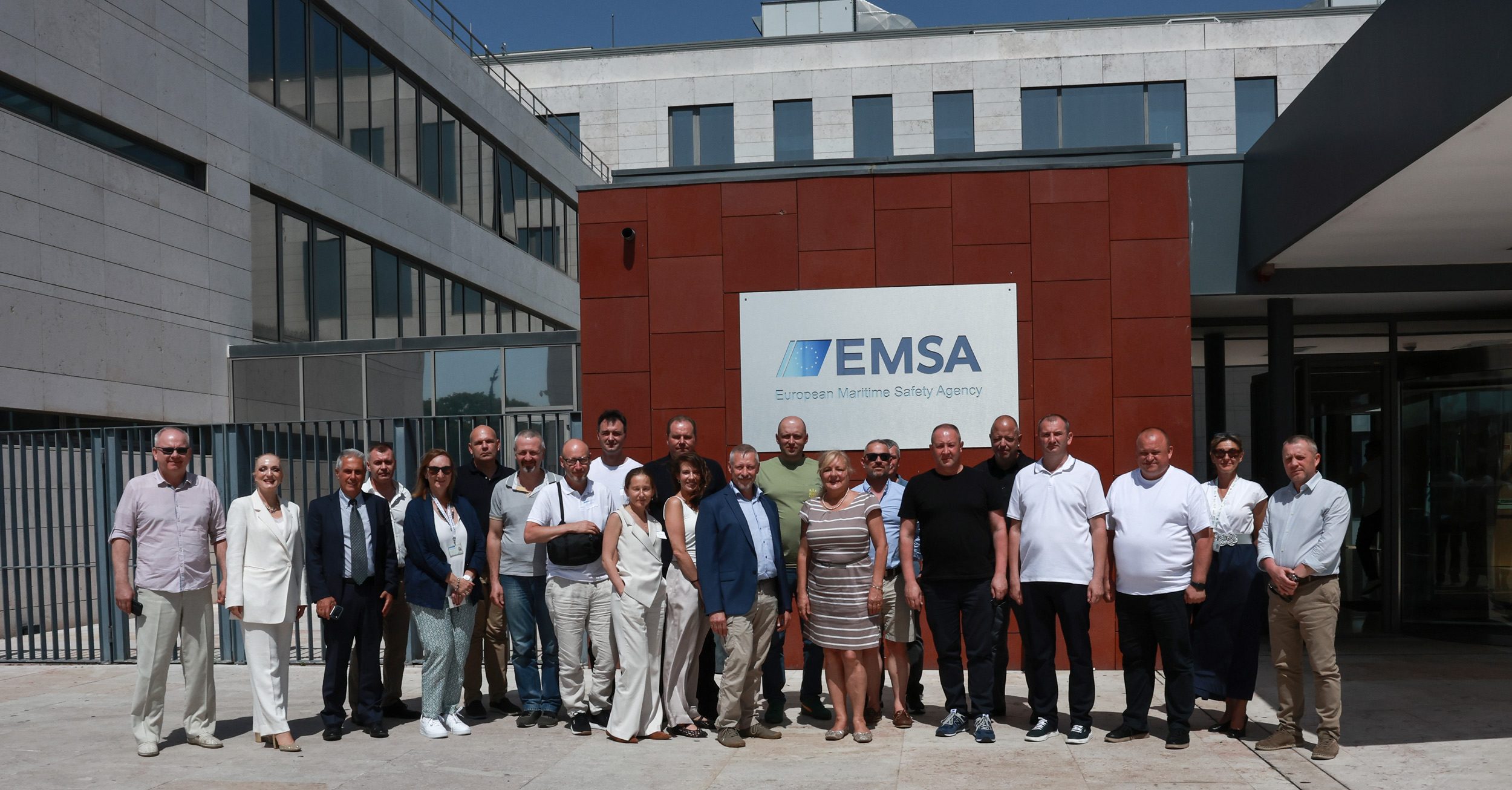
From 25 to 27 May, the Ukrainian delegation, which included representatives of the Ukrainian Navy, the State Border Guard Service of Ukraine, the Maritime Guard, the Maritime Search and Rescue Service, and EUAM, visited the Maritime Analysis and Operations Centre (Narcotics) (MAOC(N)), the Portuguese Navy Headquarters and the European Maritime Safety Agency. The visit offered a practical look at how European partners bring institutions together, build trust and use shared information to respond to maritime security challenges.
At MAOC(N), participants saw how military, law enforcement and analytical experts work together to support the fight against drug trafficking in the Atlantic and Mediterranean regions. The centre does not conduct operations itself, but helps member states exchange information, analyse risks and decide which country is best placed to act.
According to Mykola Syrynskyi, Deputy Head of the Regional Directorate of the Maritime Guard of the State Border Guard Service of Ukraine and one of the participants of the study visit, such exchanges help Ukrainian agencies better understand how maritime coordination works in different European countries and how this experience can be adapted to Ukraine’s needs.
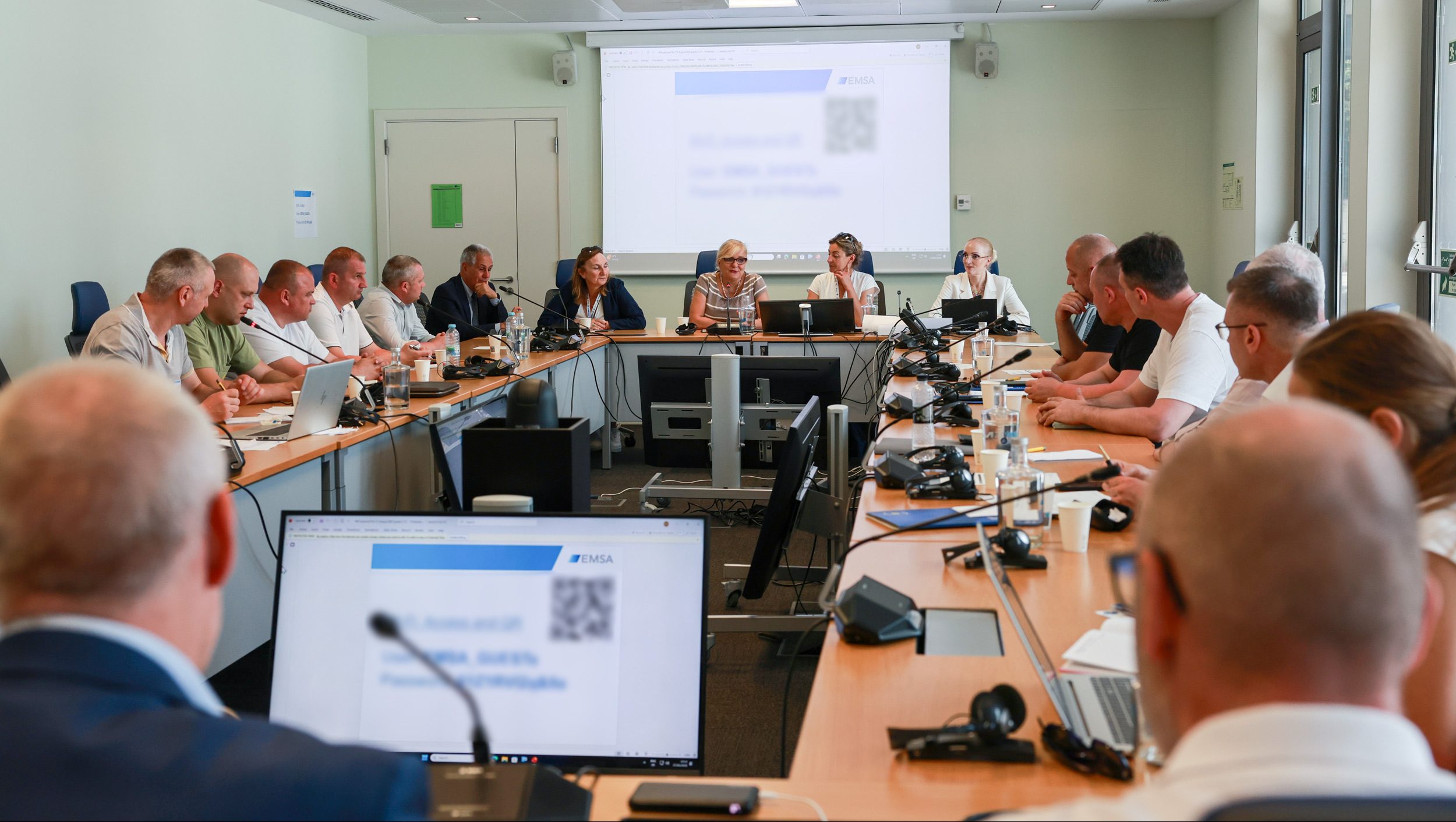
“We are looking at different models implemented in European countries, how they work in practice and who is responsible for different coast guard functions. This helps us develop our own Ukrainian model, based on the experience of our European partners, so that Ukraine can fully perform state functions at sea in line with European Union standards,” said Mykola Syrynskyi.
The delegation also learned about Portugal’s integrated “dual-use” maritime model, where coast guard functions are shared between several institutions, while the Navy and the National Maritime Authority closely cooperate and share personnel, vessels, training and infrastructure. At EMSA, participants explored EU tools such as THETIS, SafeSeaNet and CleanSeaNet, which support risk assessment, vessel traffic data exchange, pollution detection and Maritime Domain Awareness.
For Syrynskyi, the visit also showed why coordination between institutions is essential for Ukraine’s maritime security. “Coordination between all agencies is very important because it allows the state to use the full potential of all public authorities to perform different functions at sea. The main goal is to ensure the security of Ukraine and, in the future, the external borders of the European Union. This can only be done by coordinating joint actions between different agencies,” he noted.
For Stefan Sivaro, Head of Maritime at EUAM, the visit was important because the JMSC is still in its development phase and remains a new concept in Ukraine’s maritime security environment. The aim was not to present one ready-made model, but to show how different European countries and institutions address similar challenges in different ways.
“There is no single solution. The solution must match national legislation, culture and resources, as well as EU standards. By exposing Ukrainian maritime law enforcement agencies and the Navy to different European models, we want to give them the confidence to seek a genuine Ukrainian solution that matches Ukraine’s needs and challenges,” said Stefan Sivaro.
Across all three visits, one message was clear: effective maritime security depends not only on technology, but also on trust, common procedures, shared situational awareness and regular information exchange. The visit also underlined the importance of using national resources efficiently, avoiding duplication and ensuring clear coordination when working with European partners.
Following the visit, EUAM will continue supporting Ukrainian partners in the development of the future Joint Maritime Security Centre, including through work on developing the training-system and Standard Operating Procedures, training on operational coordination and information sharing and specialised workshops on the different Coast Guard Functions. suspicious maritime behaviour and trafficking indicators.
