
Modern Tools for Modern Challenges: Law Enforcement Communicators Explore AI in Odesa
December 26, 2025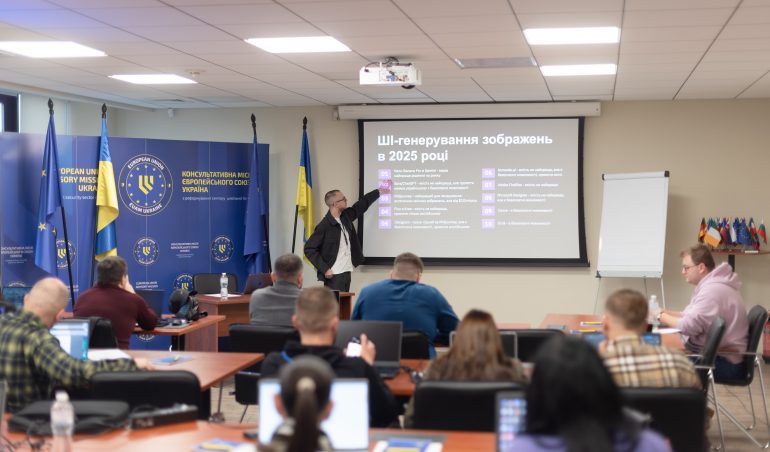
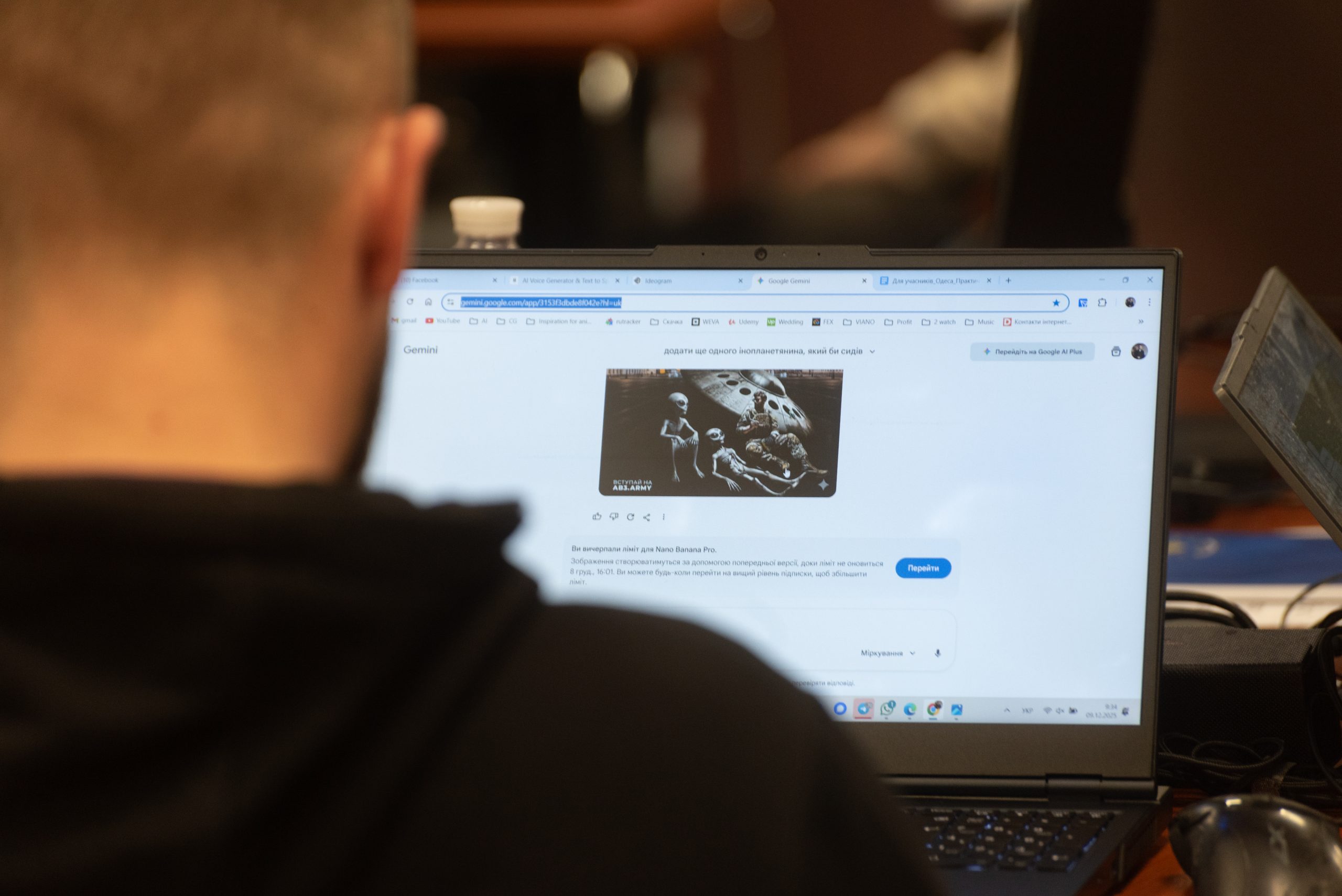
EUAM Ukraine organised a two-day practical workshop on AI for photo and video content creation for law enforcement communication professionals. The training took place on 8–9 December 2025 at the EUAM Ukraine Knowledge Hub in Odesa and focused on introducing a range of accessible AI tools and technologies relevant to daily communications work.
Nearly 25 communication professionals from the National Police of Ukraine (NPU), the State Border Guard Service of Ukraine (SBGS) and the Office of the Prosecutor General (OPG) participated in the workshop. The participants came from Odesa, Mykolaiv, Kherson and Kirovohrad regions, underlining the importance of strengthening contemporary communication capacities at regional level.
The training was delivered by experienced AI and media trainer Oleksii Minakov, who guided participants through a highly practical programme covering AI tools for image, video and audio creation. The agenda was designed to enable participants to practically test new tools and better understand how they can support everyday communication tasks, particularly in relation to visual content. Artificial intelligence is rapidly becoming an integral part of communications work, offering new opportunities to create engaging visual content, generate ideas more efficiently and optimise routine tasks. Beyond content creation, understanding how AI tools work also helps communicators recognise AI-generated content used in disinformation, supporting more informed and responsible responses in the information space. Ethical considerations related to the use of AI, including bias, consent and legal responsibilities, were also addressed during the workshop, with a particular focus on the law enforcement context.
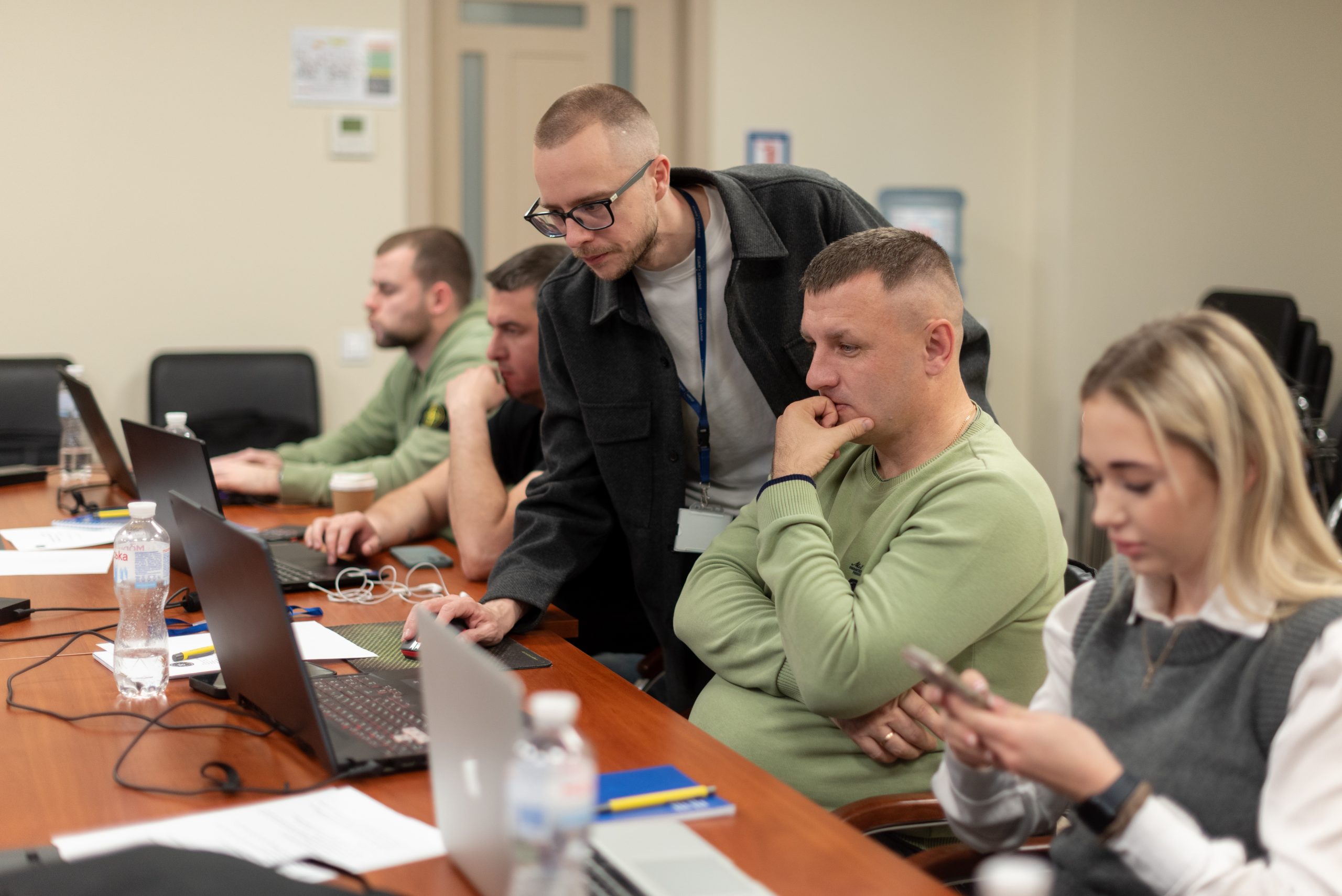
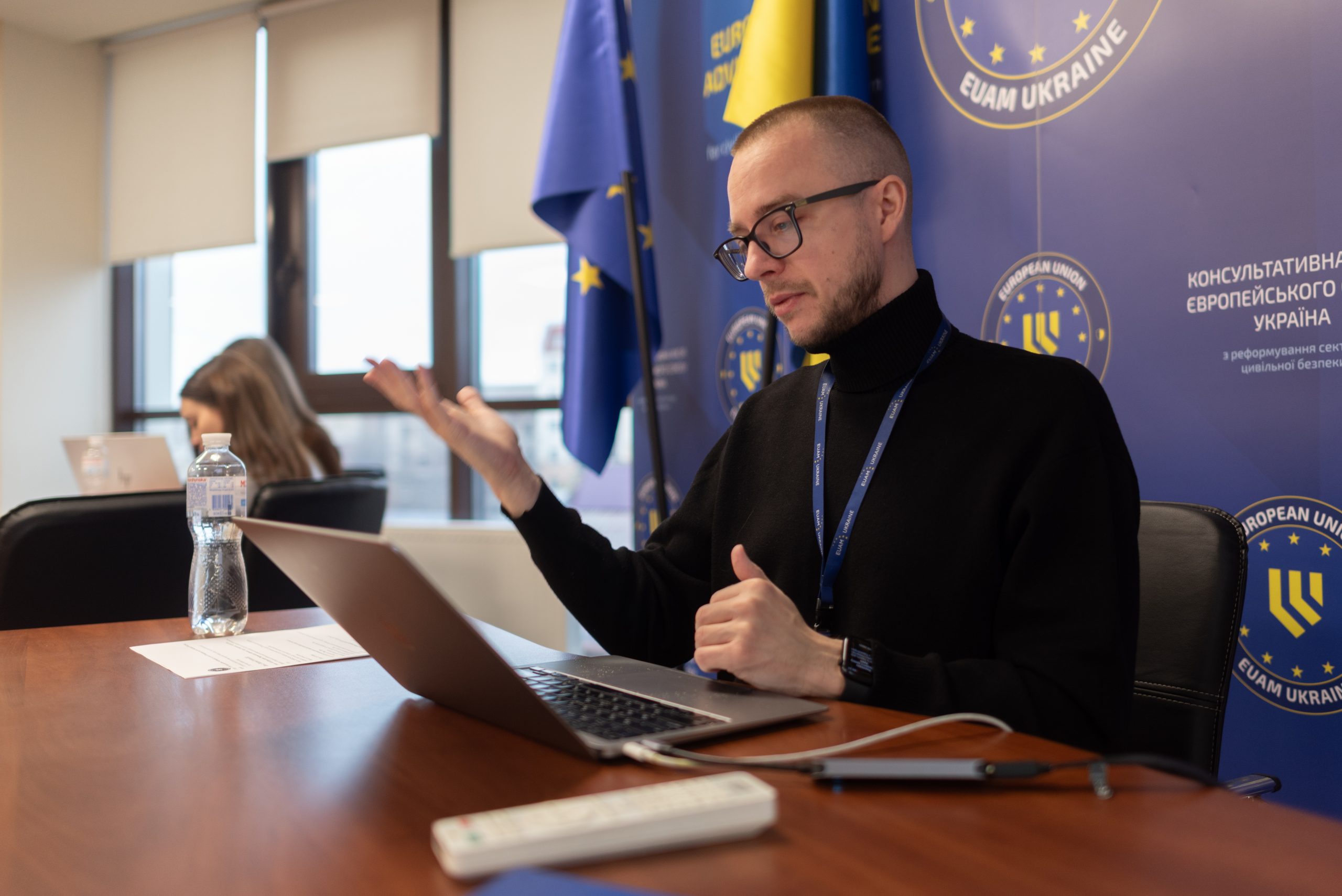
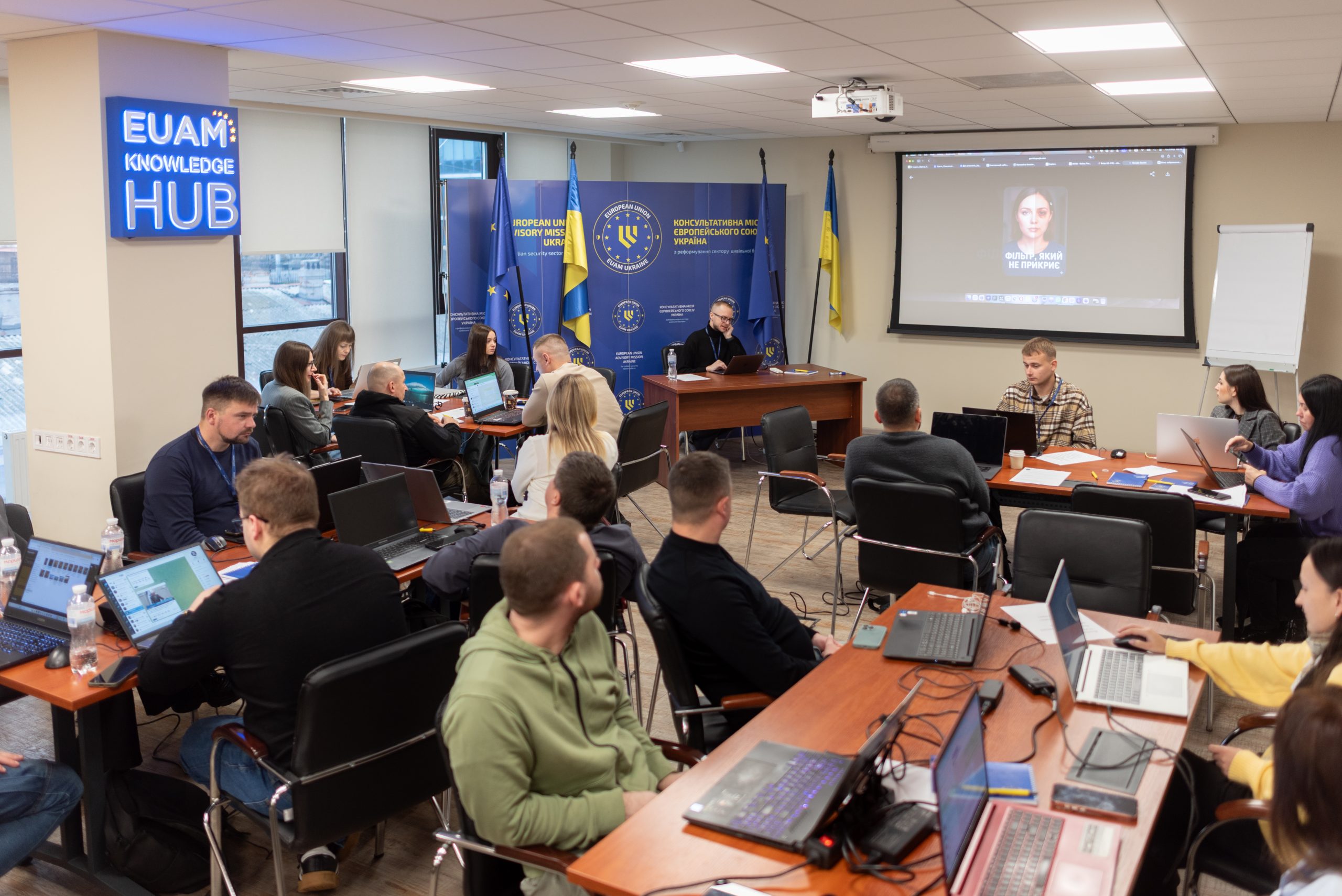
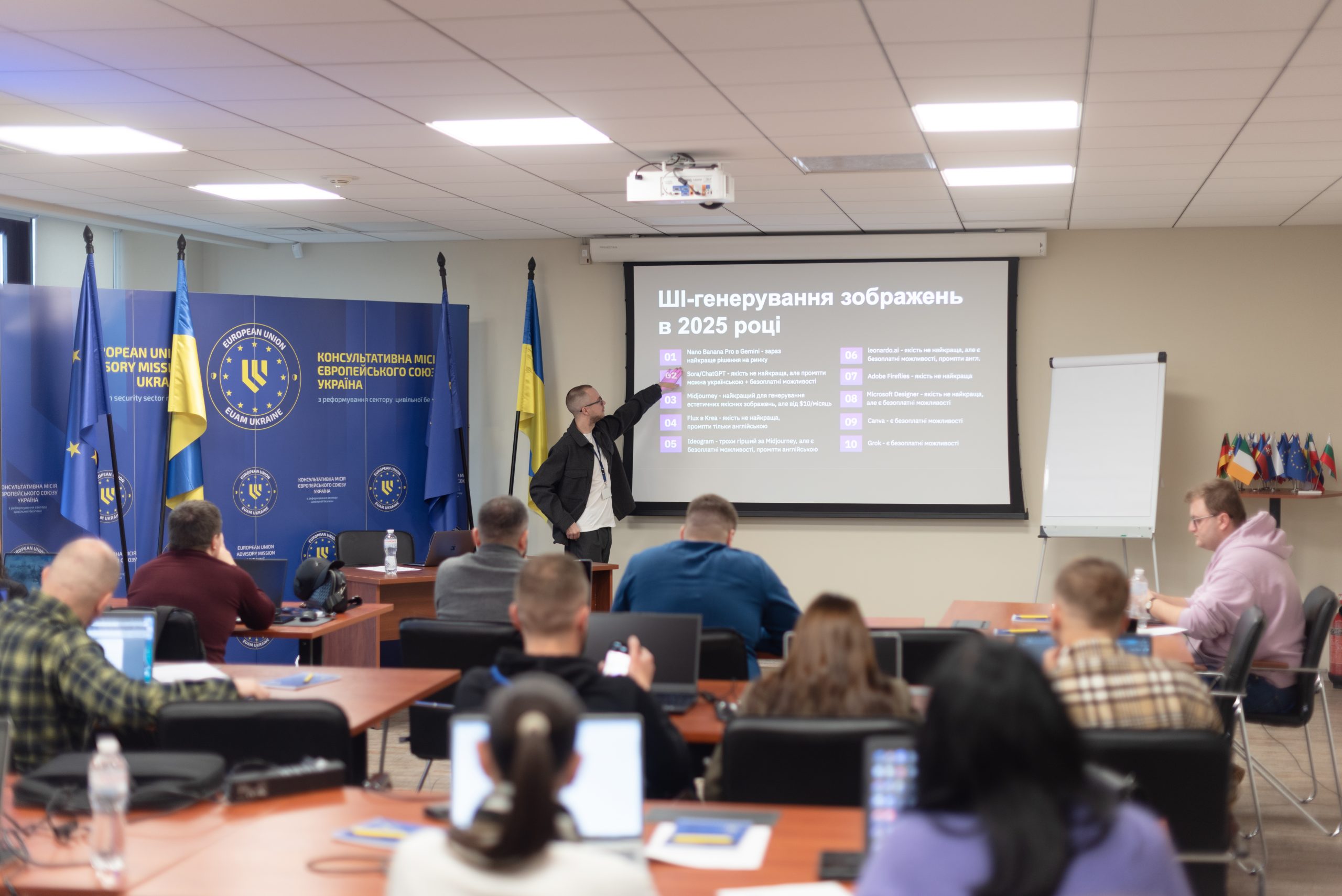








Speaking about the training, Stanislav Kalach, EUAM Strategic Communications Officer, emphasised the importance of ensuring that partners remain up to date with evolving technologies.
“Artificial intelligence is no longer about the future, it is already part of our daily work. At EUAM, we want our partners to stay one step ahead in this dynamic field, which is why we organise such practical trainings — to explore new tools together, learn how to use them effectively and adapt them to real communication needs,” he said. One of the participants highlighted the practical value of the training for everyday work.
“For me, almost the entire programme was new. I knew about some of these tools in theory, but I had never used them in practice. Now I understand how they work and how they can actually support my daily tasks. What I value most is time and these tools can help save time and effort, allowing me to focus more on communication with colleagues, prosecutors and journalists, rather than spending hours preparing materials in the office. This opens space not only for more efficient work, but also for more strategic and thoughtful communication,” said Yana Shass, Spokesperson of the Kirovohrad Regional Prosecutor’s Office.
Beyond technical skills, the training also contributed to building professional networks among law enforcement communicators from different regions. By working together on practical tasks and sharing experiences, participants strengthened peer-to-peer cooperation and contributed to the development of a more connected and resilient communications community within the security sector.













Through such activities, EUAM supports its partners in strengthening professional communications and adapting to an increasingly complex information environment. By focusing on practical skills, ethical awareness and the responsible use of new technologies, the Mission helps law enforcement communicators enhance the quality, credibility and effectiveness of their public communication. These efforts contribute to building trust, countering disinformation and ensuring that communication practices across the security sector remain transparent, consistent and effective.