
When Survivors Cross Borders, Justice Must Follow: Ukrainian Prosecutors Examine Germany’s Universal Jurisdiction Model
February 17, 2026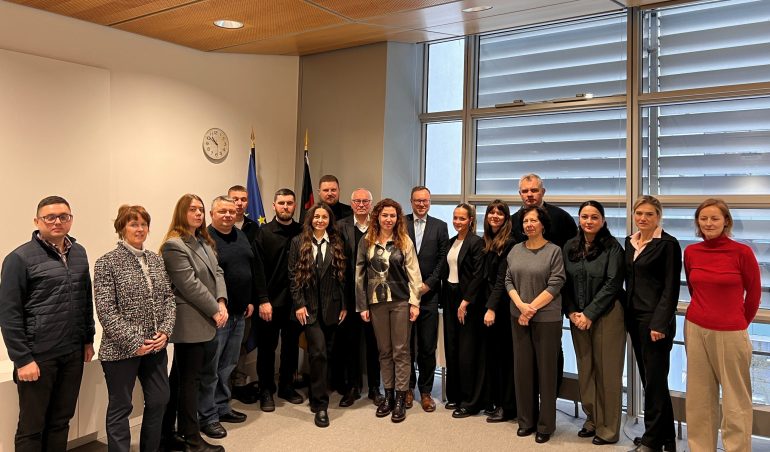
Since the beginning of the full-scale invasion, more than 1.2 million Ukrainians have fled to Germany. Among them are likely survivors of international crimes, including conflict-related sexual violence, whose testimonies may prove critical in future proceedings.
In early February, Ukrainian prosecutors and investigators travelled to Berlin to examine how one European country has translated legal principles into practical accountability. From 3–7 February, the European Union Advisory Mission (EUAM) Ukraine, together with the United Nations Team of Experts on Rule of Law and Sexual Violence in Conflict, and in cooperation with the German Federal Ministry of Justice and Consumer Protection and the German Foundation for International Legal Cooperation, organised a study visit focused on strengthening domestic investigations and prosecutions of conflict-related sexual violence.
The Ukrainian delegation included representatives of the Office of the Prosecutor General, the Kharkiv and Kherson Regional Prosecutor’s Offices, the Security Service of Ukraine and the National Police of Ukraine. They arrived with active case files, operational experience and urgent questions.
Learning from Universal Jurisdiction
Over the past decade, Germany has taken a leading role in prosecuting serious crimes under international law. Under the principle of universal jurisdiction, reflected in its national legislation, German authorities may prosecute international crimes regardless of where they were committed or the nationality of the perpetrator.
This approach has led to cases related to crimes committed in Syria, Iraq and other countries. It has also extended to Russia’s war of aggression against Ukraine.
The Berlin visit offered Ukrainian practitioners a closer look at how Germany applies universal jurisdiction in practice, including in cases where sexual violence is prosecuted as a crime against humanity.
German federal prosecutors shared lessons from landmark proceedings, including cases related to crimes committed by the so-called Islamic State in Iraq and the Levant (ISIL) against the Yazidi population and the Al-Khatib trial concerning members of the Syrian regime. Discussions examined how charges of sexual violence were constructed, how patterns were documented and how responsibility was linked to senior officials. Representatives from Syrian and Yazidi civil society organizations explained how they contribute to the accountability efforts and discussed their cooperation with German law enforcement agencies.
International experts added further depth. Former officials from the United Nations Investigative Team to Promote Accountability for Crimes Committed by Da’esh (UNITAD) addressed how international investigative mechanisms can support national accountability efforts. A former judge of the International Criminal Tribunal for the former Yugoslavia (ICTY) contributed insights into international jurisprudence. A session on vicarious trauma explored the psychological impact on professionals who work daily with testimonies of extreme abuse.
At the same time, Ukrainian participants presented their own experience of documenting war crimes in the context of an ongoing war. The exchange quickly became reciprocal.
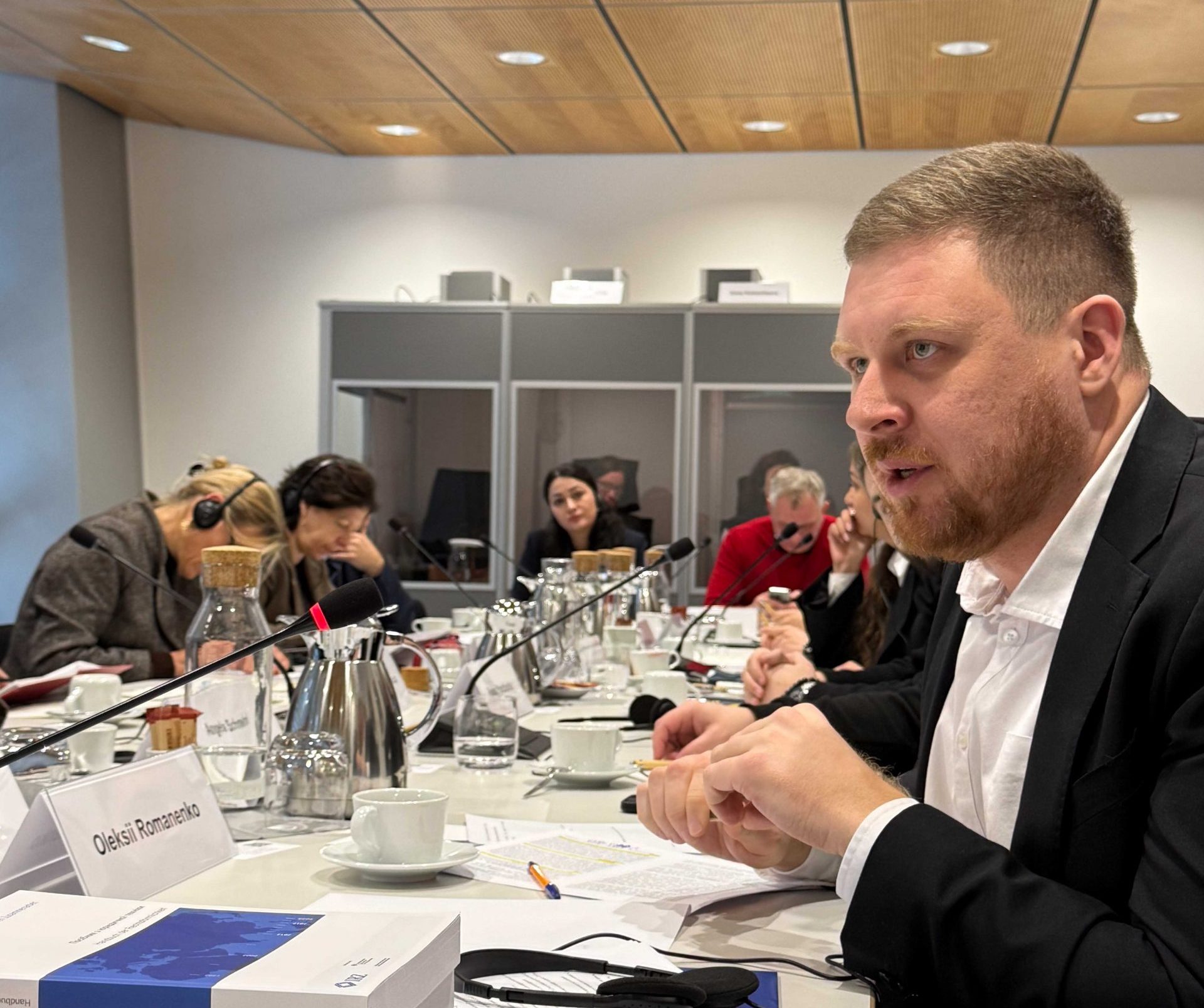
“While the focus of the visit was on Germany’s experience of prosecuting conflict-related sexual violence under the principle of universal jurisdiction, it was clear that the Ukrainian delegation came with their own expertise, prompting fruitful discussion throughout the week,” said Pauline Brosch, Senior Advisor on Investigation of Conflict-Related Sexual Violence at EUAM Ukraine.
For European Union and United Nations partners, the format itself carried significance.
“The Berlin Study Visit is a vivid example of the United Nations and European Union working in lockstep – pooling resources, aligning expertise, and strengthening support to Ukraine for maximum impact,” said Giorgia Tortora, Judicial Affairs Officer at the United Nations Team of Experts on Rule of Law and Sexual Violence in Conflict.
Reaching Survivors Abroad
Beyond courtrooms and legal frameworks, the visit addressed a pressing operational challenge: how to reach survivors who are now outside Ukraine.
Meetings with civil society organisations, the European Center for Constitutional and Human Rights, as well as representatives of the Ukrainian diplomatic mission and diaspora organisations, explored practical ways to facilitate contact between survivors residing in Germany and Ukrainian law enforcement authorities. Establishing these links can strengthen documentation efforts and help ensure that testimonies gathered abroad support proceedings at home.
Conflict-related sexual violence remains one of the most complex categories of international crime to investigate. Survivors may be displaced, traumatised or hesitant to speak. Evidence must meet strict standards if cases are to stand in court.
For Ukrainian investigators and prosecutors, one conclusion stands out: accountability does not end at national borders. When justice systems cooperate across borders, survivors have a stronger chance of being heard – and believed.