
Protecting Childhood, Securing Justice: How Ukraine Strengthens Cases on Crimes Against Children
April 07, 2026
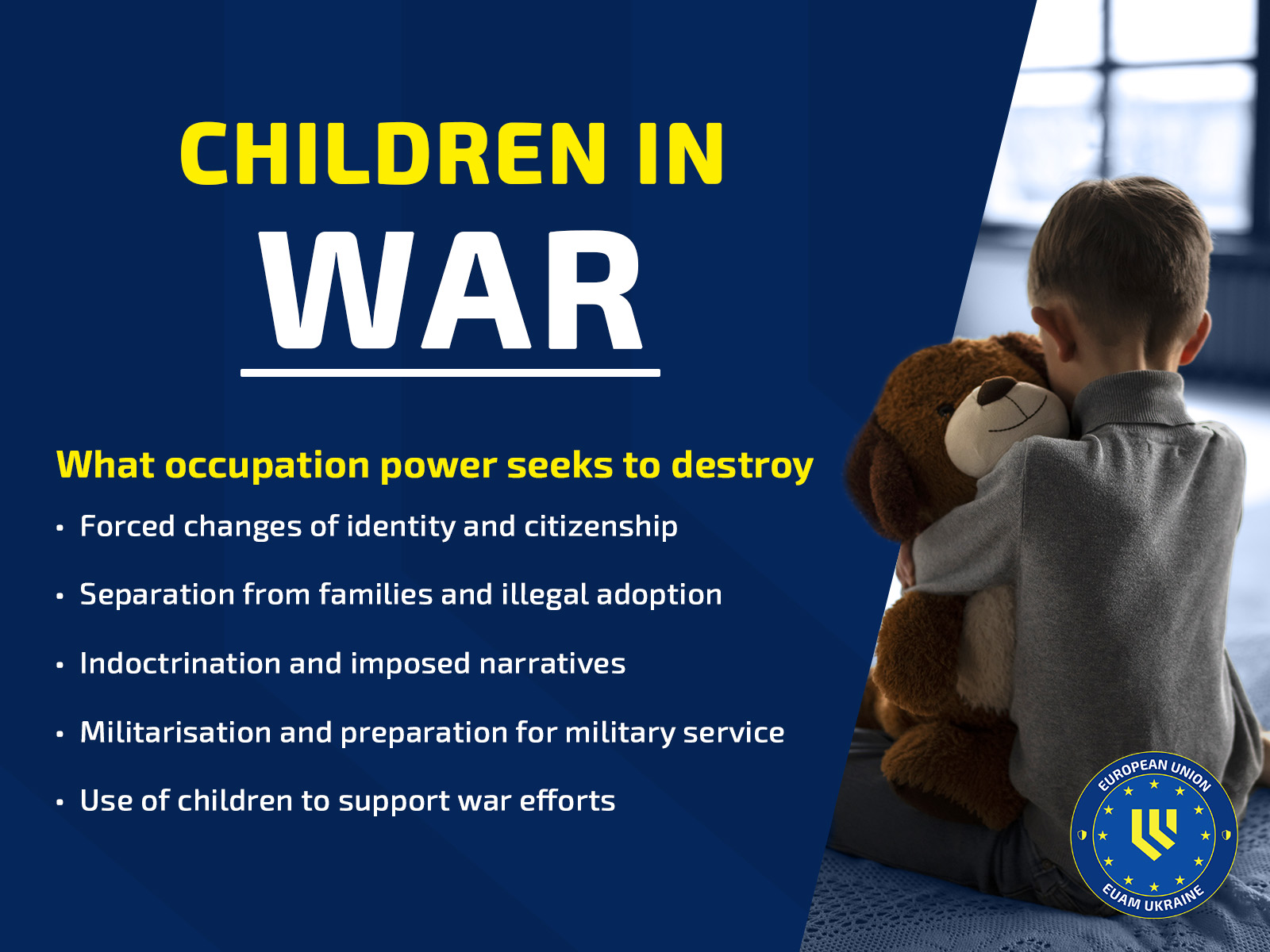
For thousands of Ukrainian children, war is not only about sirens and shelling. It is about pressure on identity, separation from families, and exposure to systems designed to reshape how they think and who they are.
Ukrainian authorities have documented cases where children in temporarily occupied territories are exposed to systematic indoctrination, forced adoption, and even military training. Recent investigations by prosecutors point to organised efforts to militarise Ukrainian children and reshape their identity. These are not isolated incidents. They form patterns that are difficult to investigate and even harder to prosecute.
For investigators and prosecutors, the challenge is twofold. These crimes must first be clearly defined in legal terms and then proven often relying on testimony from children who have already experienced trauma.
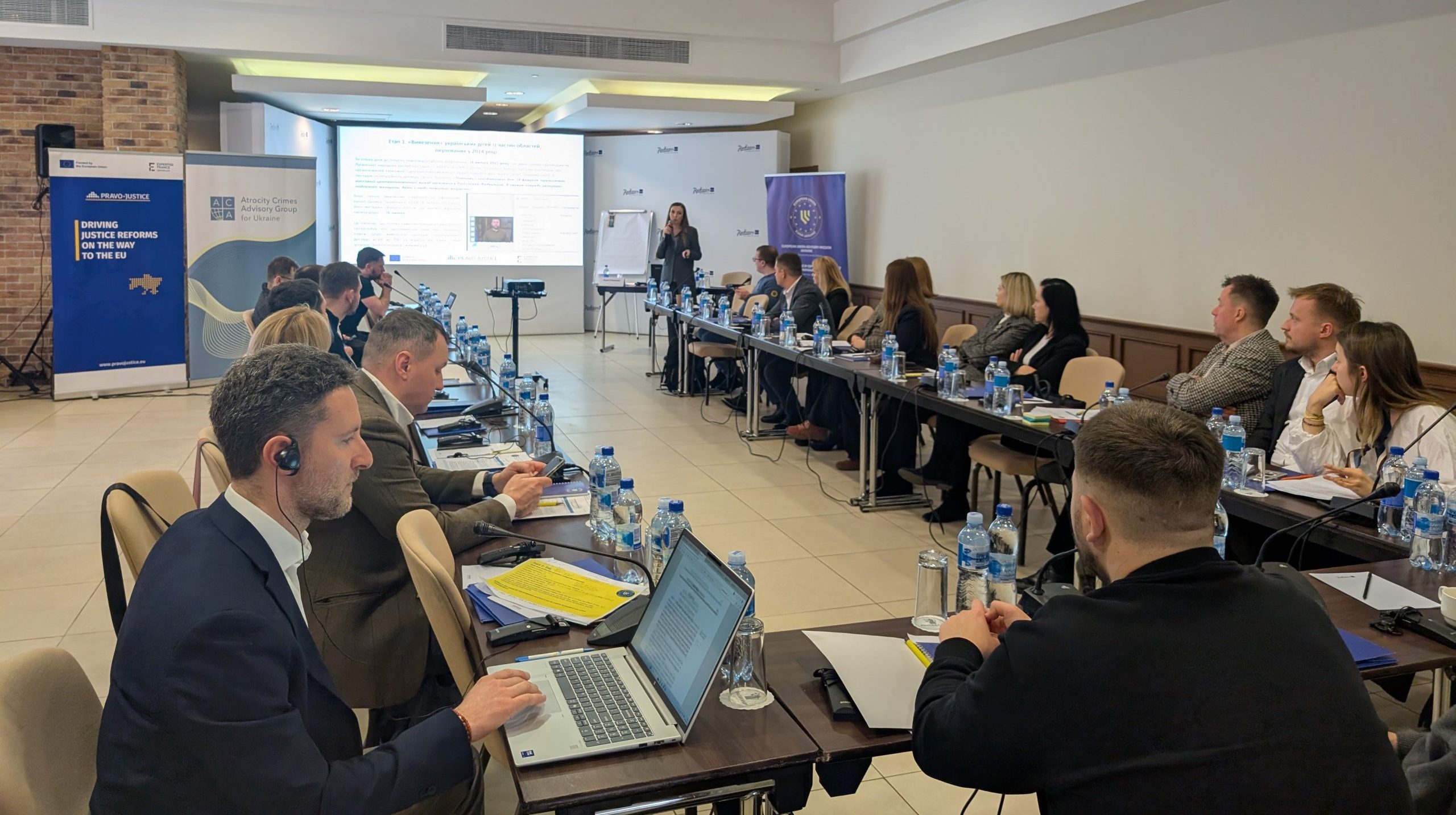
Throughout March, the European Union Advisory Mission (EUAM) Ukraine organised two specialised training sessions dedicated to the crimes of russification and militarisation of Ukrainian children by Russian authorities, as well as to international crimes affecting children. Participants included representatives from the Security Service of Ukraine, the Office of the Prosecutor General, the Office of the Prosecutor of the Autonomous Republic of Crimea, and the National Academy of Internal Affairs.
Naming the Crime and Proving It
One of the central difficulties in cases involving children is legal qualification. Acts such as indoctrination or militarisation do not always fit neatly into existing categories of international or national law.
At a specialised training in early March, organised by EUAM Ukraine in cooperation with Pravo Justice and the NGO Truth Hounds, investigators and prosecutors from the Security Service of Ukraine, the Office of the Prosecutor General, and other institutions worked through these issues together. They examined how to frame such acts within legal systems, how to link individual cases to broader patterns, and how to legally qualify these crimes under both Ukrainian and international law.
Participants also explored practical tools, including open-source intelligence, to document how these practices are organised and implemented across occupied territories.
“In these cases, evidence is rarely visible on the surface. We gather it piece by piece, from open sources, testimonies, and events taking place across different locations. It is complex work, but essential to ensure that these cases are heard in court and that the truth about each child is established. Trainings like these are crucial, as they help our partners work with such evidence in a more systematic and professional way,” said Myroslava Delita, trainer at Truth Hounds, who led one of the sessions.
For EUAM, supporting this process goes beyond theory and focuses on enabling accountability.
As Olha Matskiv, EUAM Legal Advisor, notes: “Turning Ukrainian children into soldiers and erasing their identity is not just a moral outrage – it is a crime that our legal system must learn to name and to prosecute. Our task as lawyers is to close legal gap, so that every attempt to weaponise Ukrainian childhood is clearly recognised and punished as a grave breach of international and national law.”
Hearing the Child, Protecting the Evidence
If defining the crime is one challenge, working with child victims and witnesses is another. For investigators, adopting a victim-centred and child-friendly approach is essential to balance the well-being of the child with the need to collect reliable and admissible evidence.
In late March, EUAM Ukraine together with international and national experts conducted a specialised training in Kyiv focused on interviewing children in war crimes cases. Participants included investigators from central and regional levels of the Security Service of Ukraine, dealing directly with some of the most sensitive testimonies.
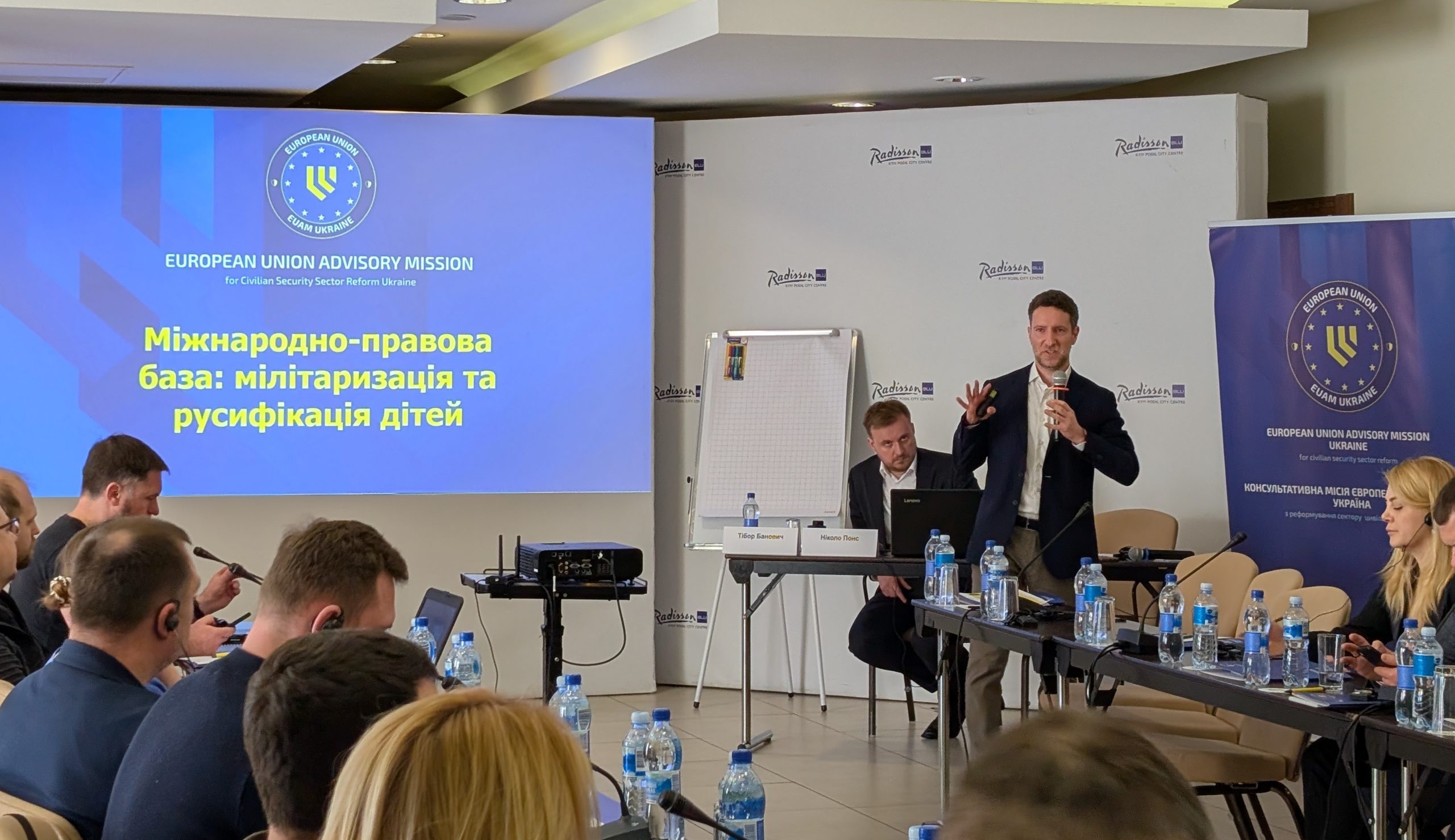
Children who have experienced deportation, indoctrination or family separation often recall events in fragments. At the same time, investigators must ensure that their testimony remains reliable and admissible in court.
“Crimes against children are among the most difficult to investigate and prosecute. They often leave little physical evidence, but deep and lasting harm. Our goal is to help Ukrainian authorities turn complex experiences into legally sound cases — so that these crimes are not only documented, but prosecuted,” says Niccolo Pons, Senior Adviser on Prosecution of International Crimes at EUAM Ukraine, explaining why the Mission provides this type of training to its partners.
The training introduced techniques designed to address this balance, including non-leading questioning, approaches that minimise retraumatisation, and methods to build trust while preserving the integrity of evidence.
As these cases develop, the challenge is no longer only to document what happened, but to ensure it is understood, proven, and judged.
