

Policing the Virtual Streets: What Ukraine Can Learn from Denmark and Sweden
February 19, 2026
Your child is playing on Roblox or scrolling through a video platform. It feels harmless. But online gaming spaces and social media channels have increasingly become recruitment grounds for criminal activities.
Behind avatars and private chats, organized groups approach young users with offers that may sound like challenges, quick money or “exclusive” online tasks. These are often entry points into cybercrime networks operating under models known as Crime as a Service (CaaS) or even Violence as a Service (VaaS).
Preventing such recruitment, especially when it targets children and teenagers, requires law enforcement to move beyond traditional methods. It demands presence, awareness and operational tools adapted to digital realities.
Learning from Denmark and Sweden
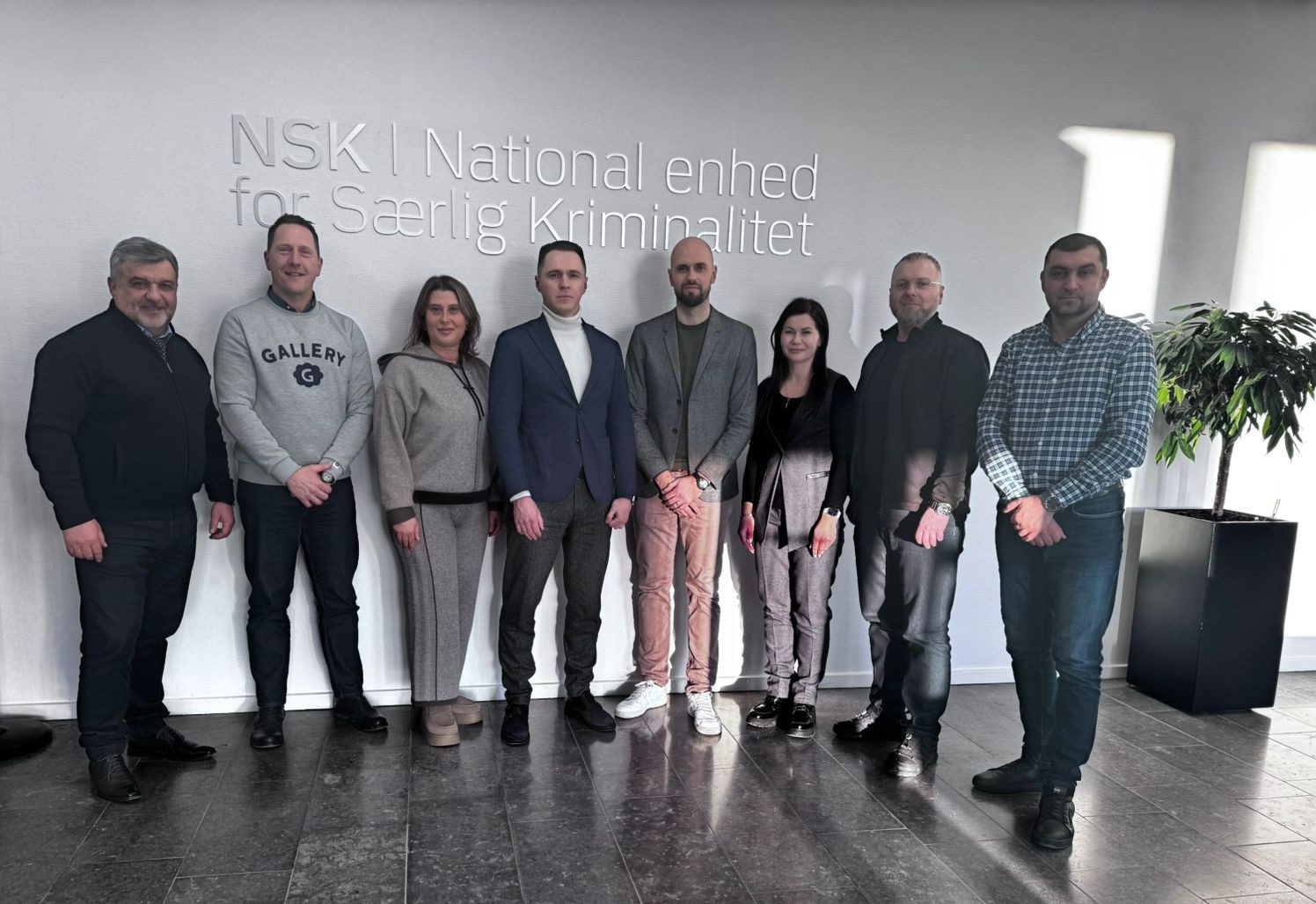
Against this backdrop, in early February a joint delegation of the European Union Advisory Mission Ukraine (EUAM), the National Police of Ukraine (NPU) and the Security Service of Ukraine (SSU) conducted a study visit to the Danish National Special Crime Unit (NSK), the Danish Security and Intelligence Service (PET), and the National Operations Centre (NDC) in Sweden.
The visit focused on combating cyber-enabled crime, with particular attention to online recruitment schemes. Participants explored how Danish and Swedish authorities identify early signs of grooming into criminal networks and disrupt the structures behind them.
Through practical case studies, investigators demonstrated how digital traces are analyzed, how online personas are mapped to real-world actors, and how operational tools are applied at different stages of an investigation. The sessions showed how theoretical frameworks are translated into concrete action – from detection to prosecution.

A Police Station in the Virtual World
One of the most striking examples comes from Denmark. The Danish police operate Politiets Online Patrulje – an official Online Patrol that maintains a visible and accessible presence across social media and digital platforms.
This is a real police unit operating in virtual spaces, where citizens – including children and young people – can directly reach out, ask questions or report suspicious activity.
By being present where young users spend their time, the Online Patrol strengthens trust and increases the likelihood that early warning signs are reported before harm occurs. It also allows officers to monitor emerging patterns of recruitment linked to CaaS and VaaS models.
Why It Matters for Ukraine
As Ukraine continues to face complex security challenges, including hybrid and cyber threats because of Russia’s war of aggression, strengthening the ability of Law enforcement to operate effectively online is no longer optional. It is essential.
The study visit provided Ukrainian counterparts with practical insights into proactive digital policing, inter-agency coordination and investigative techniques adapted to modern online environments.
Criminal networks evolve quickly. Law enforcement must evolve faster.
