
How Ukraine Handles Collaboration Cases: EUAM Workshop Brings Legal Experts Together
March 05, 2026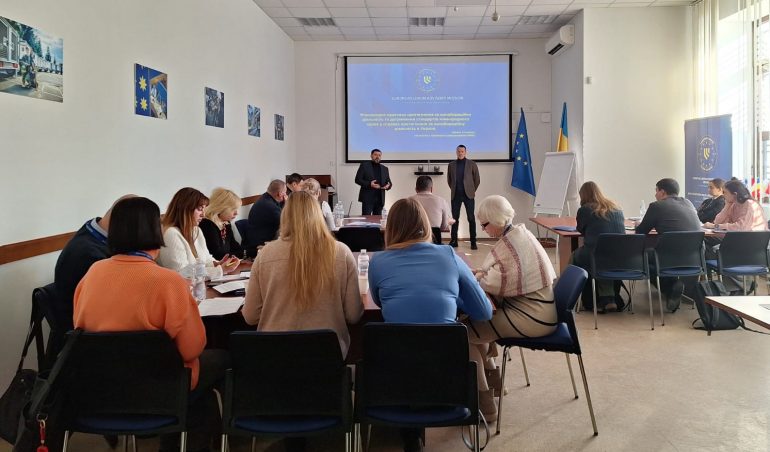
In wartime Ukraine, cases of collaboration with the occupying power raise some of the most difficult questions for the justice system. Authorities must prosecute crimes that threaten national security while ensuring that court proceedings remain fair and consistent with national and international law. How these cases are handled will influence public confidence in the rule of law.
Against this backdrop, the European Union Advisory Mission (EUAM) Ukraine, together with the Free Legal Aid Coordination Centre (FLAC) and Global Rights Compliance, concluded last week series of workshops titled “Collaborative Activities: From Historical Memory and Humanitarian Law to Judgment.” The initiative focused on strengthening the quality and consistency of criminal proceedings in cases under Article 111-1 (collaborative activities) of the Criminal Code of Ukraine.
For the first time, EUAM expanded its advisory work on collaboration cases beyond prosecutors and judges to include defence lawyers. Bringing all sides of the courtroom together was intended to support a balanced, rights-based application of the law and reinforce fairness in judicial proceedings.
A shared understanding of how collaboration offences are legally qualified remains a central challenge for practitioners. As noted by Oleksandr Zhyla, Deputy Head of the Directorate overseeing security agency cases at the Office of the Prosecutor General and one of the trainers at the event, developing a unified interpretation across prosecution, defence and judiciary is essential for consistent application of the law.
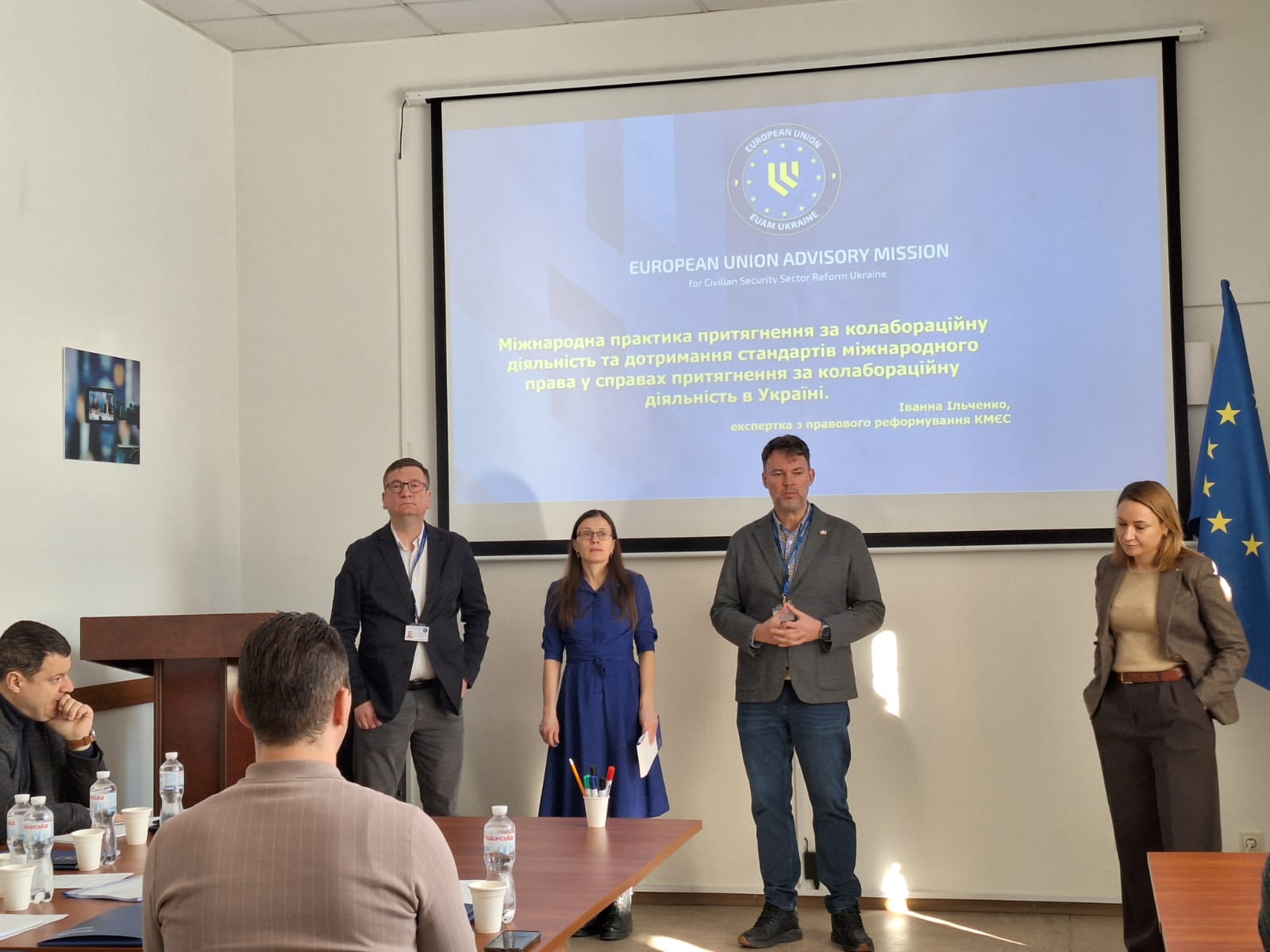
Maintaining a careful balance between protecting national security and respecting international legal standards was another key theme of the discussions. In his opening remarks, FLAC Director Oleksander Baranov highlighted that Ukraine’s free legal aid system guarantees the right to defence even in this sensitive category of cases. In 2025 alone, the system issued 2,373 mandates for lawyers representing suspects or defendants charged under Article 111-1. Proper legal defence in such proceedings, he noted, contributes to fair trial guarantees and helps sustain confidence in the justice system during wartime.
Participants also examined how domestic criminal law interacts with international humanitarian law and international human rights law. Particular attention was given to fair trial guarantees in cases conducted in absentia and to the occupation law principle that “life goes on”.
Applying international humanitarian and human rights standards remains crucial when prosecuting national security offences during wartime. EUAM Legal Reform Officer Ivanna Ilchenko, who co-moderated the sessions, stressed that these safeguards are essential to ensuring fair trial guarantees.
The way collaboration cases are investigated and adjudicated has also become an important indicator of the resilience of Ukraine’s criminal justice system during armed aggression. Valerii Zhydkov from the General Inspection of the Office of the Prosecutor General and the trainer at the workshop noted that strengthening professional understanding of how national security crimes are legally qualified helps maintain a balanced approach – supporting effective investigations while protecting the rights to defence and a fair trial.
To support practitioners, a structured analytical framework for identifying and assessing collaboration offences committed in temporarily occupied territories was presented by Global Rights Compliance expert Scott Martin. The approach helps investigators, prosecutors and defence lawyers evaluate the key elements of such cases while ensuring that proceedings remain grounded in domestic legislation and international human rights obligations.
The discussions also drew on European experience. Lessons from Lithuania’s efforts to prosecute crimes connected with the Soviet period were shared by EUAM’s Deputy Head of Operations Tomas Krusna, including debates over retroactive justice and the broader societal process of confronting the post-Soviet legacy. Germany’s experience before and after reunification was also examined, with EUAM Criminal Justice Unit Head Guido Oestreich reflecting on cases related to killings at the Berlin Wall, the vetting of public officials and the long-term public debate that followed.
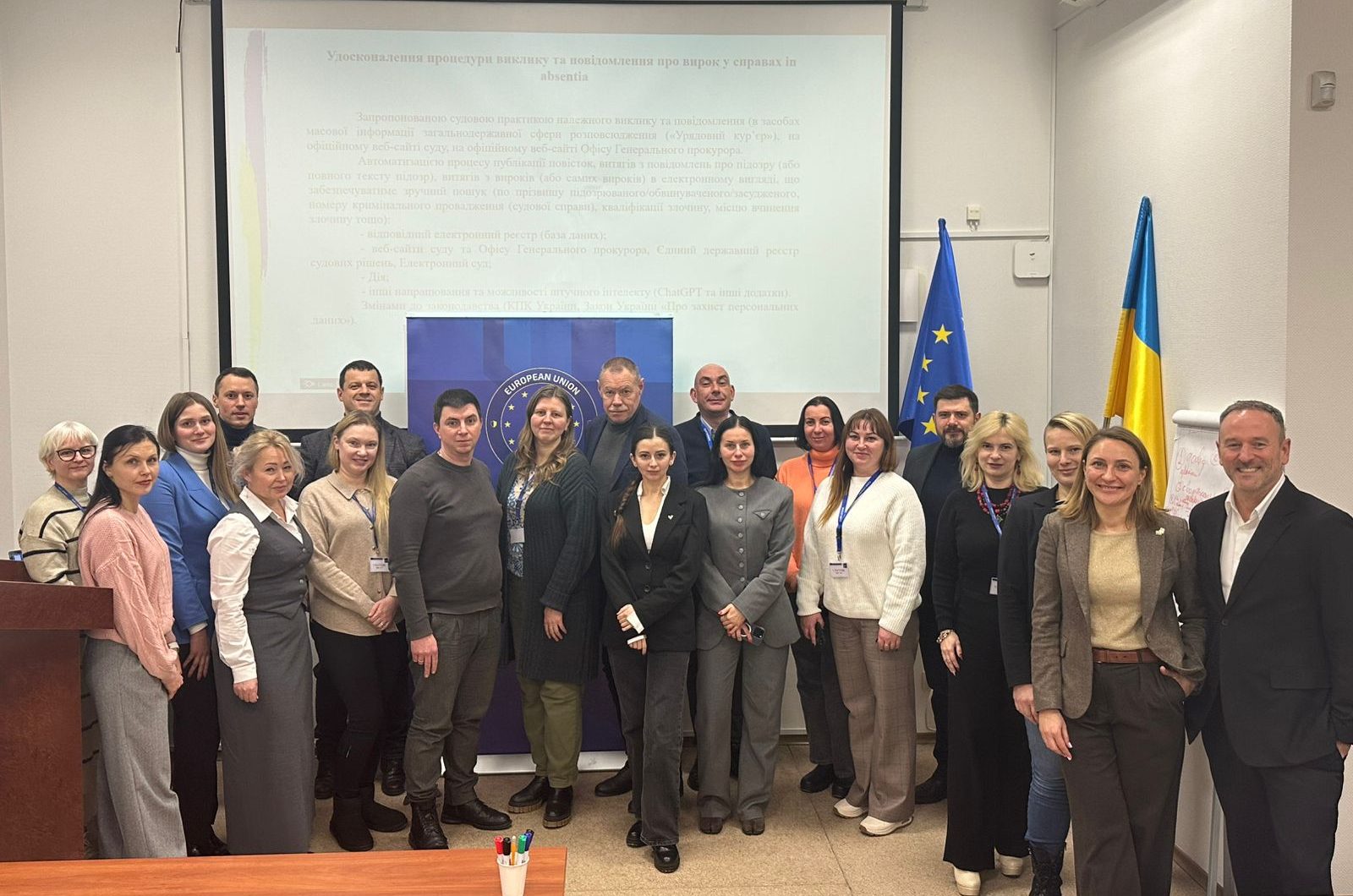
By bringing together prosecutors, defence lawyers and international experts, the workshops helped strengthen professional competence and support more consistent application of the law in collaboration cases. At a time when Ukraine continues to defend itself against aggression, such efforts contribute to ensuring that accountability for crimes against national security is delivered in line with the rule of law and the country’s international legal obligations.
