

Agents of change. Denys Skaleukh – a veteran who became a bridge of trust
March 04, 2026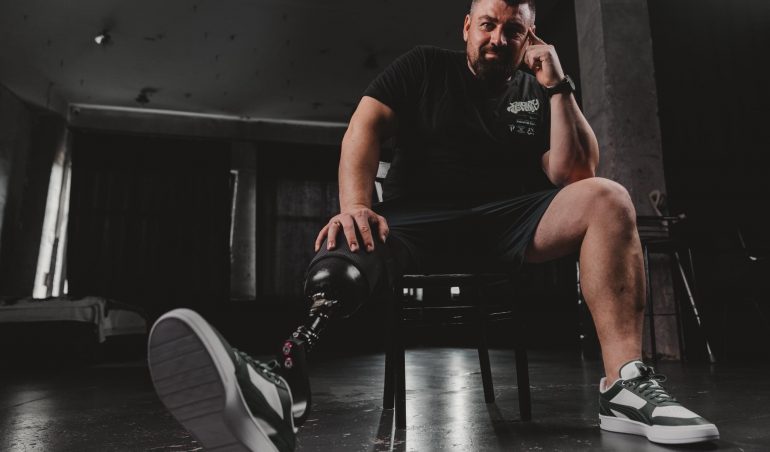
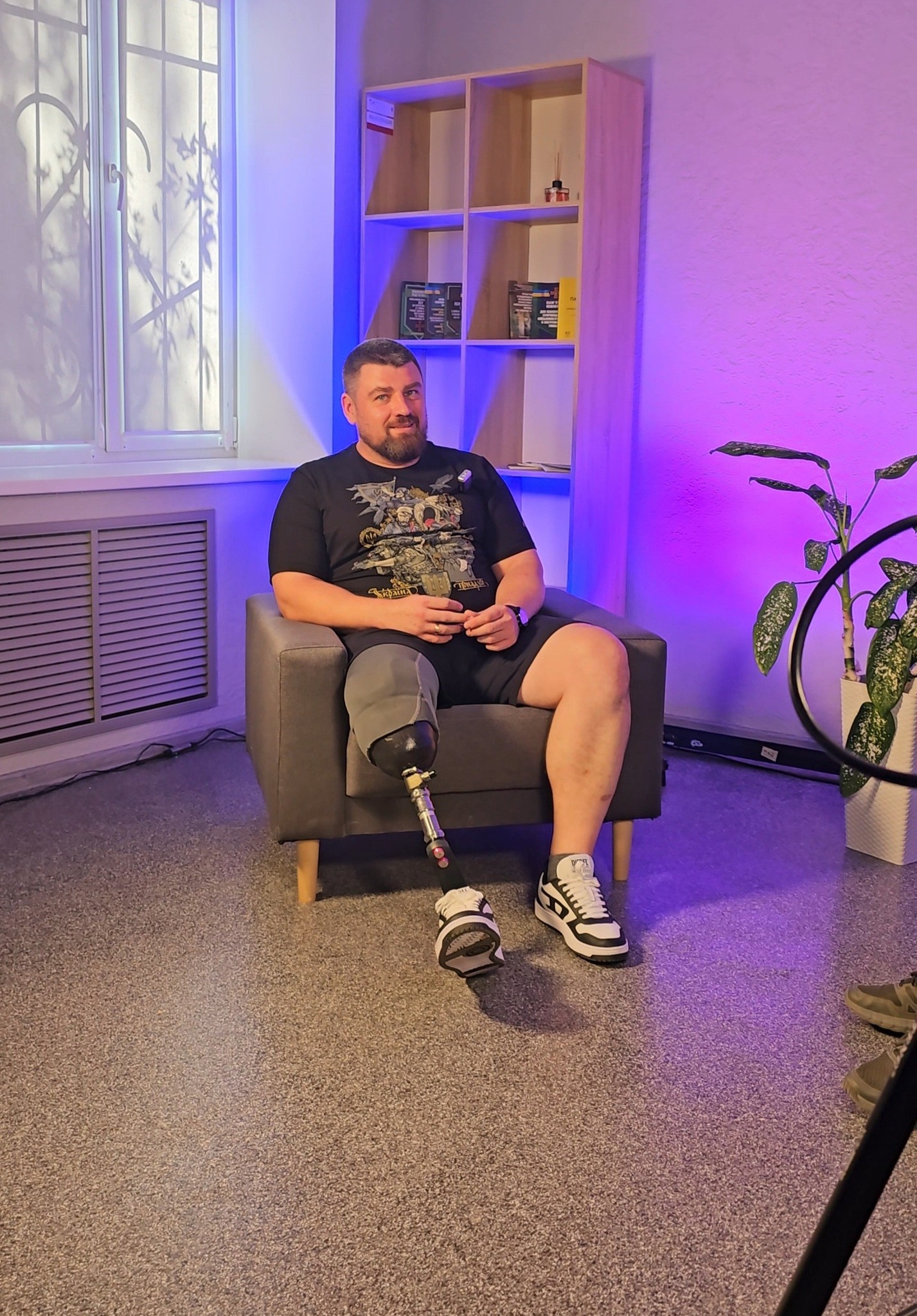
He speaks calmly and smiles warmly without pathos or loud words. There is no indifference in this calmness. Rather, it reflects the inner discipline of someone who knows what fear sounds like, and how it retreats when those you trust completely are close by.
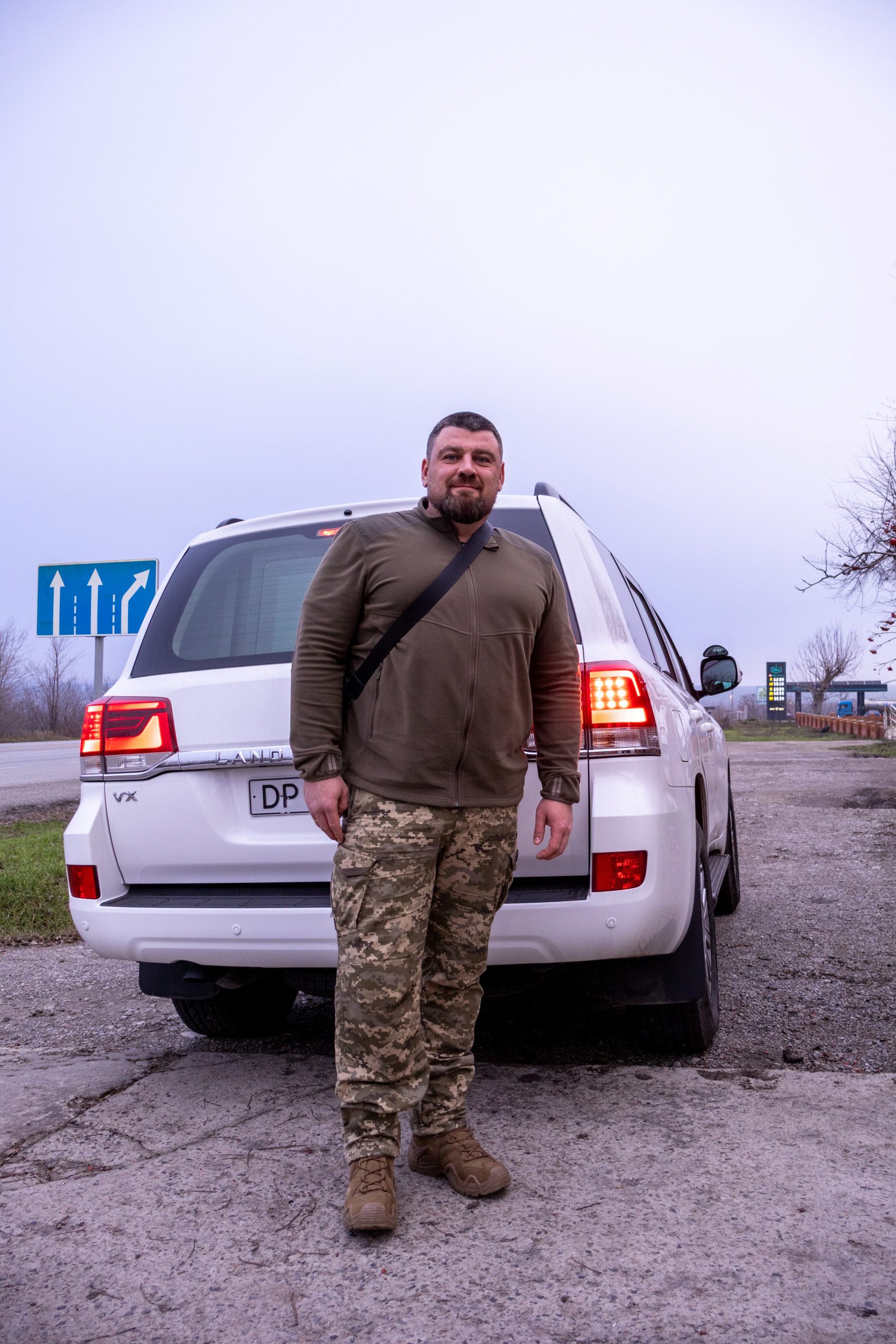
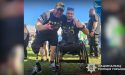
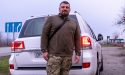
Denys Skaleukh is a veteran of the Russia–Ukraine war and now serves as Assistant Head of the Main Department of the National Police in Dnipropetrovsk Region for Veteran Policy a position that is new to the system, yet old in its essence: being there when a person needs it most.
If you ask who he truly is, the answer is simpler and more accurate than any official job description: he is the person veterans call when there is no one else to call.
A return that changes everything
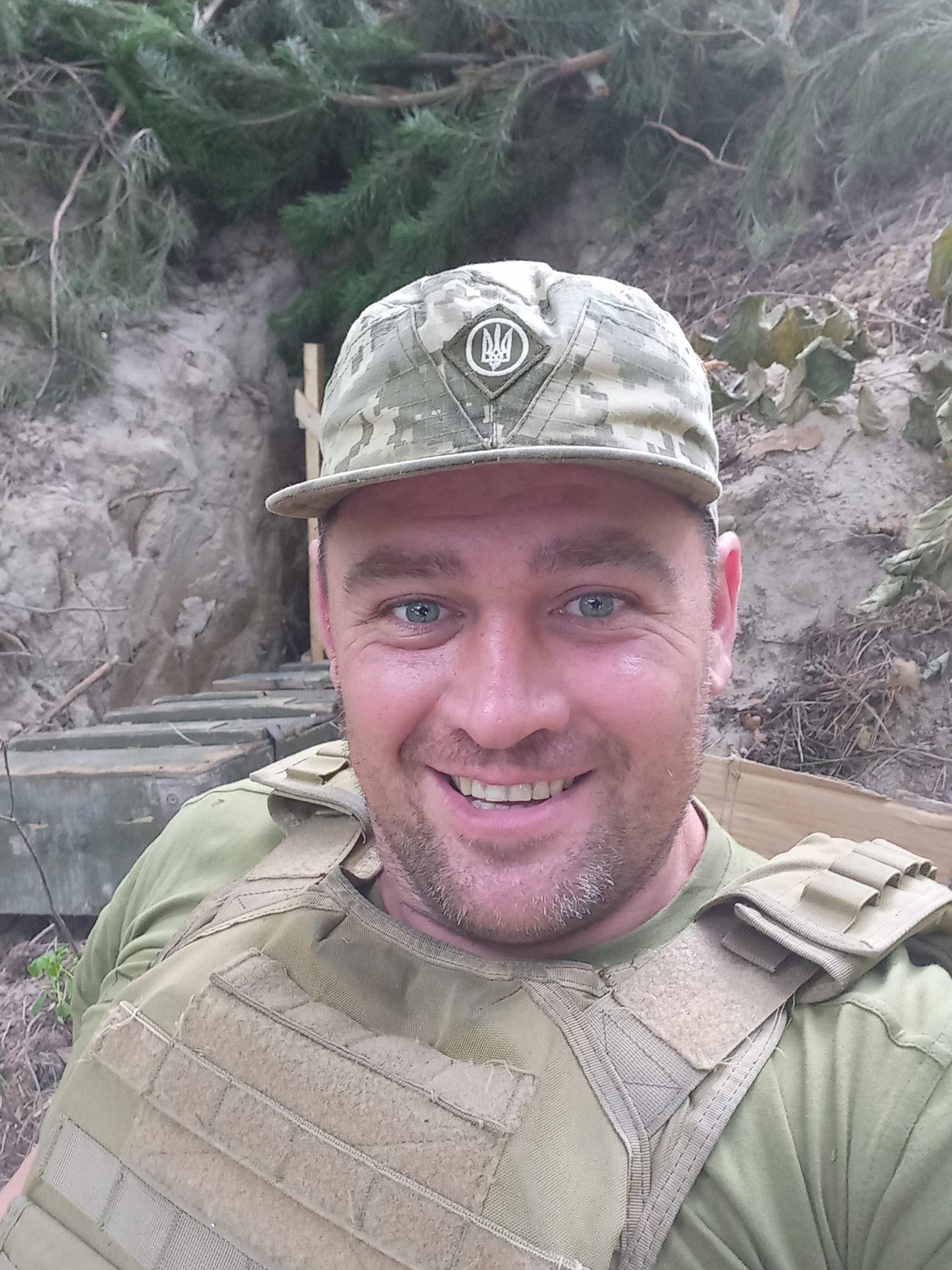
Before the full-scale invasion, Denys lived an ordinary civilian life: he worked in marketing, made plans, thought about the future.
“I was just a regular civilian, always ready to take a risk,” he recalls. “The biggest risk I ever took was deciding to go to war.”
On 24 February 2022, the first hours passed in confusion. But by midday, a clear feeling emerged: it was time to defend the country. With no military experience, Denys joined the Territorial Defence Forces. That same day, together with a friend, he went to the enlistment office, and within a day or two, they were already holding their assigned defensive positions. “I simply couldn’t stay on the sidelines,” Denys says.
War does not bring everyone back. And those who do return are changed forever. After being wounded, Denys did not go back to Kyiv, where he had lived for fifteen years. He stayed in Dnipro, a city that became a new point of departure.
“After the front, fear disappears,” he says. “When you’ve already looked death in the eyes, starting from zero is not frightening.”
Veterans feel each other
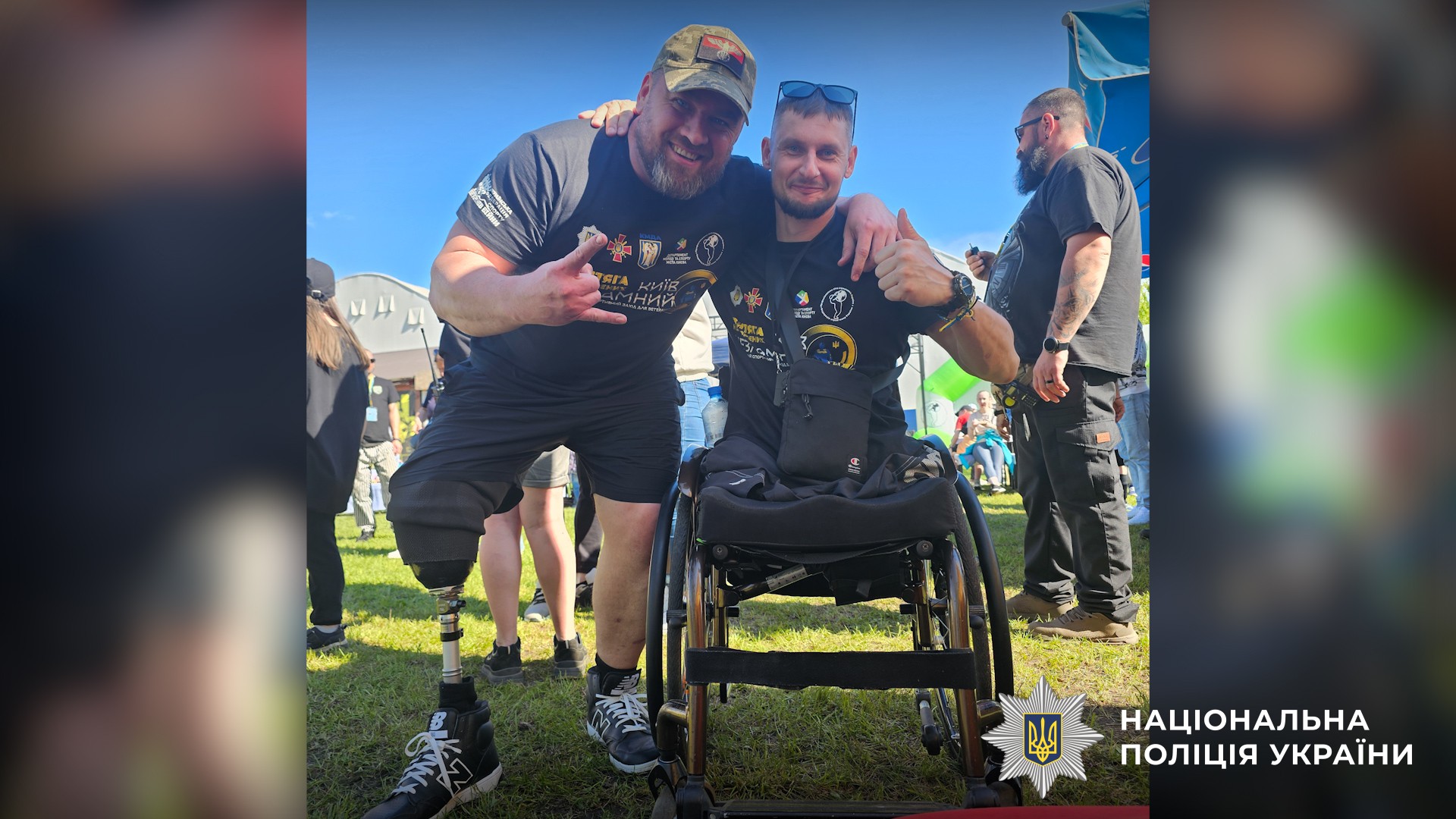
After his treatment, Denys began doing what came most naturally: being there for those who returned from the war. At first, it was in a veteran space, without positions or formal roles. He helped: with documents, referrals, and ensuring that people were not left alone with the system.
That was when he truly saw how lonely a veteran’s life in peacetime can be.
“Many people don’t know where to go. They don’t trust the system. They’re angry. Withdrawn. And that’s normal. But a veteran always senses whether the person speaking to them is one of their own,” says Denys Skaleukh.
This sense of “one’s own” has nothing to do with uniforms or institutional affiliation. It is about shared experience, something that needs no explanation. Denys tells a telling story: a veteran who lost an arm calls him drunk and furious at the whole world, shouting, swearing at everything around him, but addressing Denys with a single word: “brother.” Denys Skaleukh emphasizes. “There’s nothing to explain here.”
A new role in the police: not an office, but a bridge
Over time, Denys began cooperating with the police, organising meetings where veterans of the Armed Forces of Ukraine and police veterans sat at the same table. He saw how quickly stereotypes collapse when people meet not as “categories,” but as those who have lived through the same experience.
“When a soldier looks at a police officer and suddenly realises that he, too, has been on the front line, the tension disappears,” says our hero, “they become just people who fought on the same side.”
When the National Police introduced positions focused on veteran policy, Denys was invited to an interview. He came with a clear vision and became the first person to take on this role in Dnipropetrovsk Region.
Calls that cannot be ignored
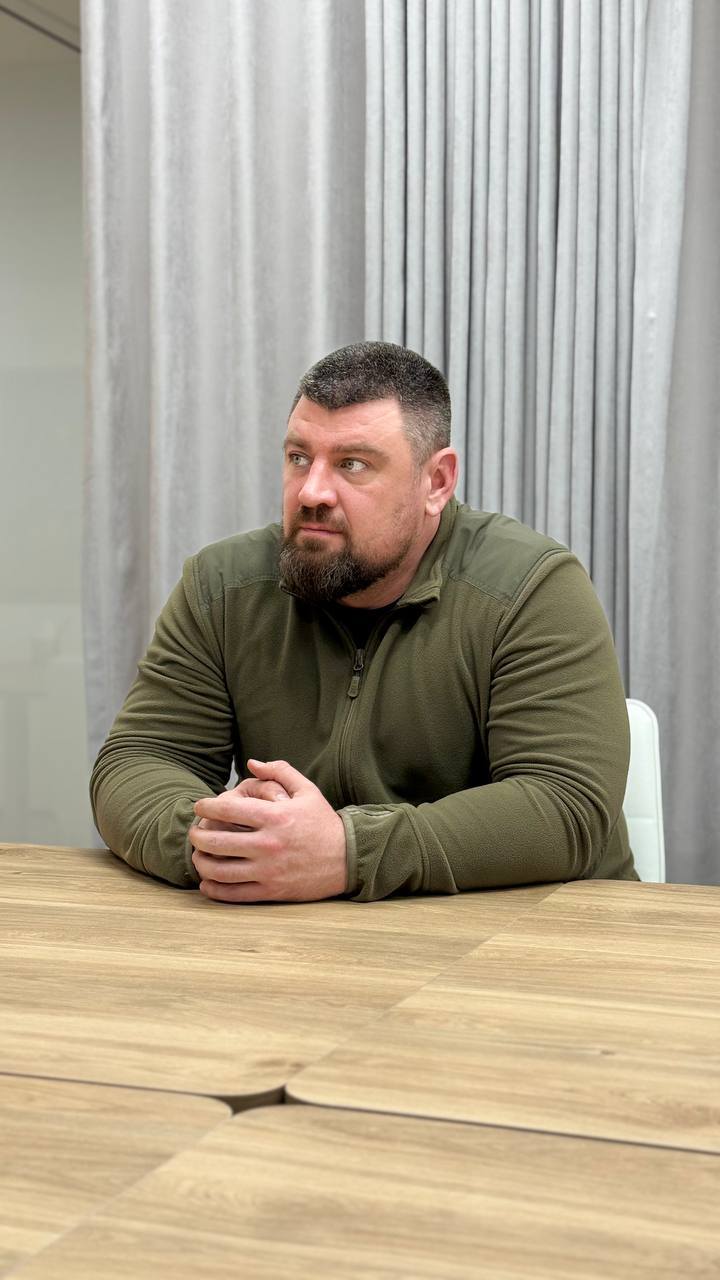
People rarely come to Denys officially. More often, they simply call.
About documents. Benefits. A sense of injustice. Anger. Exhaustion. And sometimes just to speak.
There are calls with no right answer. The hardest part, Denys says, is working with families of the fallen and those missing in action.
“I can’t always speak calmly even about my own brothers-in-arms, sometimes I just break down and cry. And when you see a mother, a wife, or a child who is either still hoping or already knows the worst thing, that is probably the hardest part of my job. You need great strength to support such people and not break yourself. But we must do it as they are our heroes too, the families of heroes,” our interlocutor tells as he opens up about the nuances of the work.
When light appears
But there are other moments that keep you going. The moments after which Denys tells himself: “I’m here for a reason.”
One of them was the psychological support meetings he initiated together with a mental health centre. Small groups. Silence at the beginning. People sit in a circle and speak without pressure, without expectations of a “proper story.” Gradually, they open up. It becomes easier to breathe. A professional is always nearby, ready to step in if the conversation becomes too heavy.
The pattern is often the same: first silence, then words. And with words come ideas, initiatives, the desire to help not only oneself, but others as well.
“At some point, people stop talking only about their own pain and begin thinking about how to support those who are hurting even more,” shares Denys.
At one of these meetings were men who had just returned from captivity, alongside wounded soldiers not yet demobilised. “The atmosphere was incredible. Everyone supported one another. That evening, I went to bed smiling, thinking about it,” says Denys about what inspires him to keep going.
Early intervention as key to rehabilitation
When speaking about community safety and the role of veterans, Denys immediately warns: participation cannot be forced. A person has to want to help.
His key principle, “veterans must be supported as early as possible, especially those already in hospital. Come, introduce yourself, and say: ‘You can call or message me with any question. If I don’t know the answer, I know who does.’”
When a veteran’s first encounters are met with indifference and bureaucracy, what emerges is not readiness to engage, but alienation. But when a person feels needed and not left alone, initiatives appear: work with youth, volunteering, participation in community safety dialogues, and support for others.
“You can’t force this,” Denys sums up. “It has to grow naturally.”

Trust, social cohesion, and live contact
Denys works at the intersection of several worlds, veterans, communities, and the police, a nexus precisely where tension and mistrust are often most acute.
Asked about trust in the police, he offers no simple recipes.
“This is a very complex issue,” he says. “I think everyone has something to change in themselves, police officers, soldiers, civilians. Trust doesn’t appear instantly. It requires time, consistent effort, and above all, genuine human contact.”
He assigns a special role to the veteran movement within the police. When a veteran in a police uniform stand before a community and speaks honestly about their combat experience, it breaks stereotypes more powerfully than any information campaign. Because people see not a system, but a human being.
For Denys, the veteran factor is not a communication tool, but part of a reality society still does not fully see. Entire units of the National Police are fighting on the front line today, including KORD, the Liut Assault Brigade, and rifle battalions formed from police officers. They carry out combat missions alongside the Armed Forces of Ukraine, suffer losses, and live through the same frontline experience. This is being discussed, but still not enough especially as society needs to see not only uniforms but faces and personal stories.
“People need to understand that today’s police are not the ‘old militia.’ Things have moved far forward. Law enforcement officers do not hide in the rear, they risk their lives alongside soldiers and are often the first to help civilians during shelling, evacuations, and emergencies,” says Denys.
In this reality, the conversation of “police versus military” loses meaning. Increasingly, these are people with shared experiences, returning home in different uniforms, but with the same need to be heard.
Denys speaks even more directly about social cohesion: Ukrainians are often united by adversity. But he believes in something else, in small, honest steps. In dialogue. In meetings. In the opportunity to hear each other.
“Trust doesn’t come in one day. But it comes when people sit down together and talk honestly,” Skaleukh emphasizes.
Community safety dialogues and bridges that work
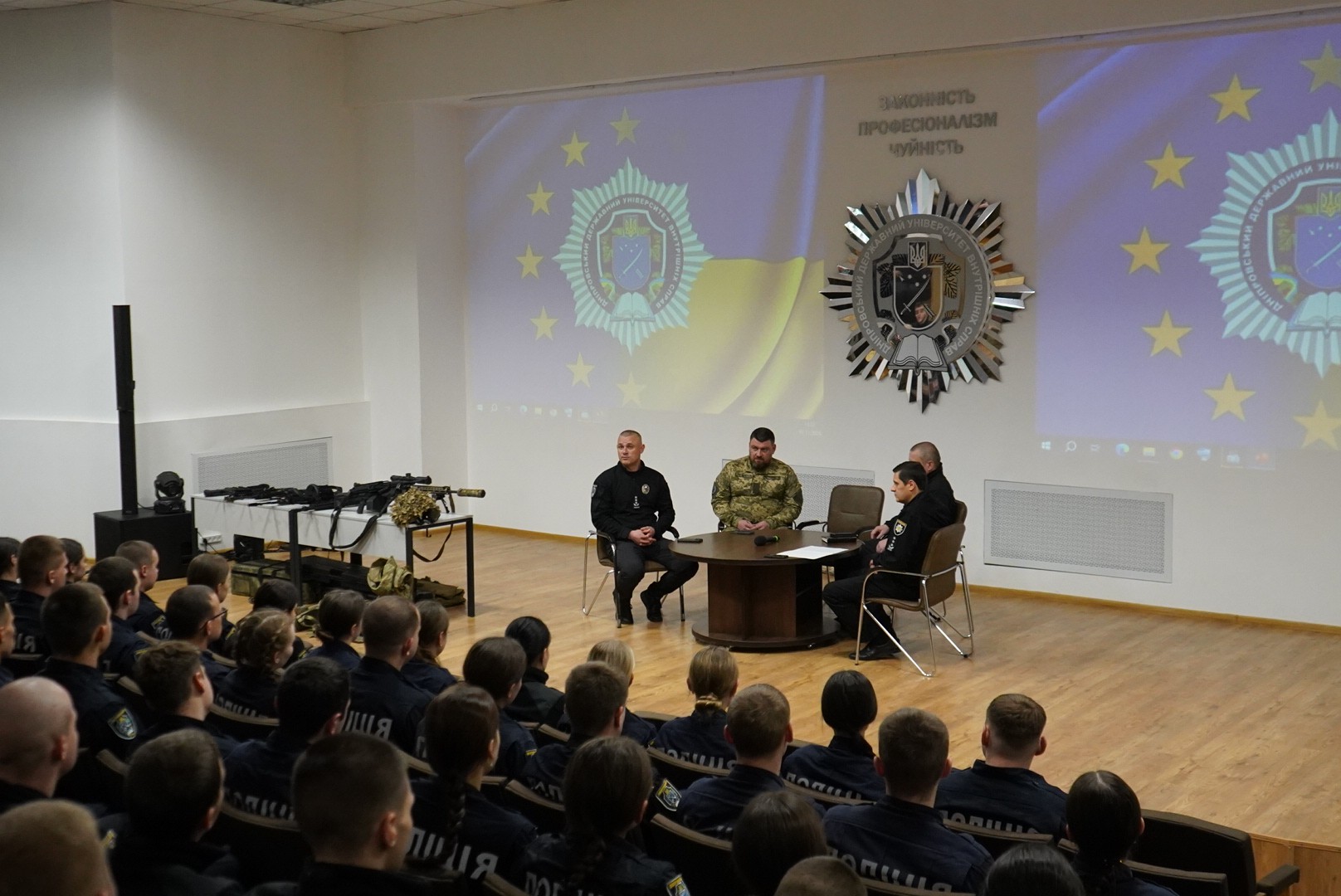
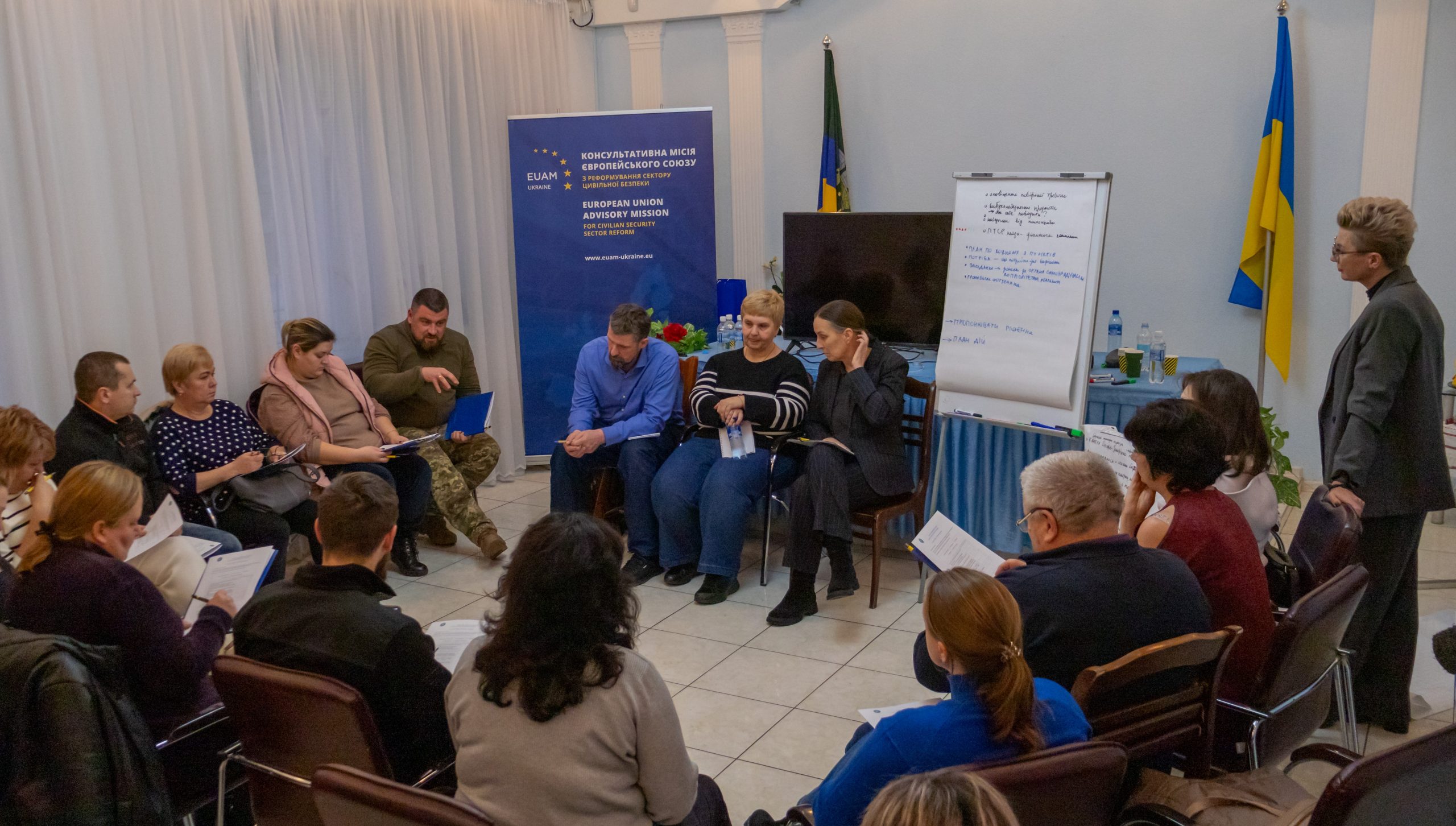
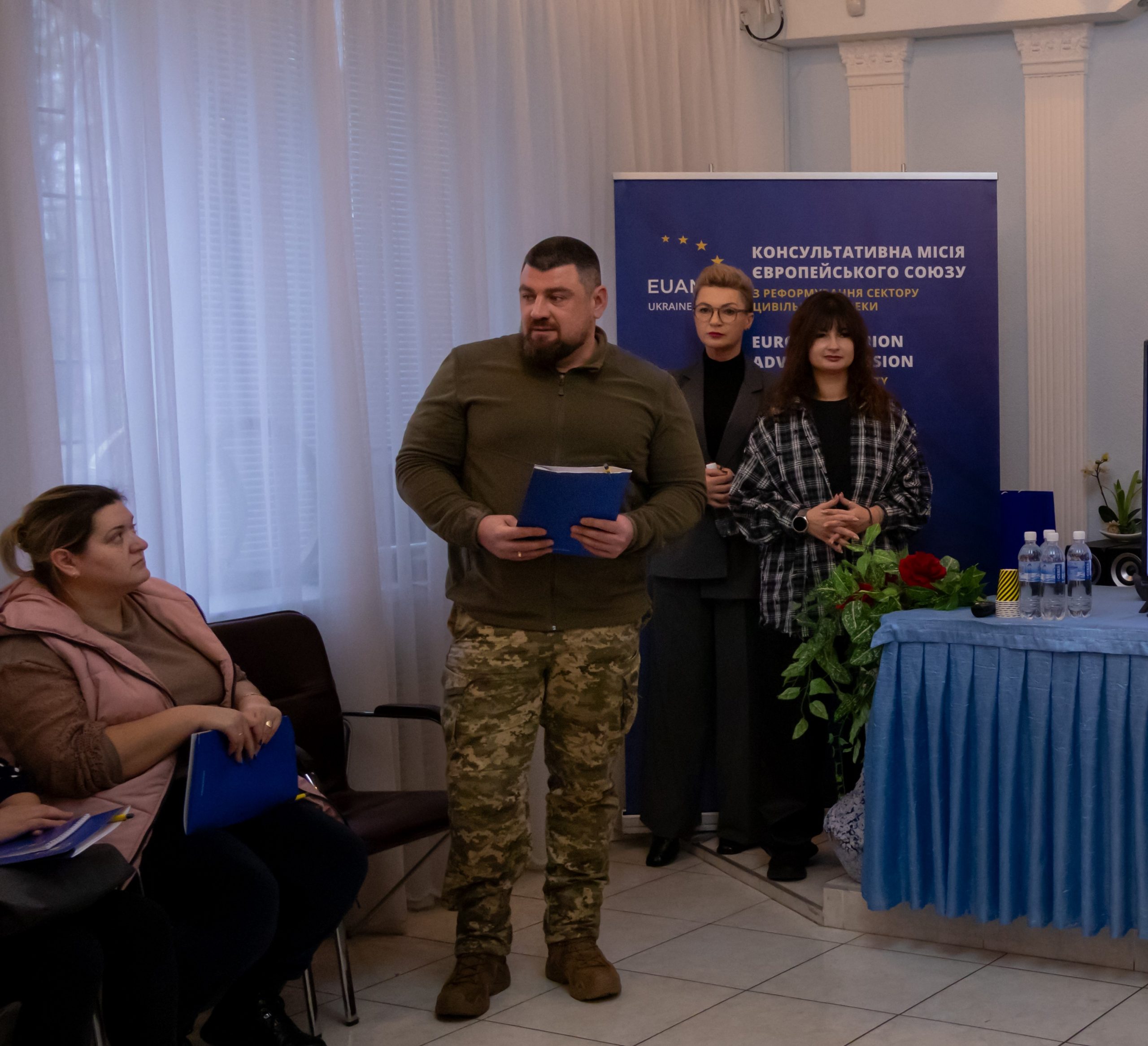
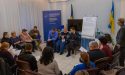
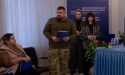
This is why Denys supports dialogue formats between communities, police, and veterans such as Community Safety Dialogues initiated by the European Union Advisory Mission Ukraine (EUAM Ukraine), which works to strengthen trust and professional policing services at the local level.
For him, this is not just another event. It is a chance to seat people next to each other who usually speak about one another, not with one another.
“I’m confident this will be productive cooperation, because we’re looking in the same direction. The EUAM Ukraine does important work, helping build dialogue between different services and communities. I see the value of initiatives like today’s Community Safety Dialogue. It’s a strong platform for people to hear each other. Step by step, that’s how trust grows,” says Denys about the EUAM Ukraine initiative.
On humanity, love, and dreams
When asked what helped him preserve his humanity during the war, Denys does not look for complicated answers.
First his brothers-in-arms. Long preparation, conversations, mutual trust. And that moment when two people exchange promises “just in case,” and then one does not return, and the other keeps their word.
“When I was wounded, the evacuation took a long time, about ten hours on foot, across a minefield, under fire. I truly didn’t know if I would survive. But I did. And I always say: it was a chance at another life. And if you’re given another life, you must live it with dignity. For those who are no longer here. There were many of them. Bright, young men… I often cry when I remember them. That’s what kept my humanity alive,” Denys Skaleukh shares his emotions.
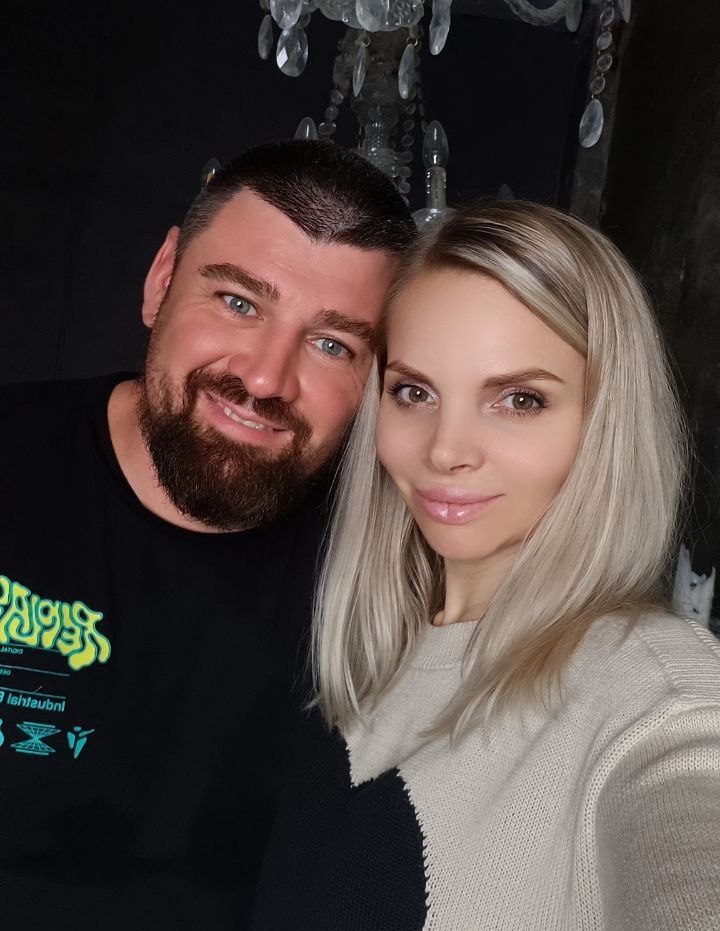
There is another pillar in Denys’s life — love. During the war, when his unit was stationed near Dnipro, he met a woman who later became his wife. “At the time, I didn’t yet know who she would become to me,” Denys admits. His decision to stay in the city was connected to her.
At the front, he says, he hardly thought about it “there are different thoughts there.” But after being wounded, everything narrowed to one thing:
“I thought only about her. I wanted to survive to be with her,” Skaleukh recalls.
Today, her support means even more. She has been there from the very first day, calmly and without conditions.
“She tells me, ‘You’ll manage,’” Denys smiles. “And then I start believing it too.”
He speaks about the future without grand declarations: professionally, he sees himself working with veterans and developing veteran initiatives; personally, he dreams of simple and essential things.
“I want children. I think I will have them,” he says. “And my biggest dream is victory – without which all other plans become conditional.”
At the end of the conversation, he addresses those who will read this story, especially veterans, police officers, people in communities: “Look at those who have made it through and take them as your reference point. If someone managed to survive loss, injury, bureaucracy, mistrust, and still remained a kind, humane person who helps others, then you can too. The main thing is not to lose faith in yourself and in the people around you.”
And then he adds with a smile: “Even if you’ve been eaten you still have two ways out.” And in that is Denys Skaleukh: without embellishment, without loud words, but with a deep sense of meaning – a man who returned from war and began holding others.
