
When crime crosses borders, investigations must follow: EUAM links Ukrainian and EU practice
April 30, 2026
Drug trafficking and other organised crime cases rarely stay within one country. Evidence, suspects and financial flows move across borders, and investigations must be able to follow. This requires police and prosecutors to work with shared methods, compatible procedures and direct professional contacts.
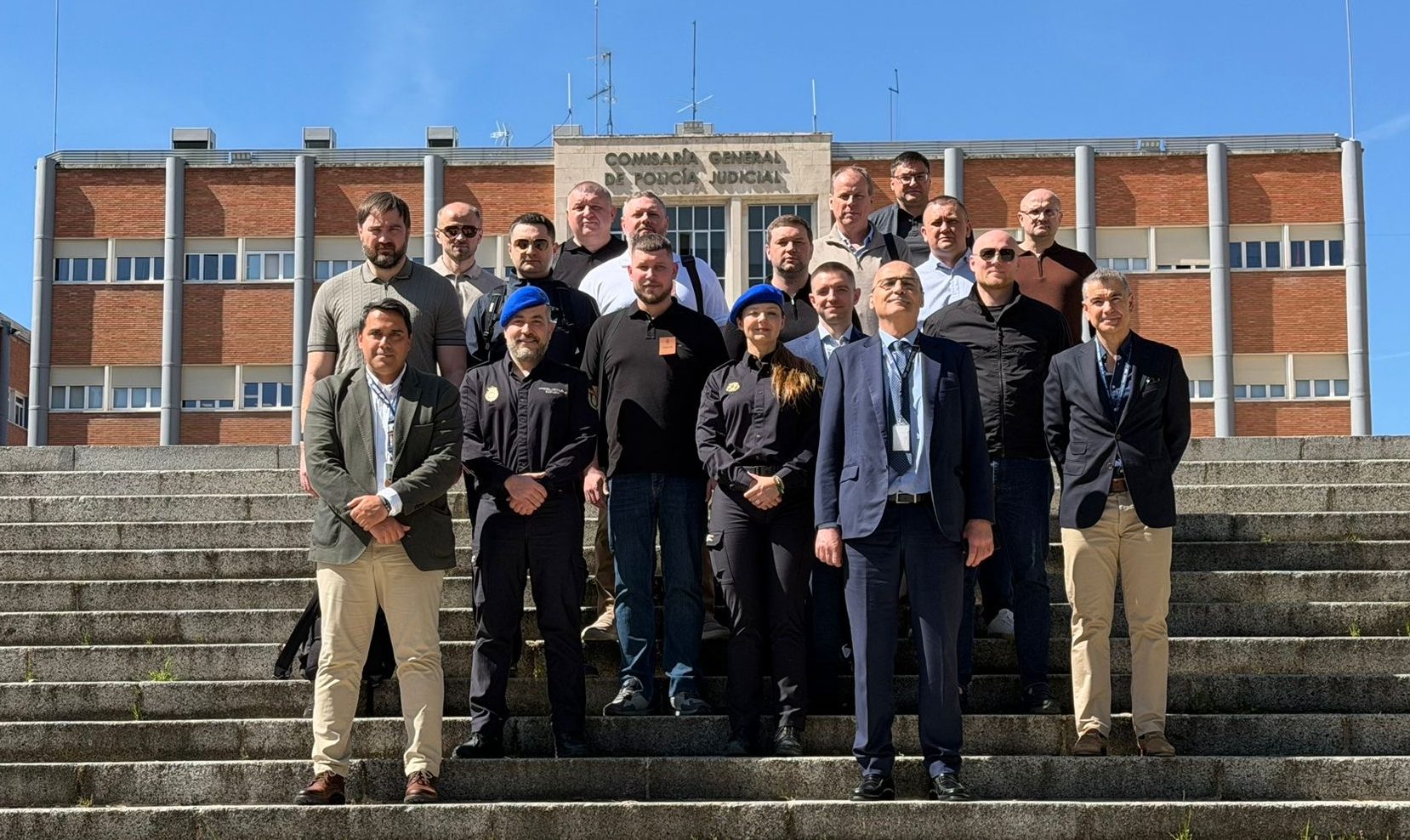
To support this, the European Union Advisory Mission (EUAM) Ukraine facilitated a study visit to Spain in early April for a Ukrainian delegation composed of representatives of the Prosecutor General’s Office of Ukraine, regional prosecutors, and counter-narcotic units of the National Police of Ukraine.
The visit addressed how Ukrainian police and prosecutors can strengthen investigations when cases extend across several jurisdictions.
“Organised crime cannot be investigated effectively in isolation,” said Anastasiya Reshetova Ovchynnikova, EUAM’s Senior Adviser on Criminal Investigations. “A case may begin with one operational lead in one country and continue through several other jurisdictions. For that case to succeed, institutions need shared tools, common standards and direct professional contacts.”
Spain provided a practical reference point. Through exchanges with the Policía Nacional and the Fiscalía Especial Antidroga, Ukrainian participants saw how counter-narcotics and organised crime cases are handled through close coordination between investigators and prosecutors, including in complex cross-border investigations linked to ports and trafficking routes.
A central focus of the exchange was the early coordination between investigators and prosecutors. Participants examined how operational intelligence is turned into evidence and aligned with legal strategy from the outset, reducing gaps in case files and increasing the likelihood of successful prosecution.
The visit also gave participants practical insight into international cooperation tools, including Joint Investigation Teams and EU mechanisms supporting cross-border investigations, with emphasis on their effective use in real cases.
“The purpose of this visit was not only to learn how Spain works,” said Daniel Santiago Ferro, EUAM’s Head of Criminal Investigation Unit. “It was to help Ukrainian institutions identify what can be adapted to their own operational reality, from intelligence-led policing to joint investigations and faster cooperation with EU partners.”
The visit underlined that tackling organised crime depends not only on legal frameworks or resources, but on systems that connect institutions across borders and throughout the investigative process.
