
Missing Persons in Ukraine: Improving Coordination to Deliver Answers
March 26, 2026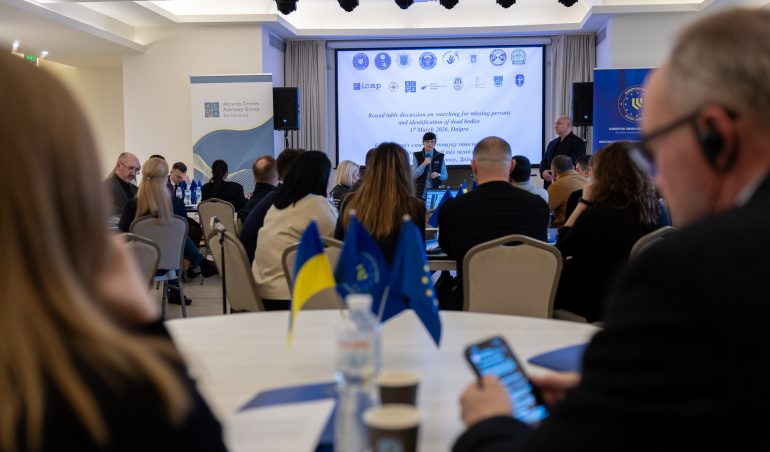
Uncertainty is one of the most difficult consequences of war. For thousands of families across Ukraine, the lack of information about missing relatives and loved ones remains a daily burden. According to Ukrainian authorities, more than 90,000 Ukrainians are listed as missing. And this number is not final.
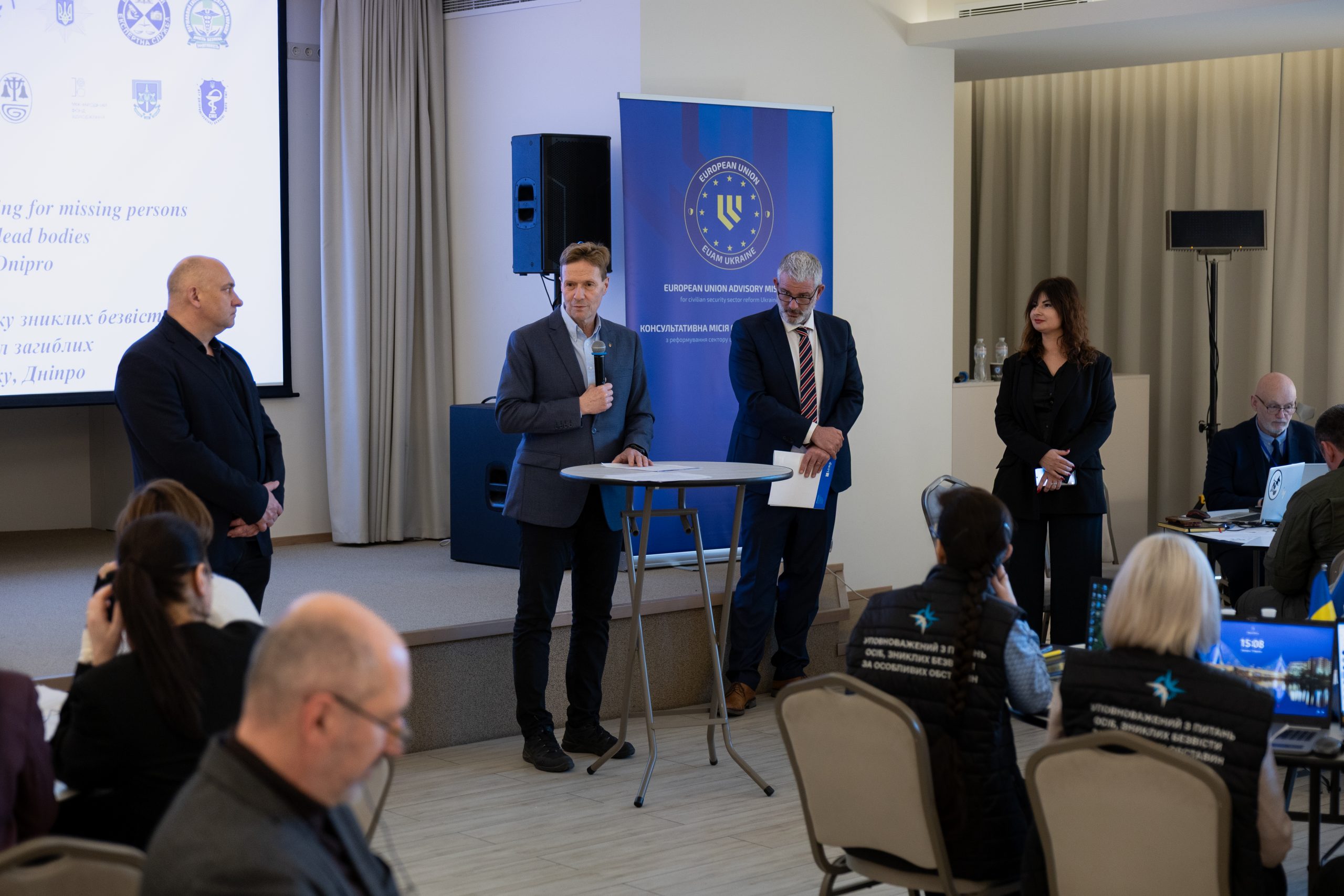
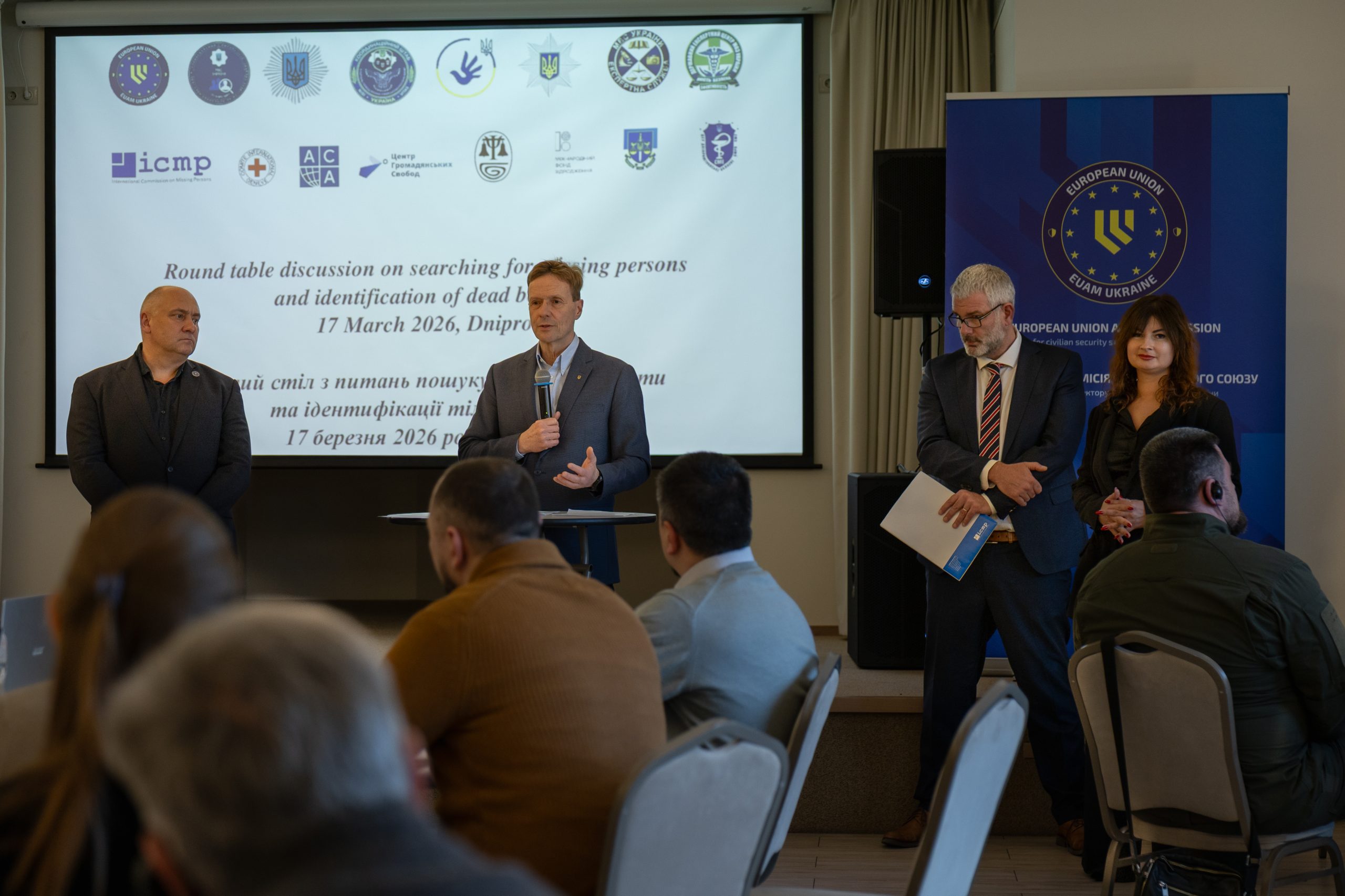
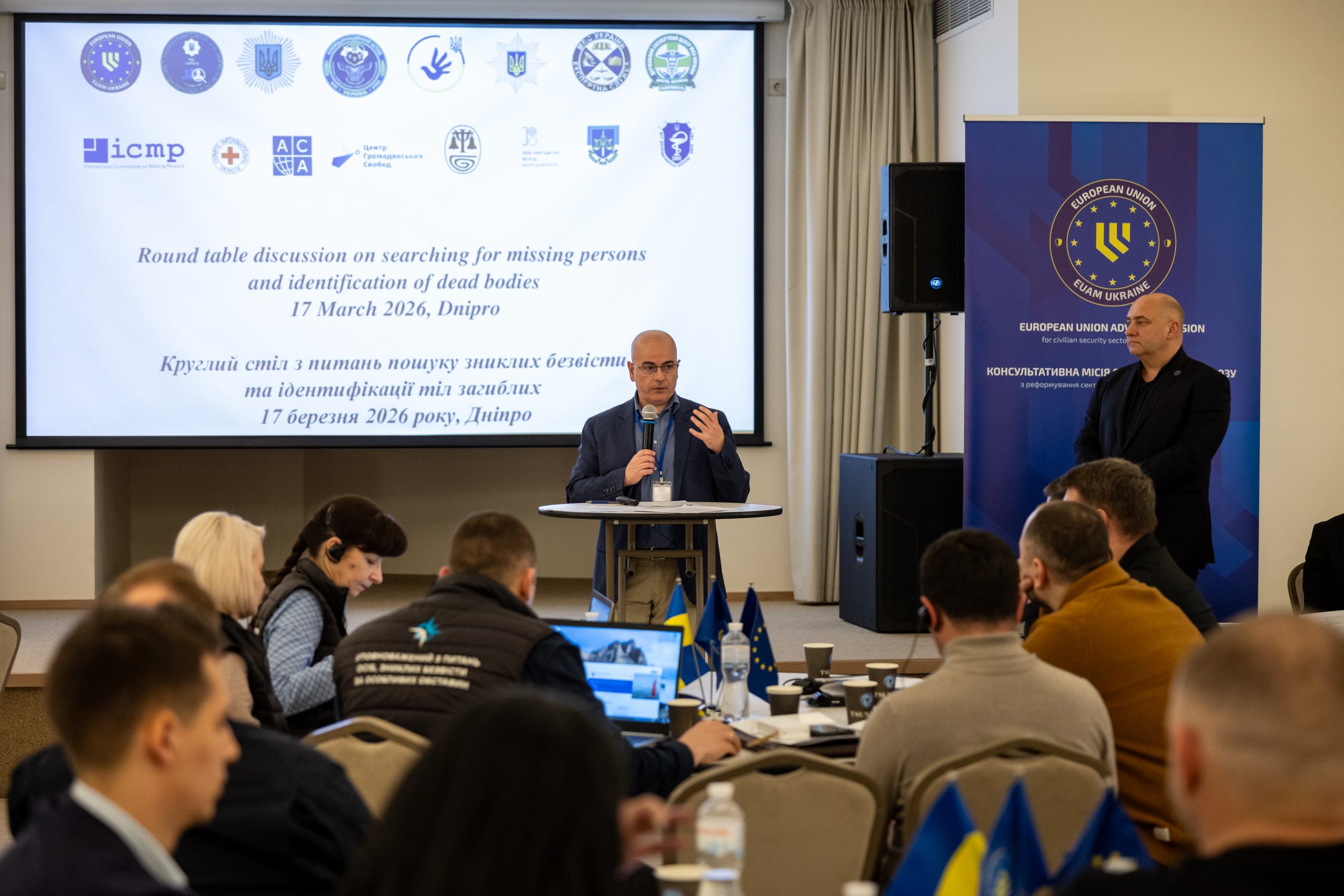
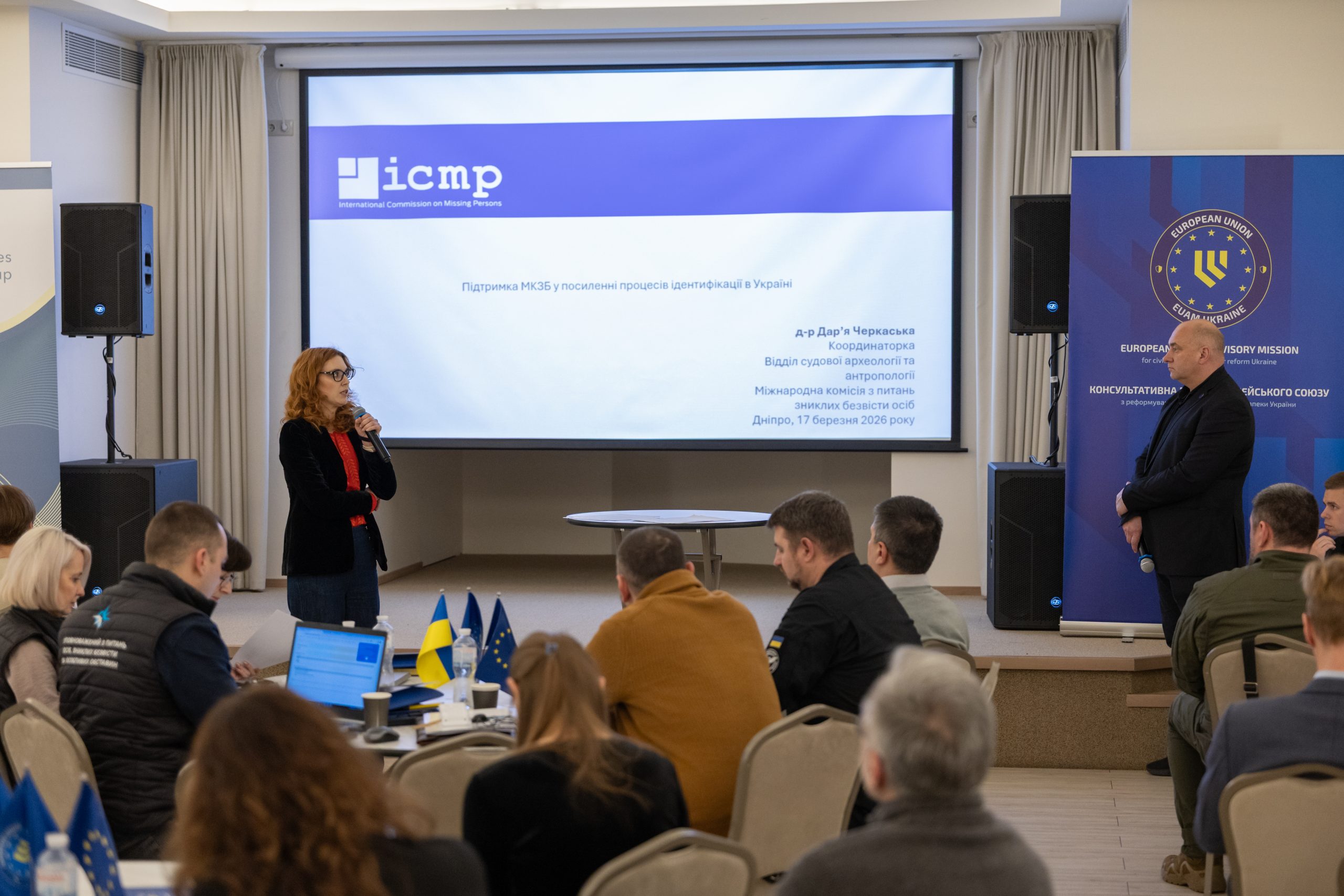
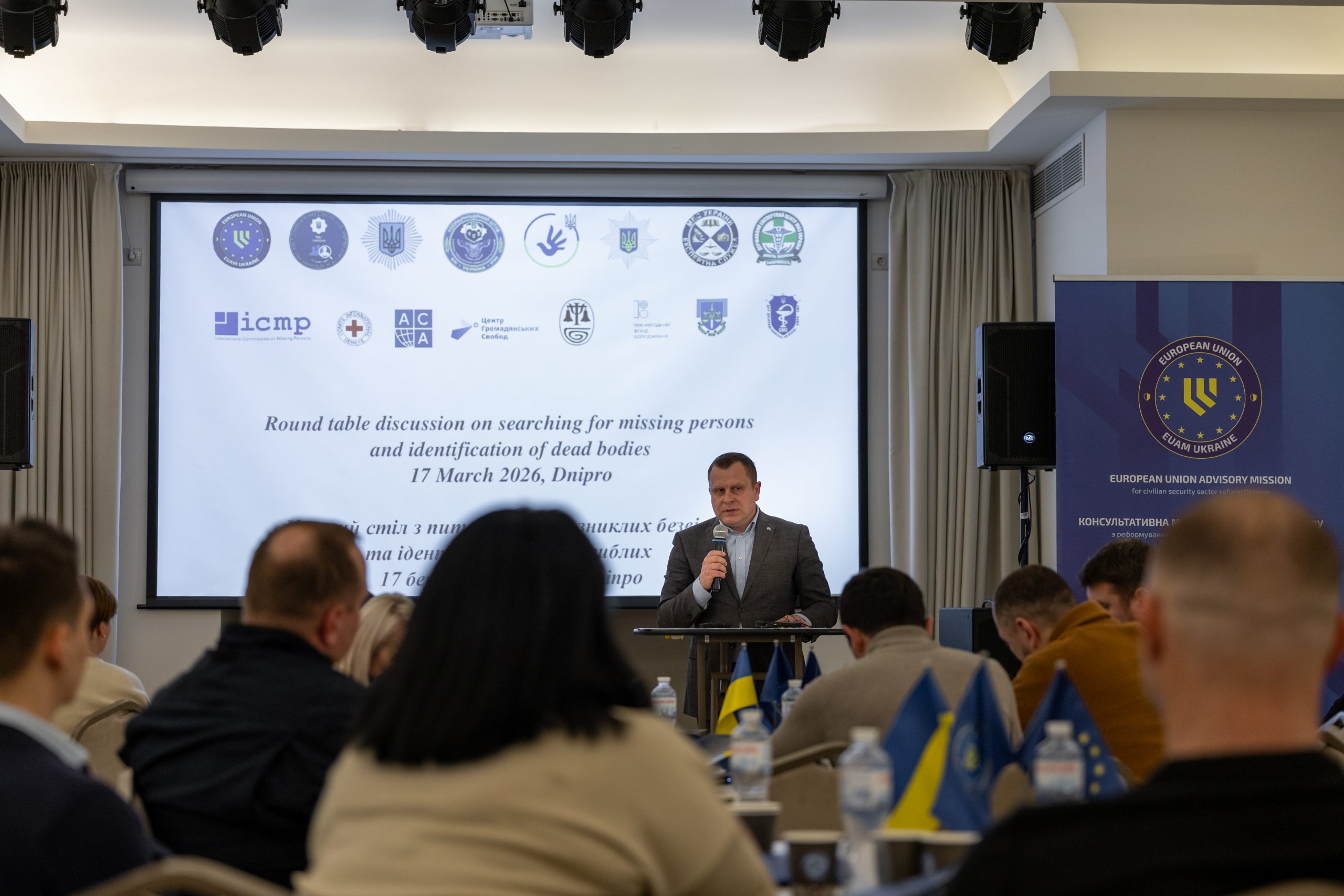
How to improve the way cases of missing persons are investigated, coordinated and communicated — and, ultimately, how to bring answers to those who are waiting — was at the centre of discussions at a roundtable in Dnipro last week. The event was organised by the European Union Advisory Mission (EUAM) Ukraine in cooperation with the Commissioner for Persons Missing Under Special Circumstances.
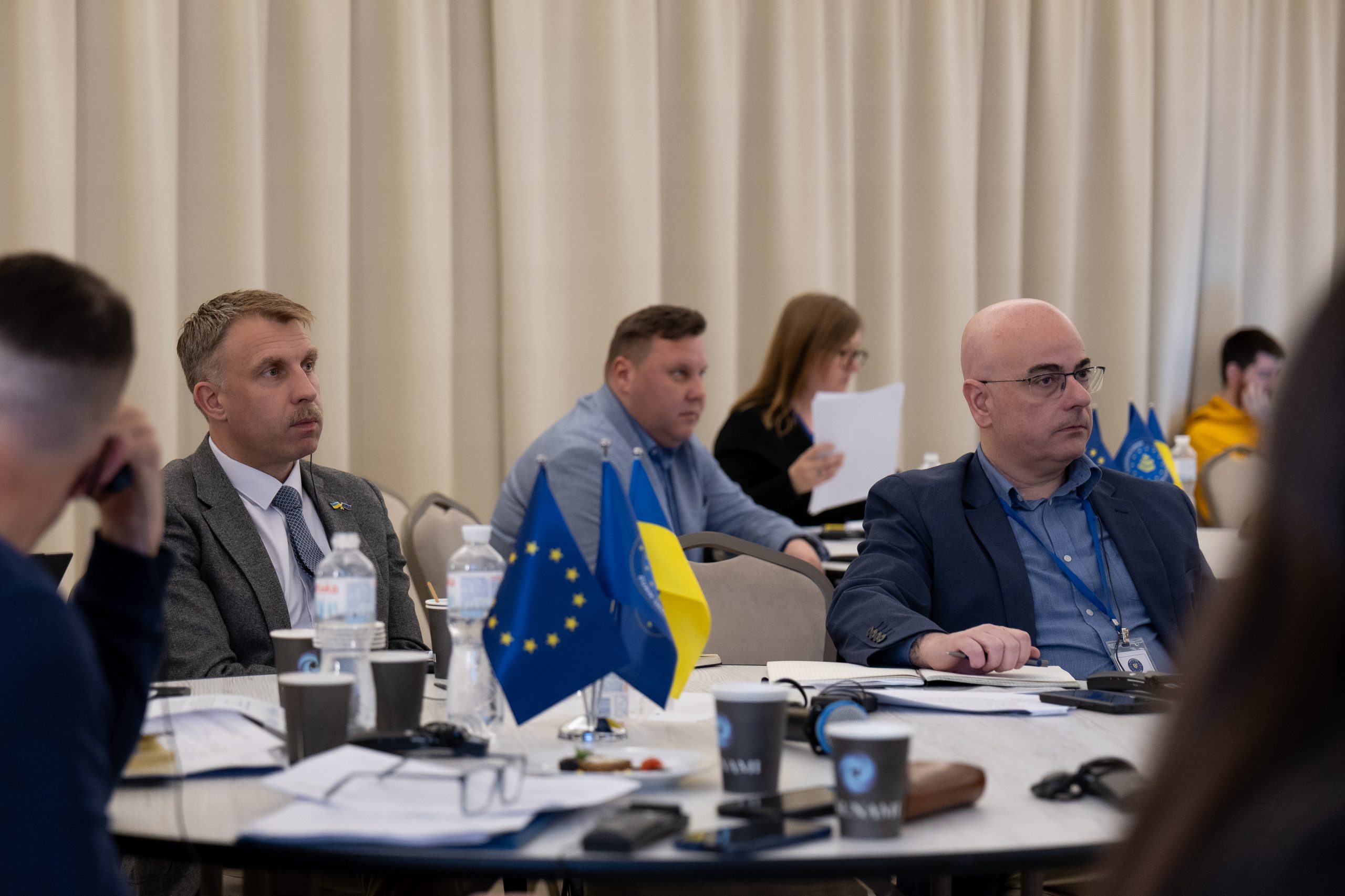
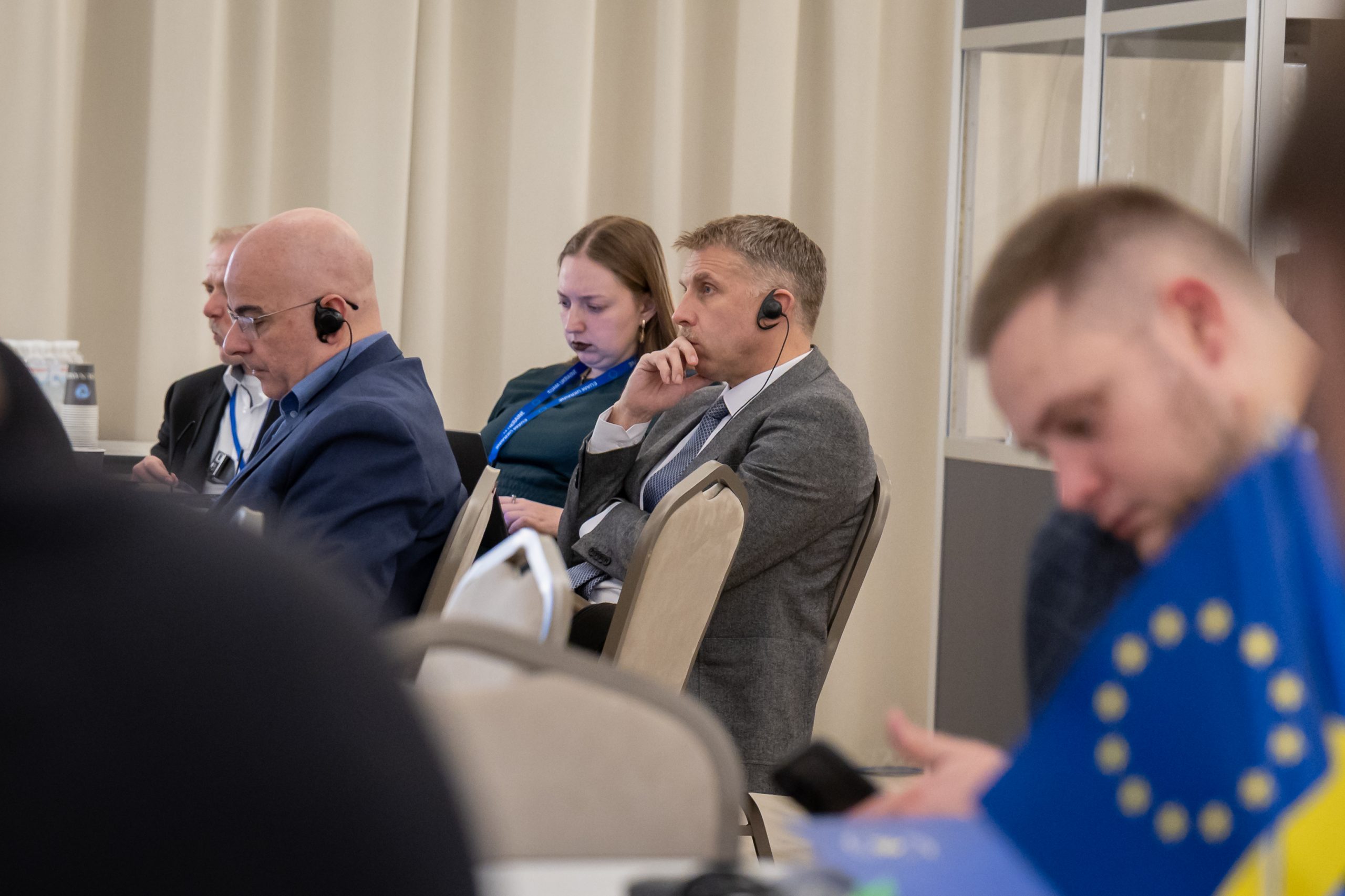
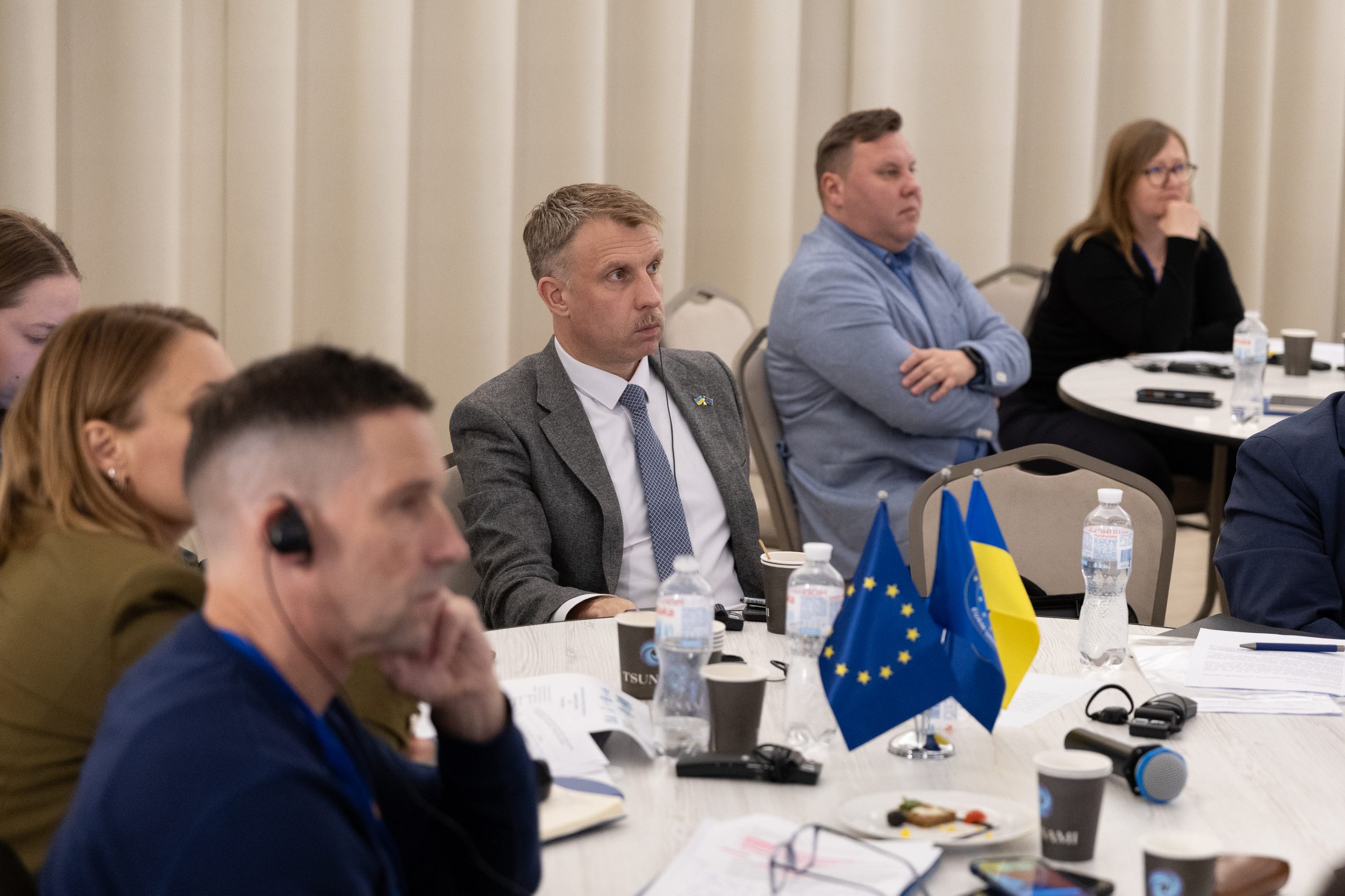
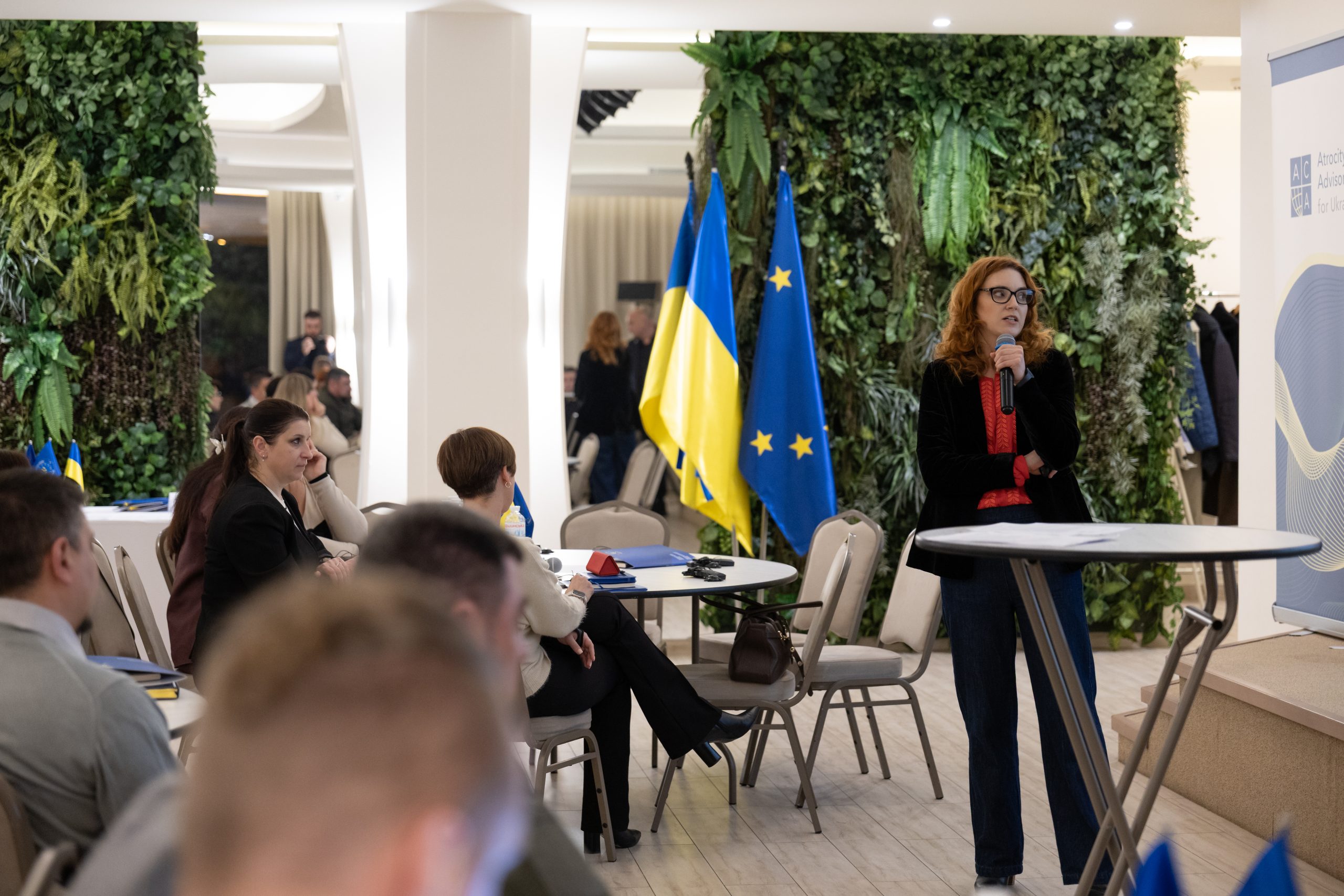
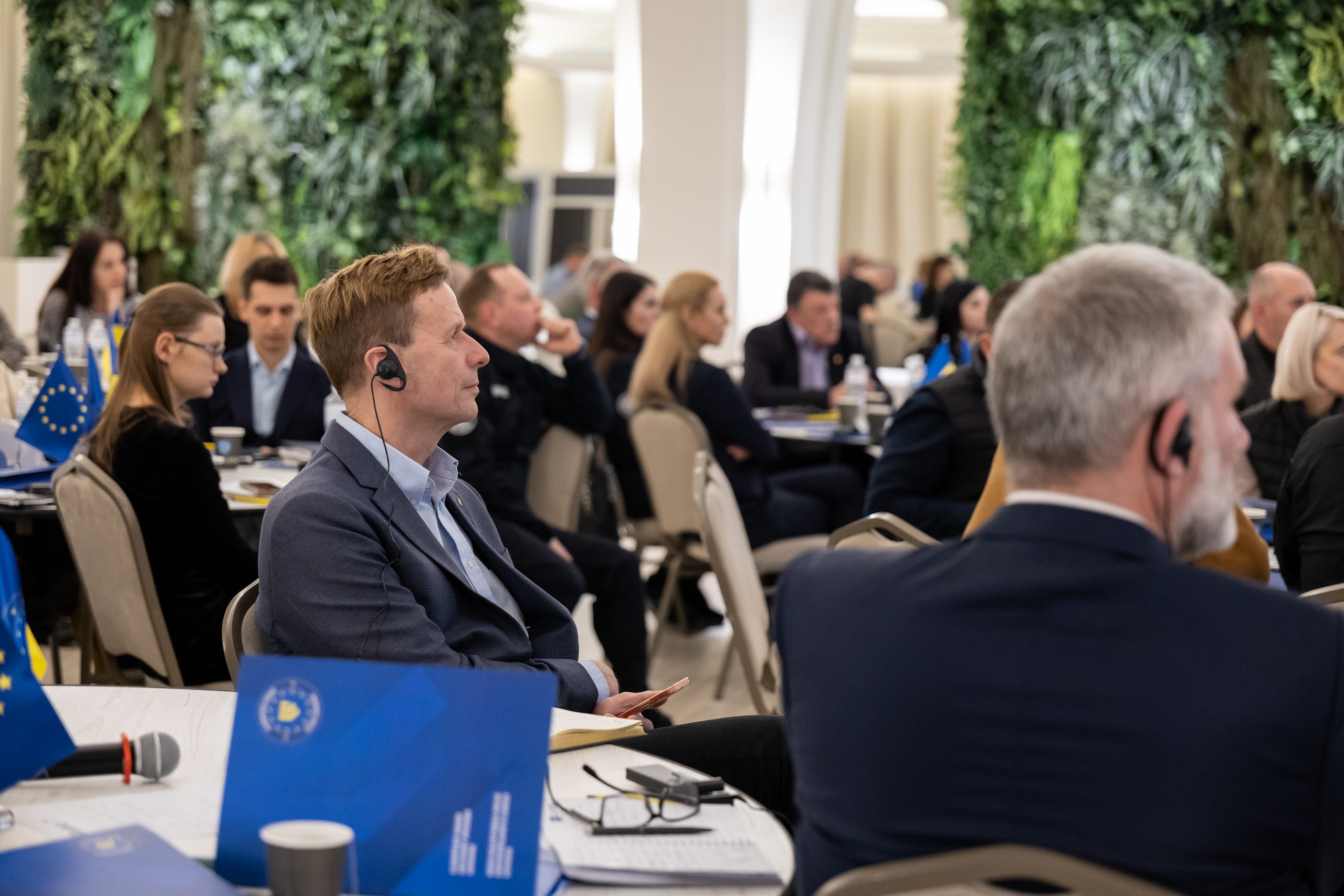
The discussion brought together representatives of law enforcement agencies, forensic institutions, ministries, the Ombudsman’s Office, international organisations and NGOs. The aim was to exchange views on existing problems and to identify practical ways forward.
At the centre of the conversation was coordination. Participants highlighted that while multiple institutions are involved — from investigators and forensic experts to prosecutors and humanitarian actors — gaps in information exchange continue to slow down processes and complicate case management.
In response, several priority areas were identified. Improving the exchange of information between institutions was seen as essential, alongside clearer mechanisms for cooperation in the identification of bodies and the handling of forensic data. Participants also underlined the importance of transparency in communication with families, stressing that trust depends not only on results, but also on how information is shared during investigations.
Dnipro’s experience played a central role in the discussion. As one of Ukraine’s key regional hubs for forensic work and missing persons investigations, the region has developed practical approaches that can be applied elsewhere. Sharing those lessons — and scaling them nationally — was seen as a priority.
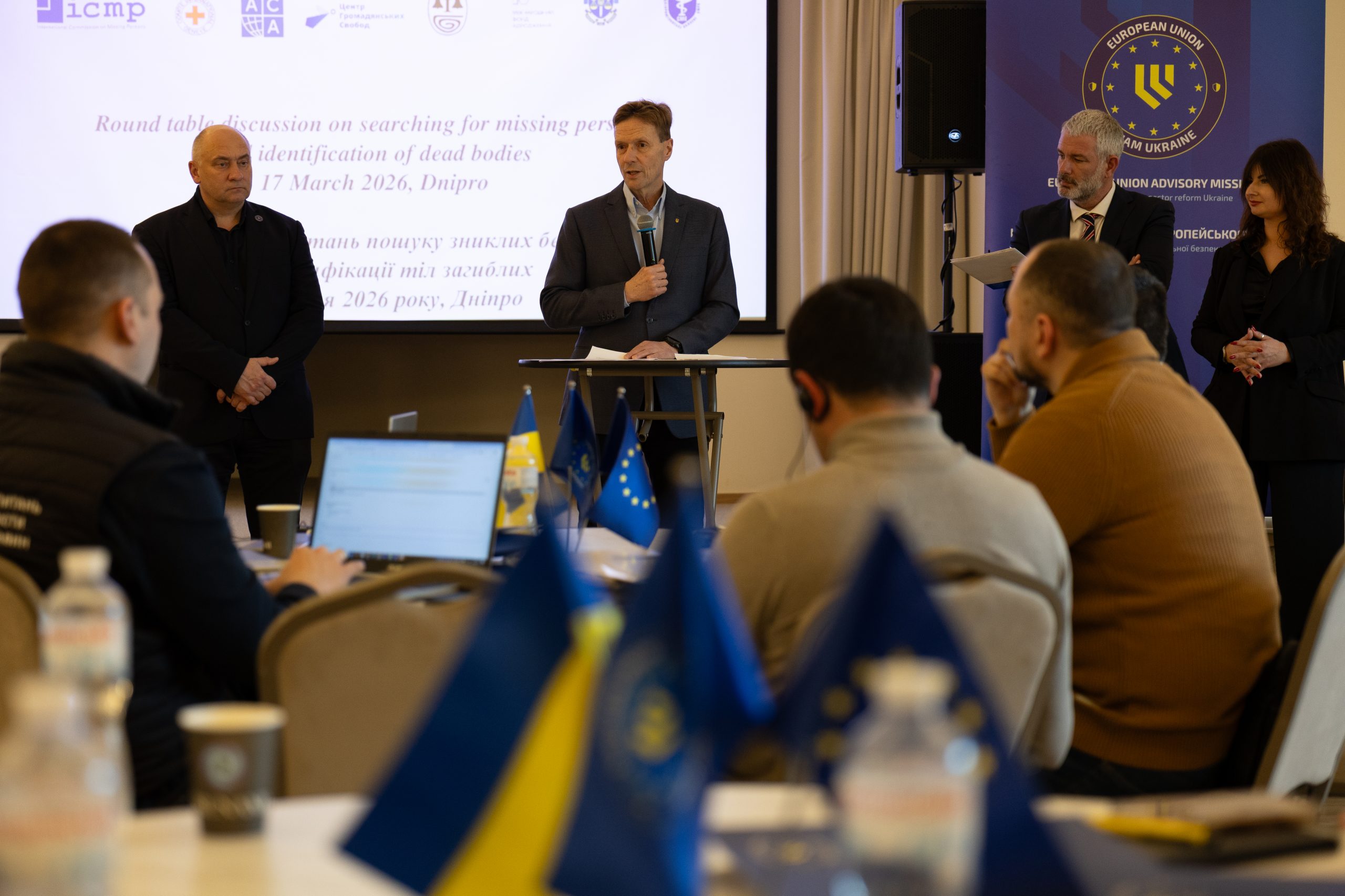
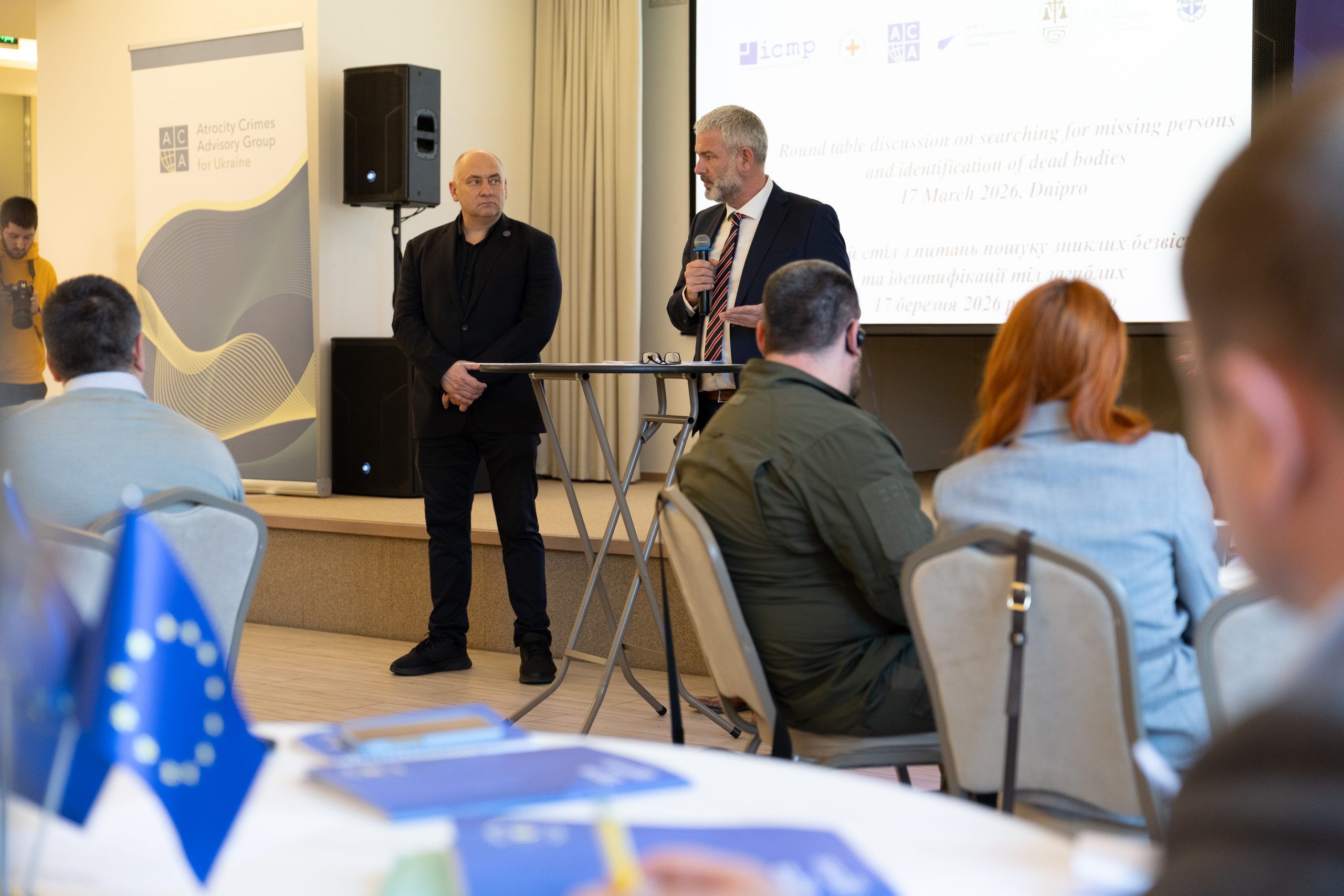
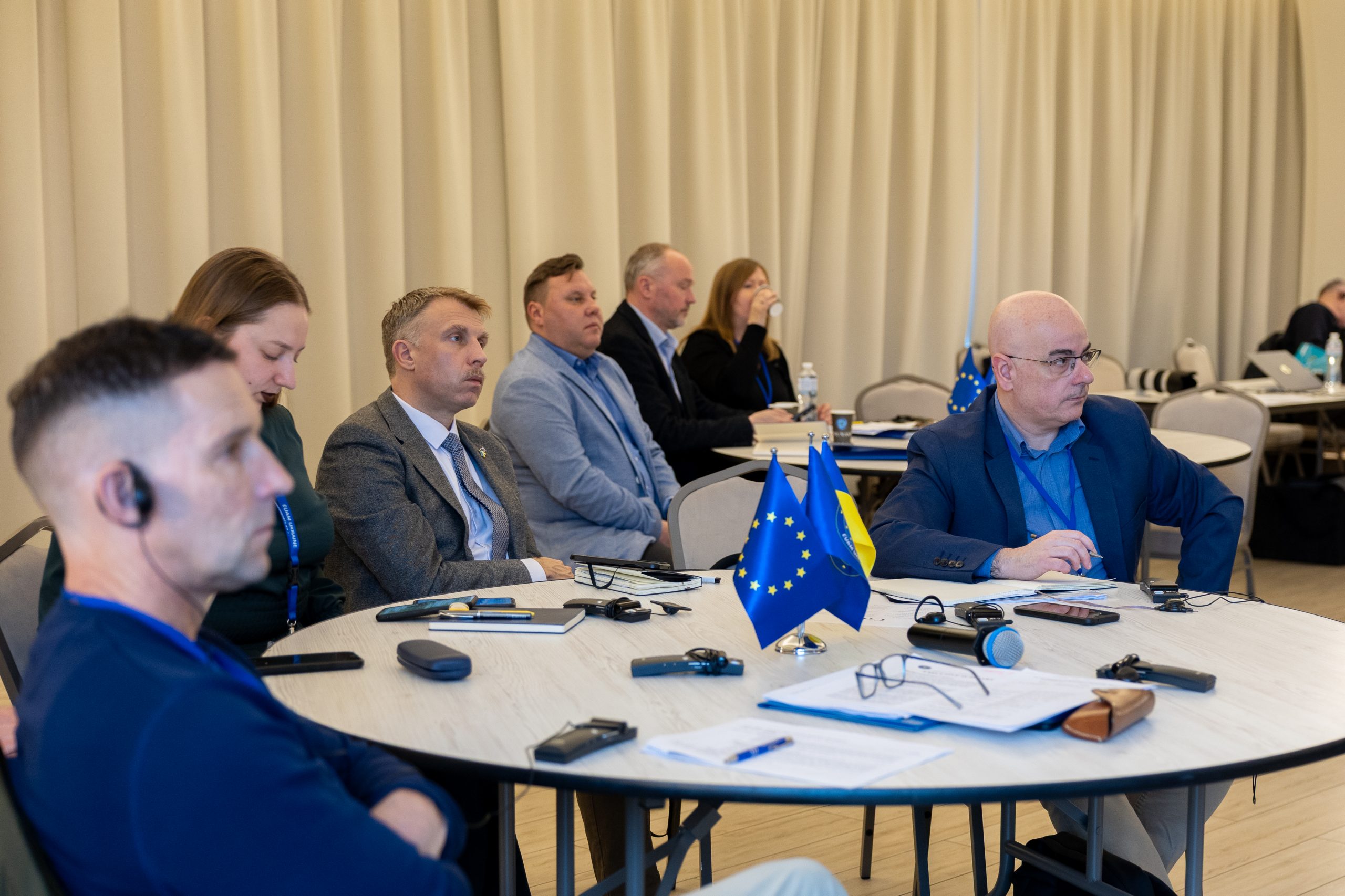
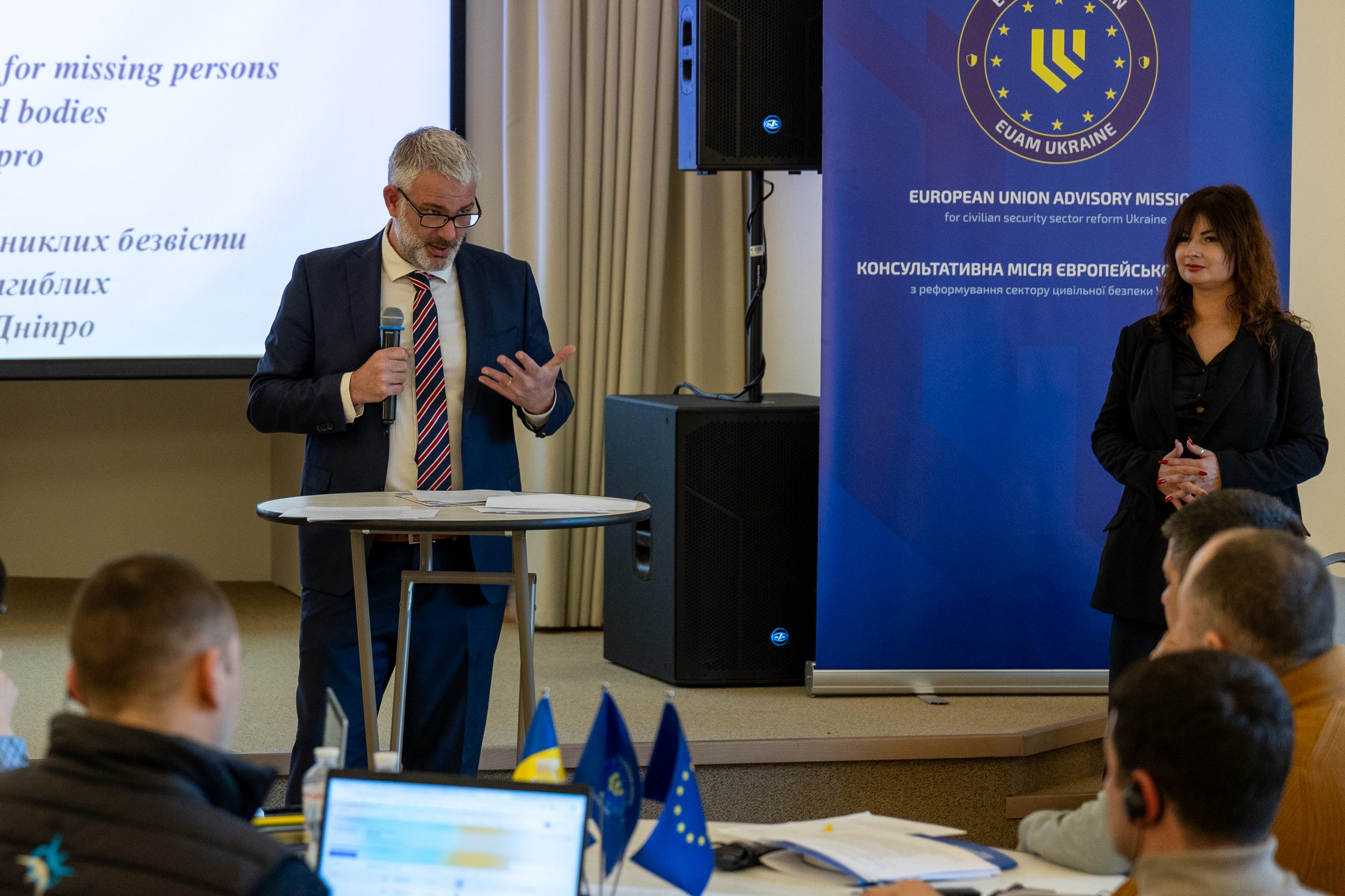
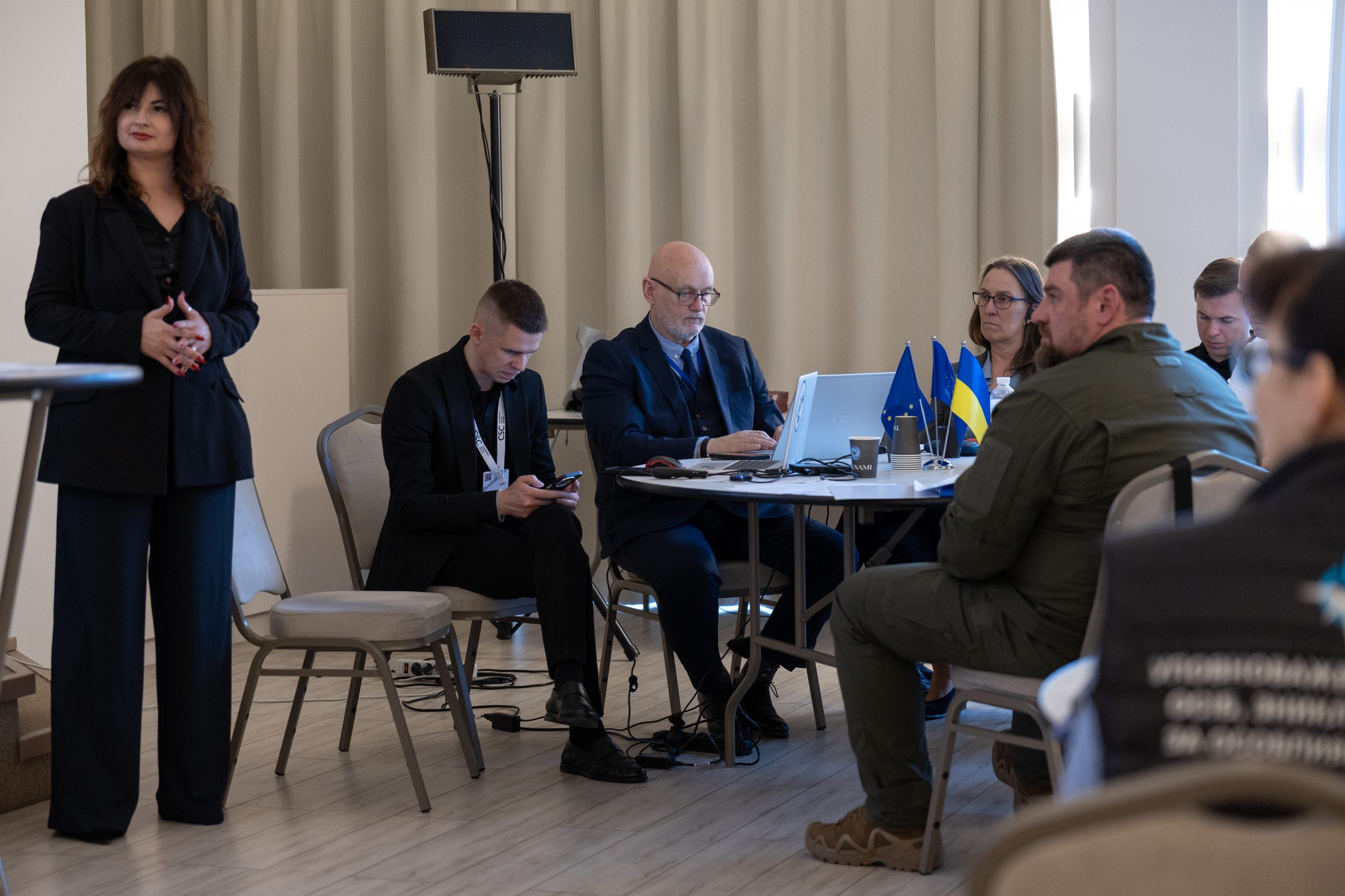
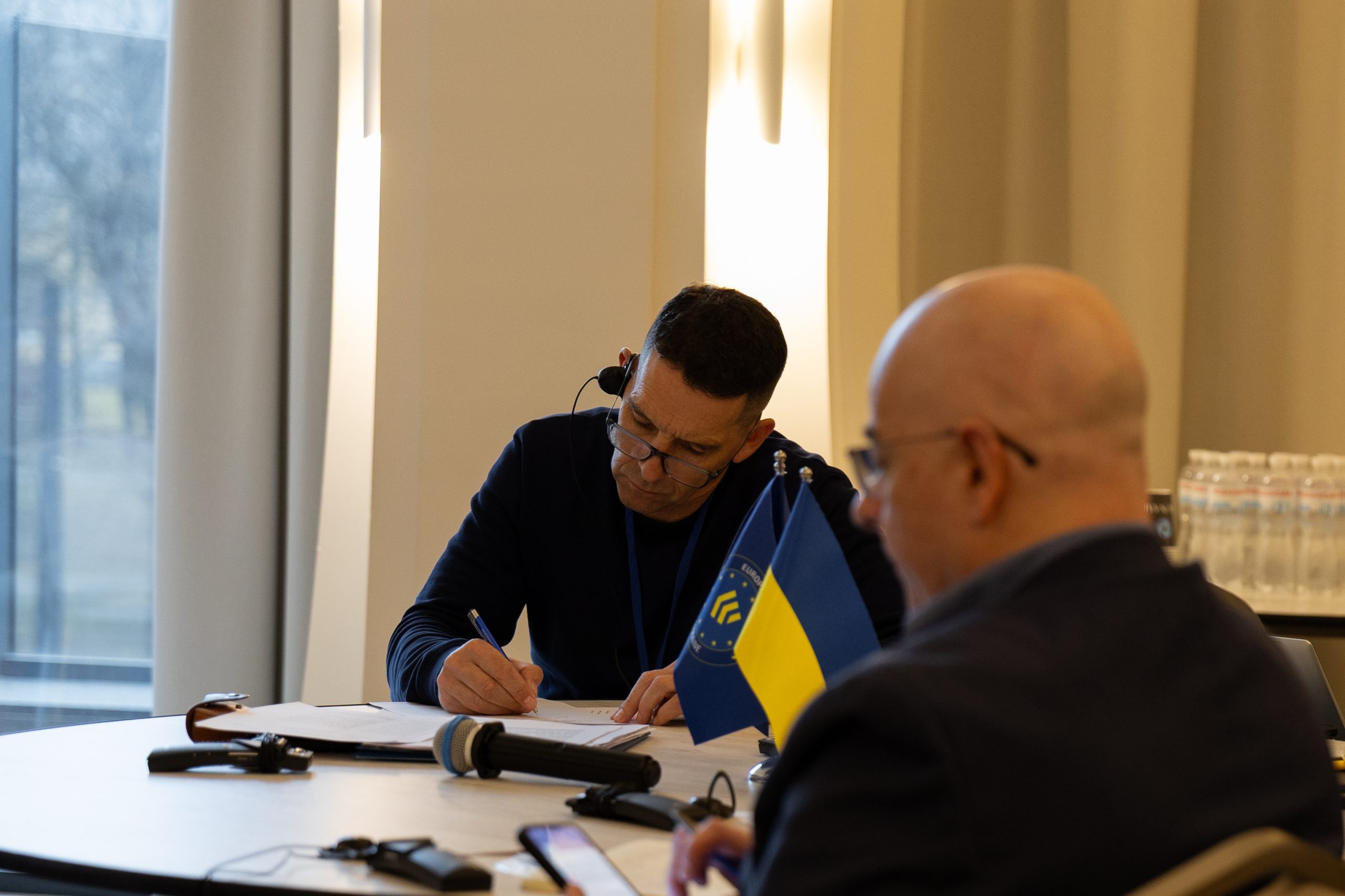
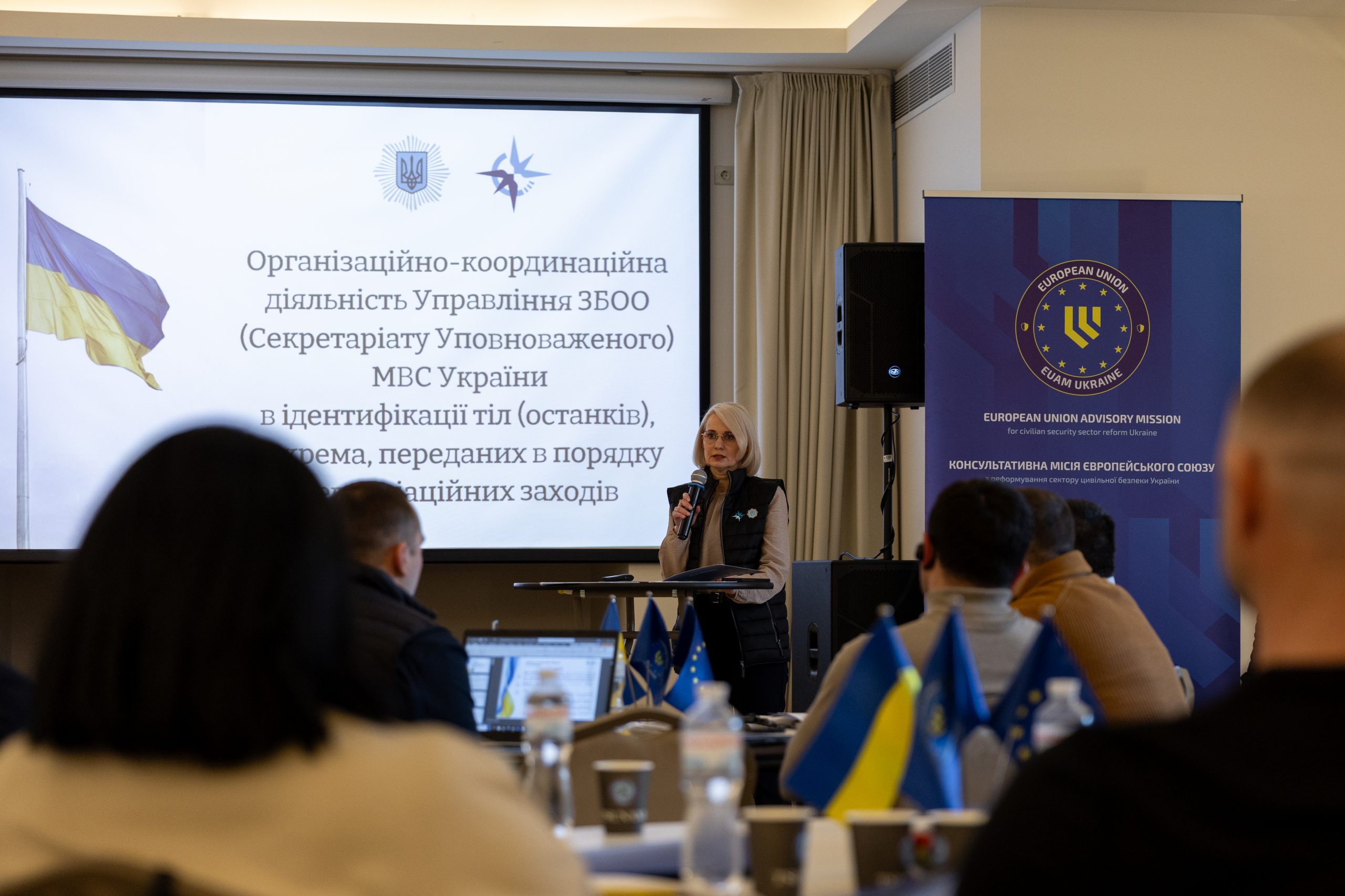
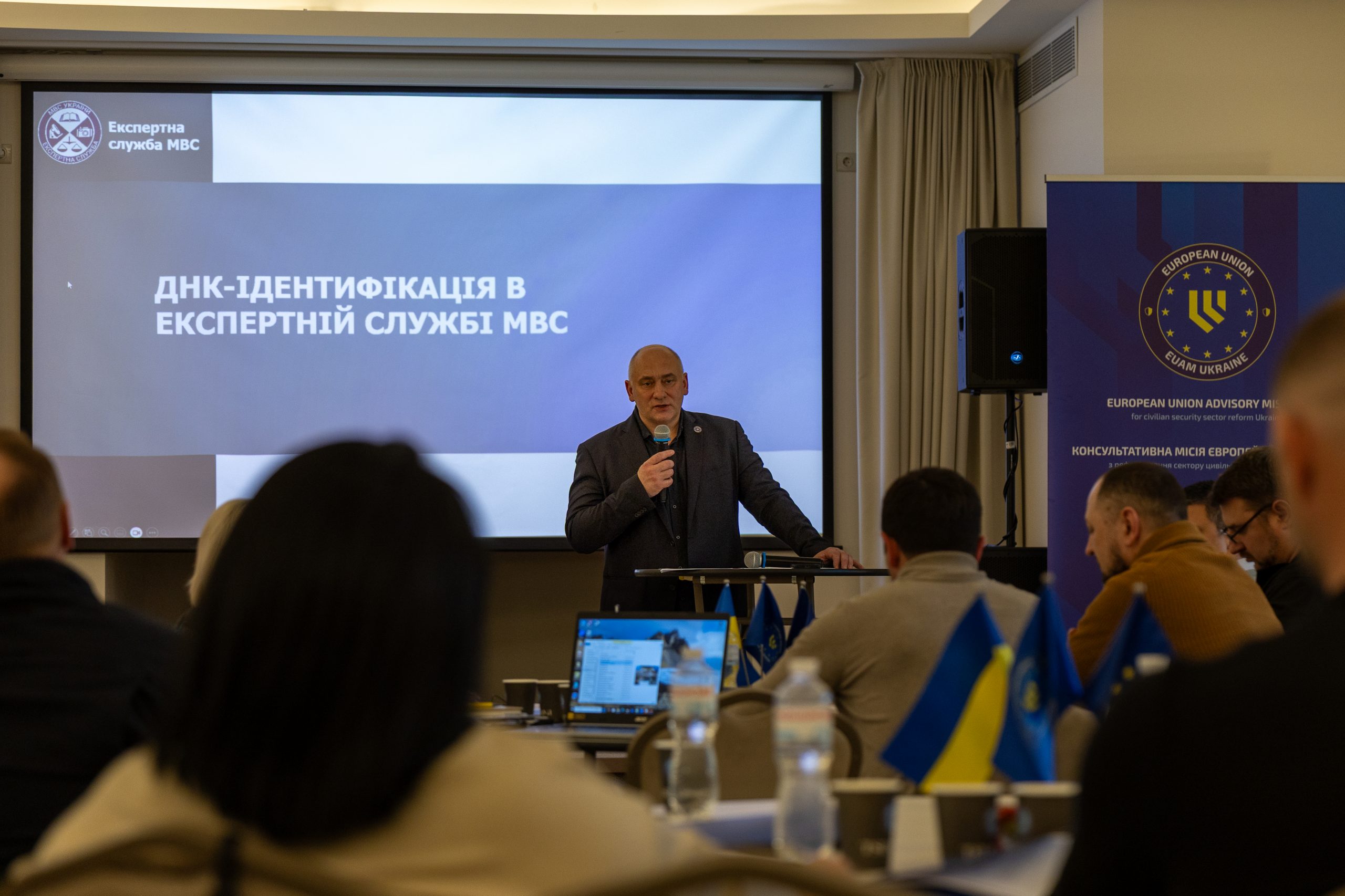
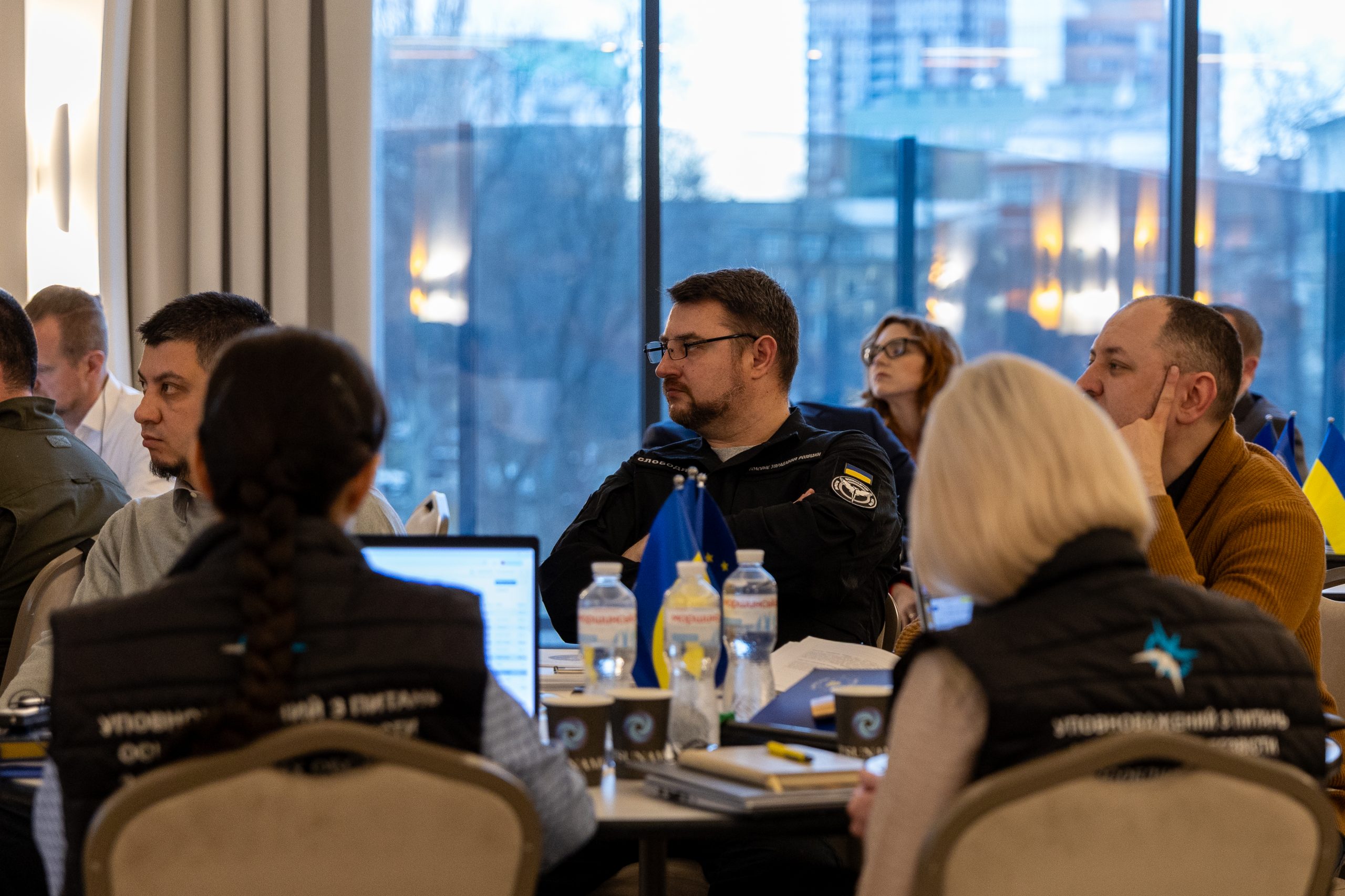
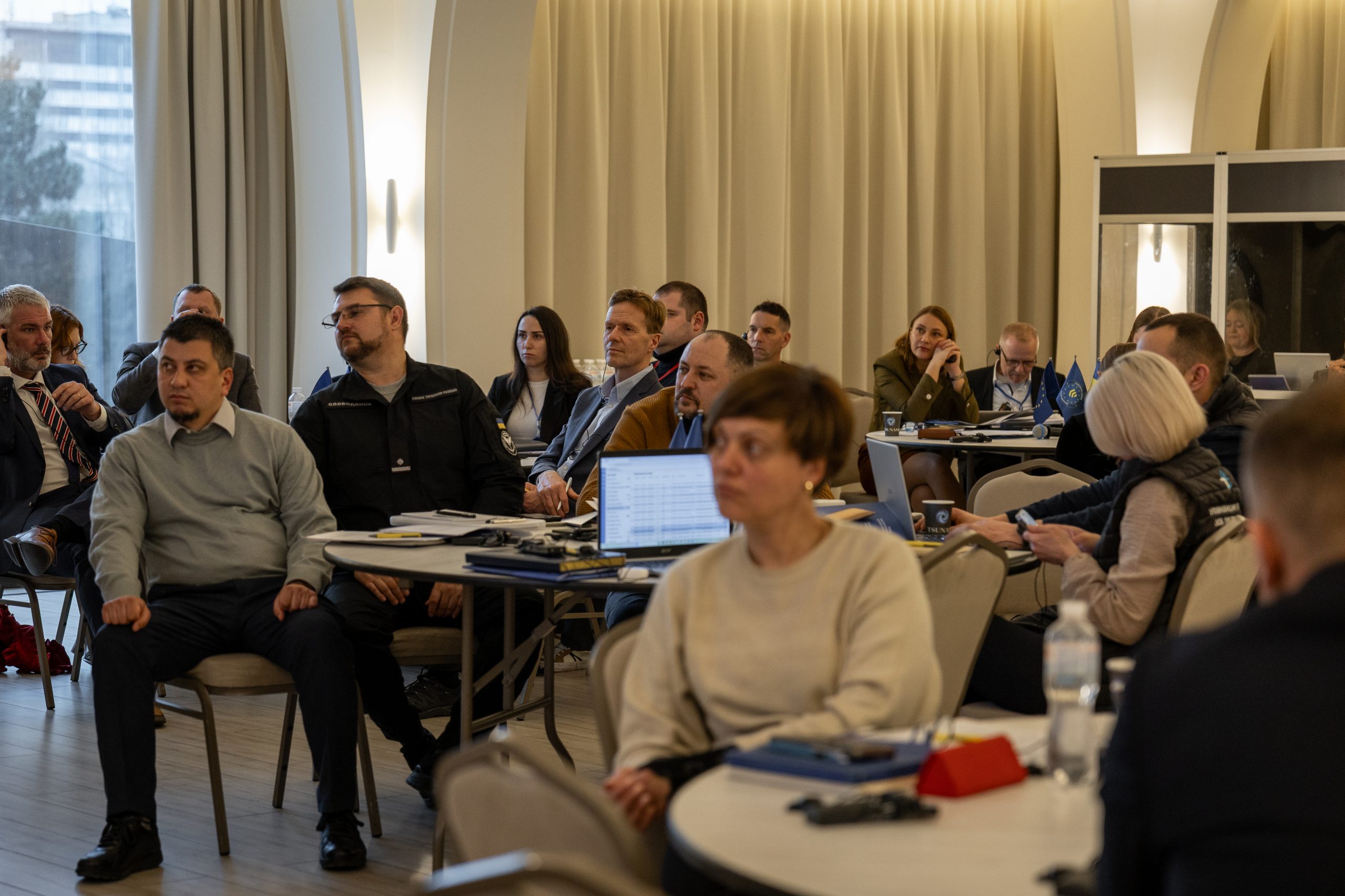
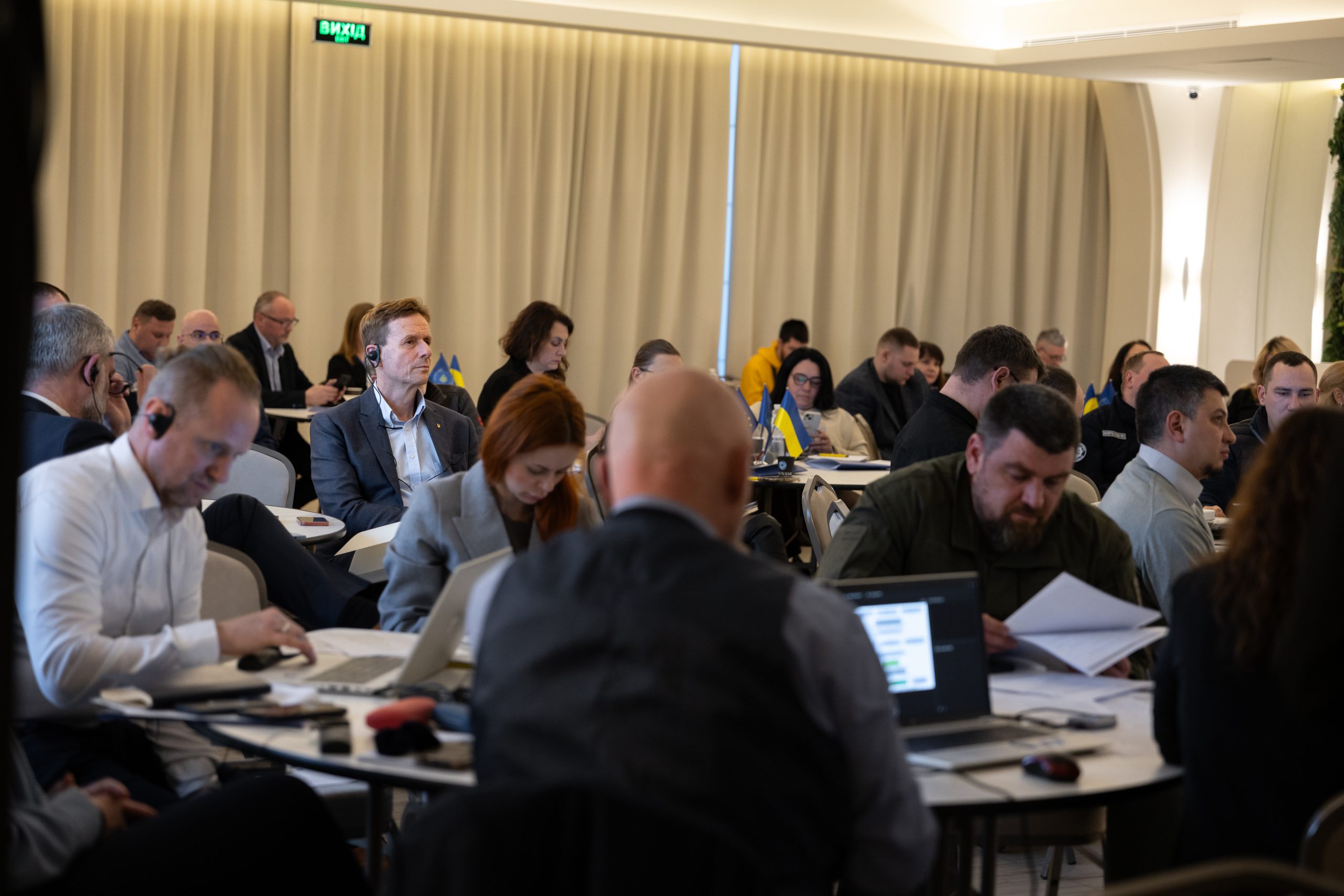
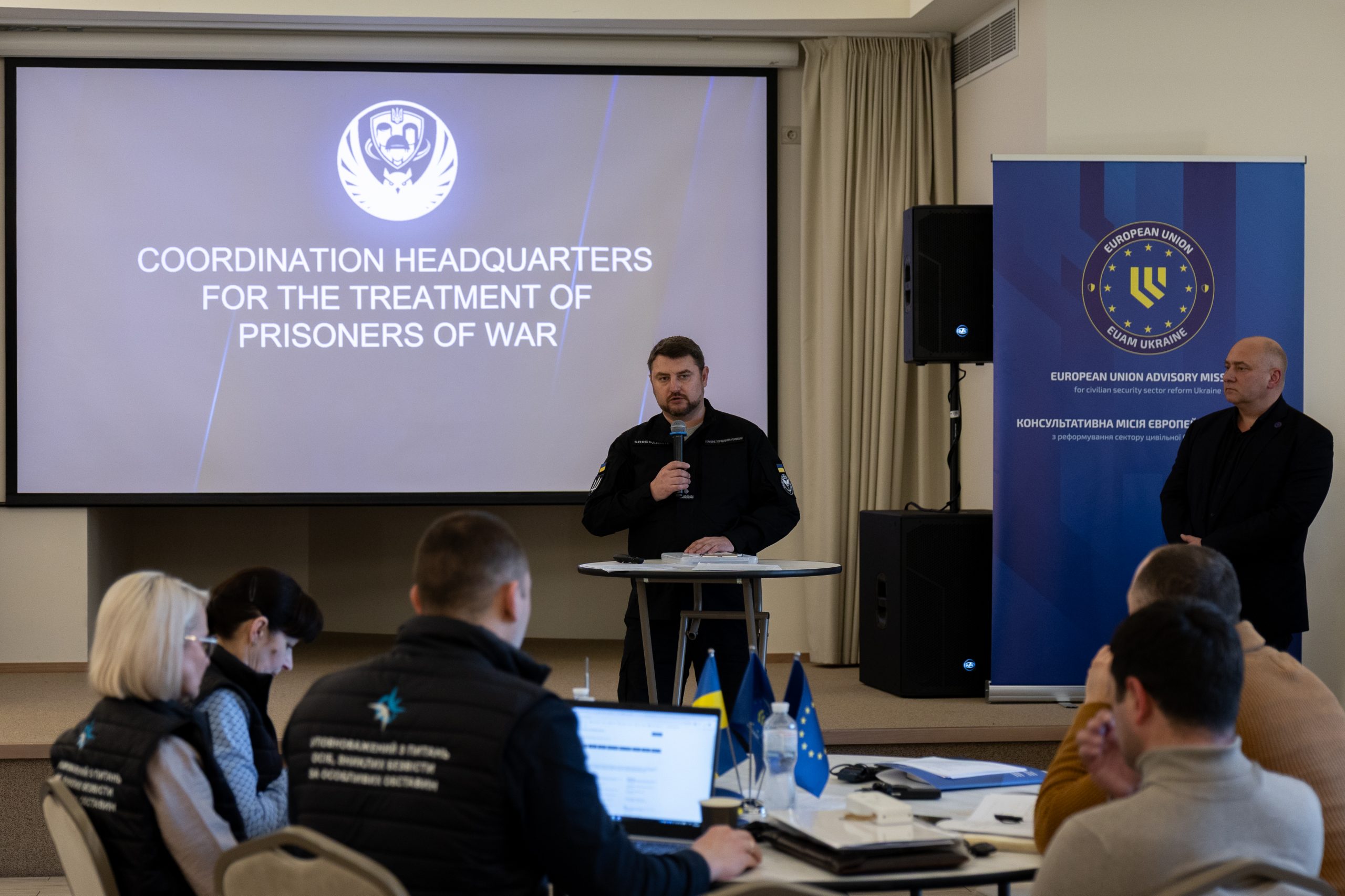
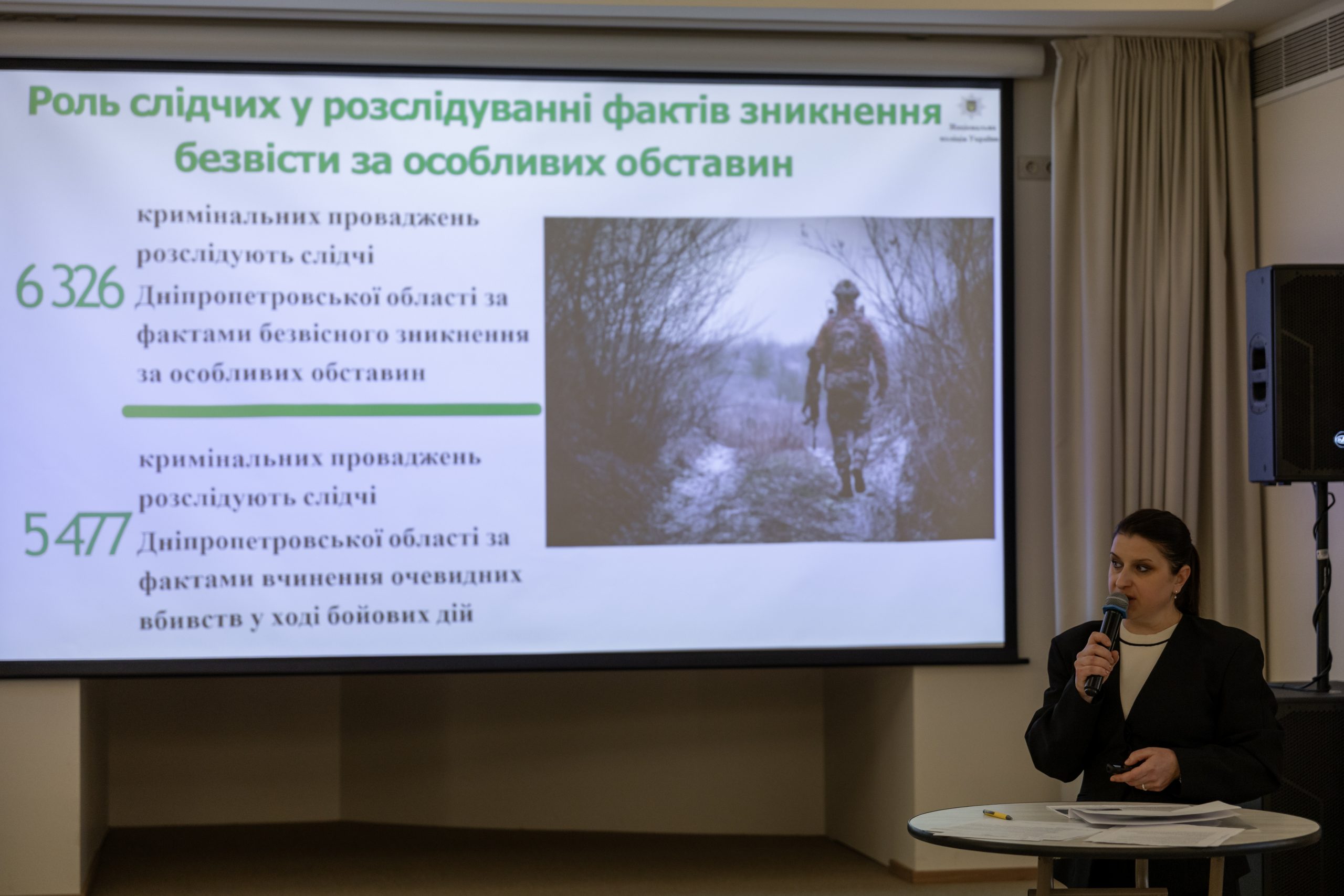
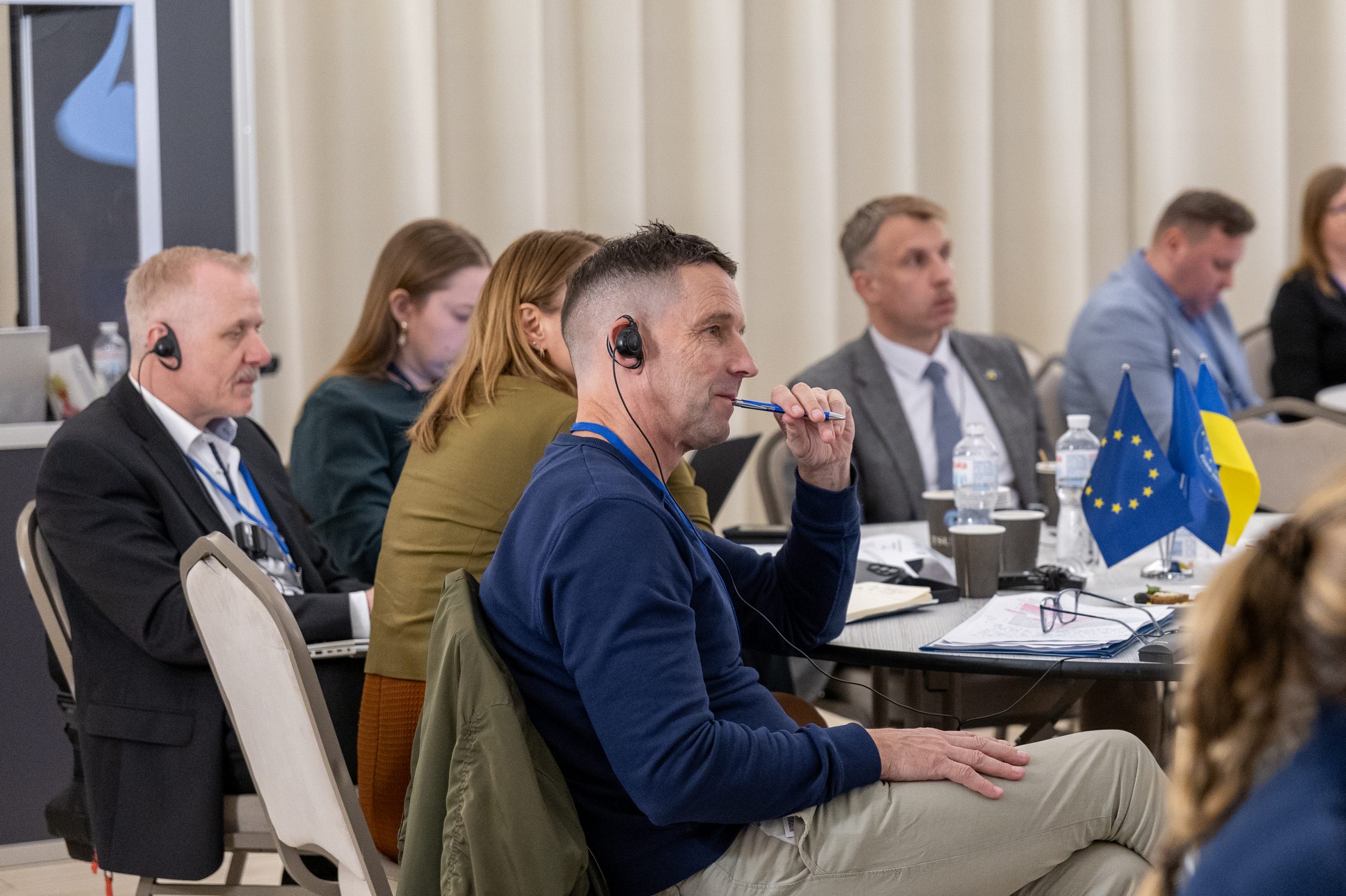
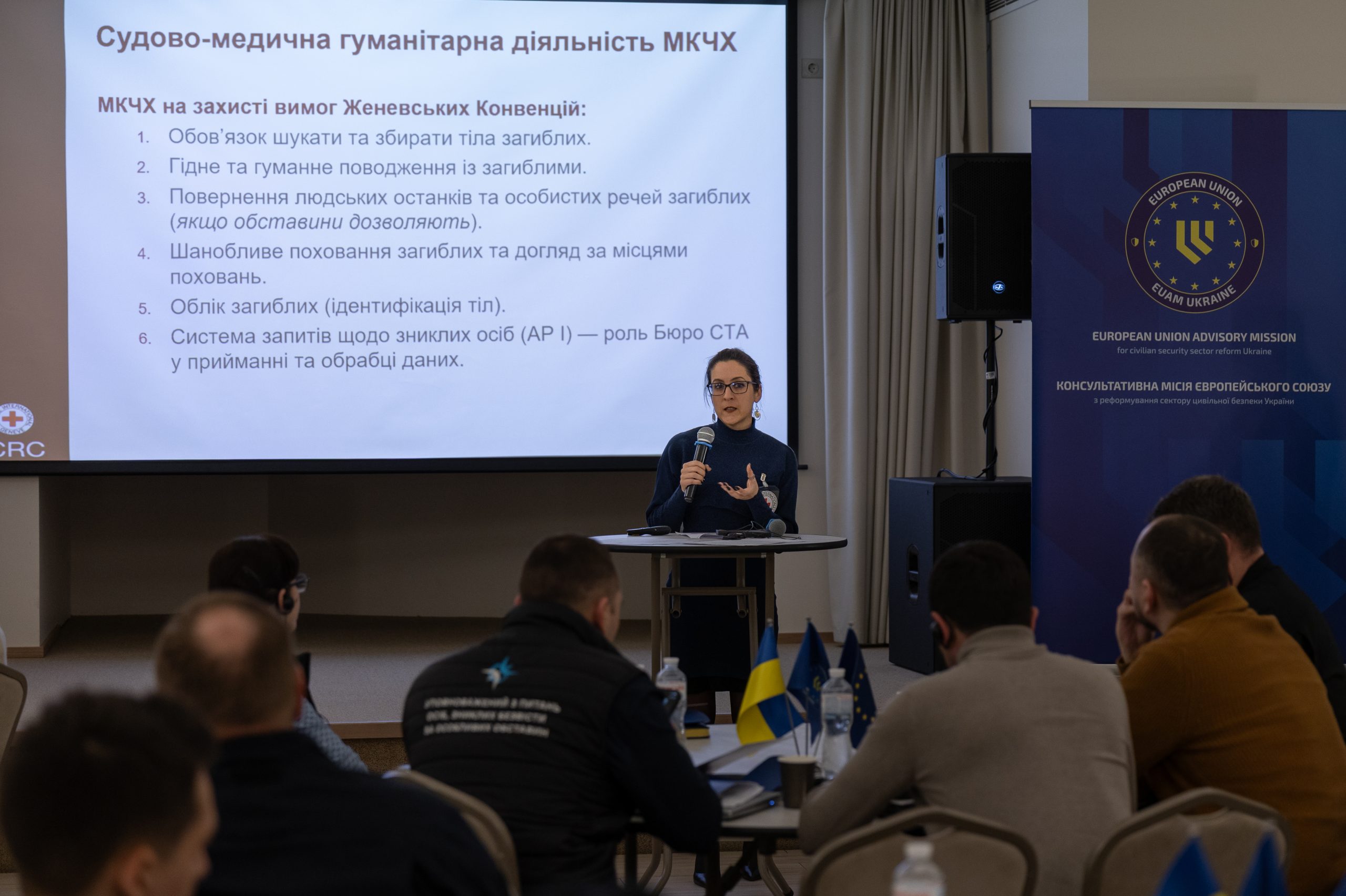













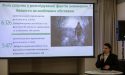










The roundtable also addressed challenges that go beyond technical procedures. These include the return of persons from captivity, the identification of repatriated bodies, and the need to strengthen support systems for families. Civil society organisations highlighted their role in bridging gaps between institutions and affected communities, particularly in providing information and assistance to relatives.
“Behind every number is a human life — a child, a spouse, a friend, a parent. We must always remember this and do everything possible to support families and help them find answers,” said one of the participants during discussion.
EUAM remains ready to continue its advisory engagement with Ukrainian partners, strengthening investigative methodologies, forensic coordination and institutional cooperation, while supporting broader efforts to ensure accountability and justice.
“In Ukraine the issue of missing persons remains one of the most difficult humanitarian and institutional challenges created by the war,” said Rolf Holmboe, Head of EUAM Ukraine, who participated in the roundtable during his working visit to Dnipro. “Ensuring effective cooperation between institutions, strengthening investigative and forensic capacities, and maintaining trust with affected families are essential elements of this work”.
The Mission has been working with partners in Dnipro over time, building practical cooperation in a city that plays a key role in law enforcement and accountability. As the war continues and the security situation remains tense, that engagement is not diminishing. It is being sustained with a focus on supporting those who continue this work on the ground.
