
All Roads Lead to Rome: What Italy’s Model Shows for Ukraine’s Prosecution Reform
March 19, 2026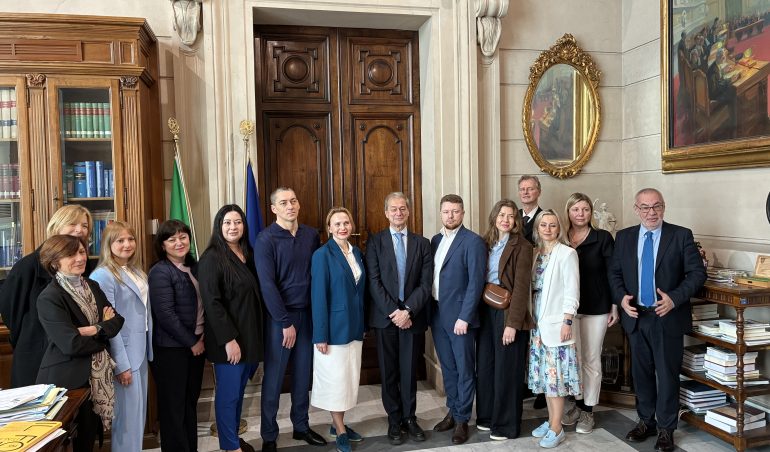
Rules alone do not guarantee independence. In prosecution systems, it is shaped by everyday decisions – appointments, performance evaluation and accountability. For Ukraine, the challenge is to make these systems work in practice.
From 11 to 13 March, the European Union Advisory Mission (EUAM) Ukraine organised a study visit for Ukrainian representatives of the Council of Prosecutors and the Prosecutor General’s Office to Rome.
During the visit, the Ukrainian delegation engaged with key judicial institutions, including the High Council for the Judiciary, the Judicial Council of the Lazio District at the Court of Appeal of Rome, and the Public Prosecutor’s Office at the Court of Cassation. This provided first-hand insight into how prosecutorial governance and oversight work across different levels of the system in Italy.
“The aim of this visit was to show, in practical terms, how prosecutorial self-governance works within a European system. How decisions are taken, how independence is safeguarded, and how professional standards are maintained on a daily basis,” said Guido Oestreich, Head of the Criminal Justice Unit that organised the visit. “Seeing these processes first-hand helps Ukrainian prosecutors reflect on what could work in their own system and how to adapt it in a practical way.”
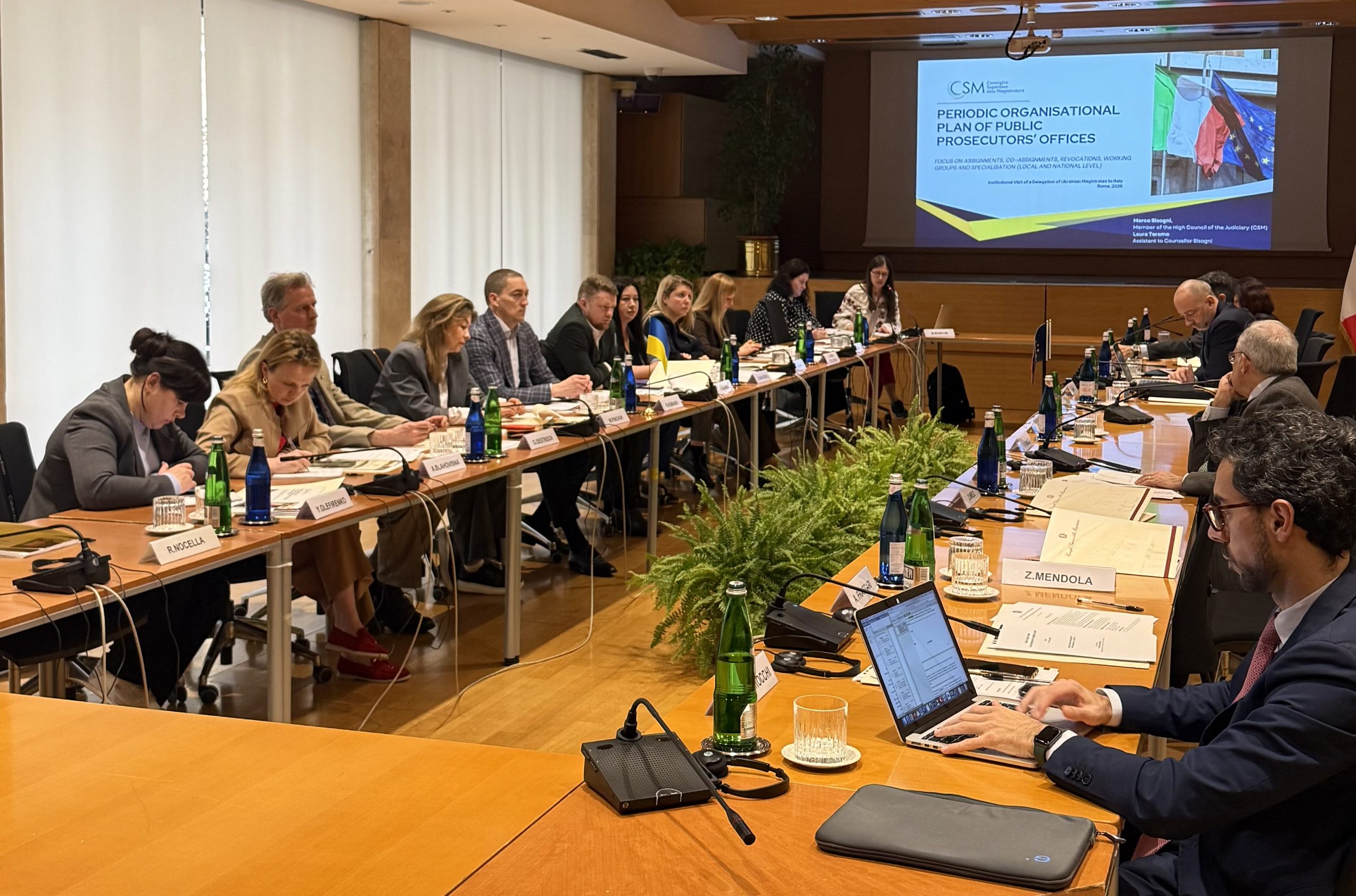
At Italy’s High Council for the Judiciary responsible for both, prosecutors and judges, participants focused on how key processes operate – from selecting senior prosecutors and assessing performance over time to managing career progression within a structured and impartial framework.
They also examined how institutions organise their daily work. Discussions covered case distribution, specialisation at different levels, and internal planning that supports consistency. Disciplinary procedures and the role of central bodies illustrated how professional standards are upheld without compromising independence.
The visit comes as Ukraine advances commitments linked to recommendations by the Group of States against Corruption (GRECO) and the Ukraine Facility Plan, requiring clear and consistently applied procedures for appointments, evaluation and accountability. For the Ukrainian delegation, the key takeaway was how these mechanisms function together, forming a system that supports consistency, independence and self-governance.
“During the visit, representatives of the Prosecutor General’s Office received comprehensive information on the work of the High Council for the Judiciary, including procedures for performance evaluation and competitions for managerial positions. They also took part in discussions on disciplinary proceedings,” said Anna Blahovisna, Head of the Prosecutor’s Performance Evaluation, Innovation and Strategic Development Division.
Other Ukrainian participants also shared their reflections. For many, the visit shifted the focus from observing systems to considering how they can work in Ukraine’s context. The challenge ahead is not defining reform – but implementing it in a way that works.
